HELLO, VOYAGER? YOUR MESSAGE ARRIVES TOMORROW!
On 18 November 2026 Voyager 1 reached one light-day from Earth. A radio signal now takes 24 hours to get there. Here is what that distance means, and why the story still feels close.
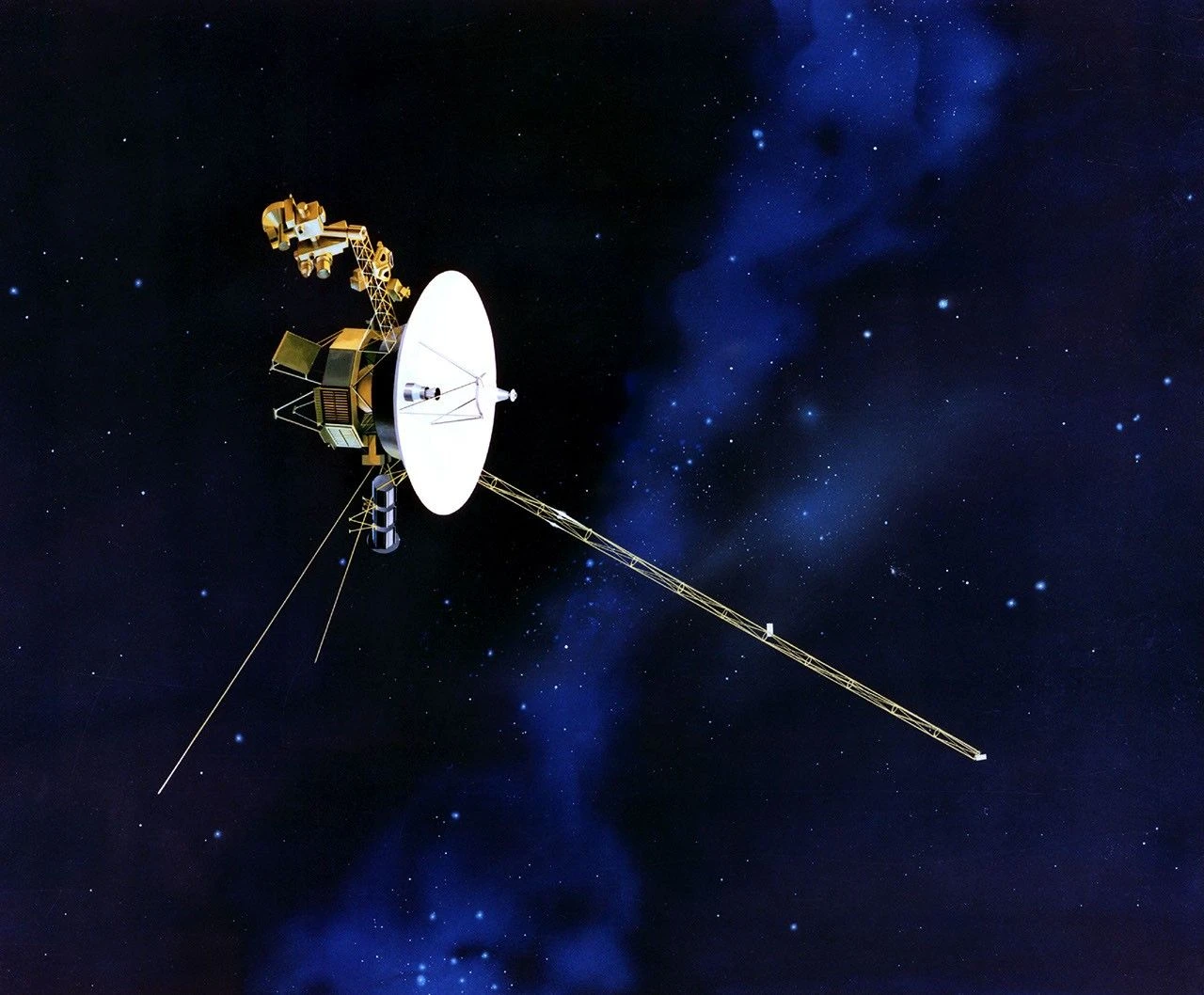
Imagine sending a greeting now. It travels at the speed of light, crosses space and reaches its destination tomorrow. That is the distance Voyager 1 reached on 18 November 2026: one light-day from Earth. A spacecraft launched in 1977 has carried something built by human hands farther away than any other object we have made.
The milestone corresponds to about 25.9 billion kilometres. Light needs twenty-four hours to cover them; Voyager has travelled for almost fifty years. Pause over that difference for a moment. It offers a simple way to feel how fast light moves and how vast space is, even before reaching for a calculator.
A light-day measures distance
The name sounds like something for a clock, but it describes a journey’s length. A light-second is the distance light travels in one second; a light-day is the distance covered in twenty-four hours. The same reasoning applies to a light-year. When you encounter one in an astronomy story, you are reading a measure of distance.
Light and radio signals are forms of electromagnetic radiation and move at the same speed in a vacuum. That gives a light-day a practical consequence for communications. It is not a programme setting or a connection that a faster subscription can improve: it is the time the signal needs to cross the space between us.
A reply needs another day
When a command leaves Earth, it takes about a day to reach the spacecraft. A response signal must then cover the distance in the opposite direction. The round trip alone is therefore close to forty-eight hours, with operational time added on top. Nobody can correct a manoeuvre while watching it happen live, as in a video game.
Imagine working with a team at that pace. Before sending a request, you would want to think it through carefully; afterwards, you would have to wait. Exploring distant space requires preparation, checks and patience. The interval between sending and receiving contains an essential part of the work that rarely makes the most dramatic mission pictures.
The Moon suddenly feels close
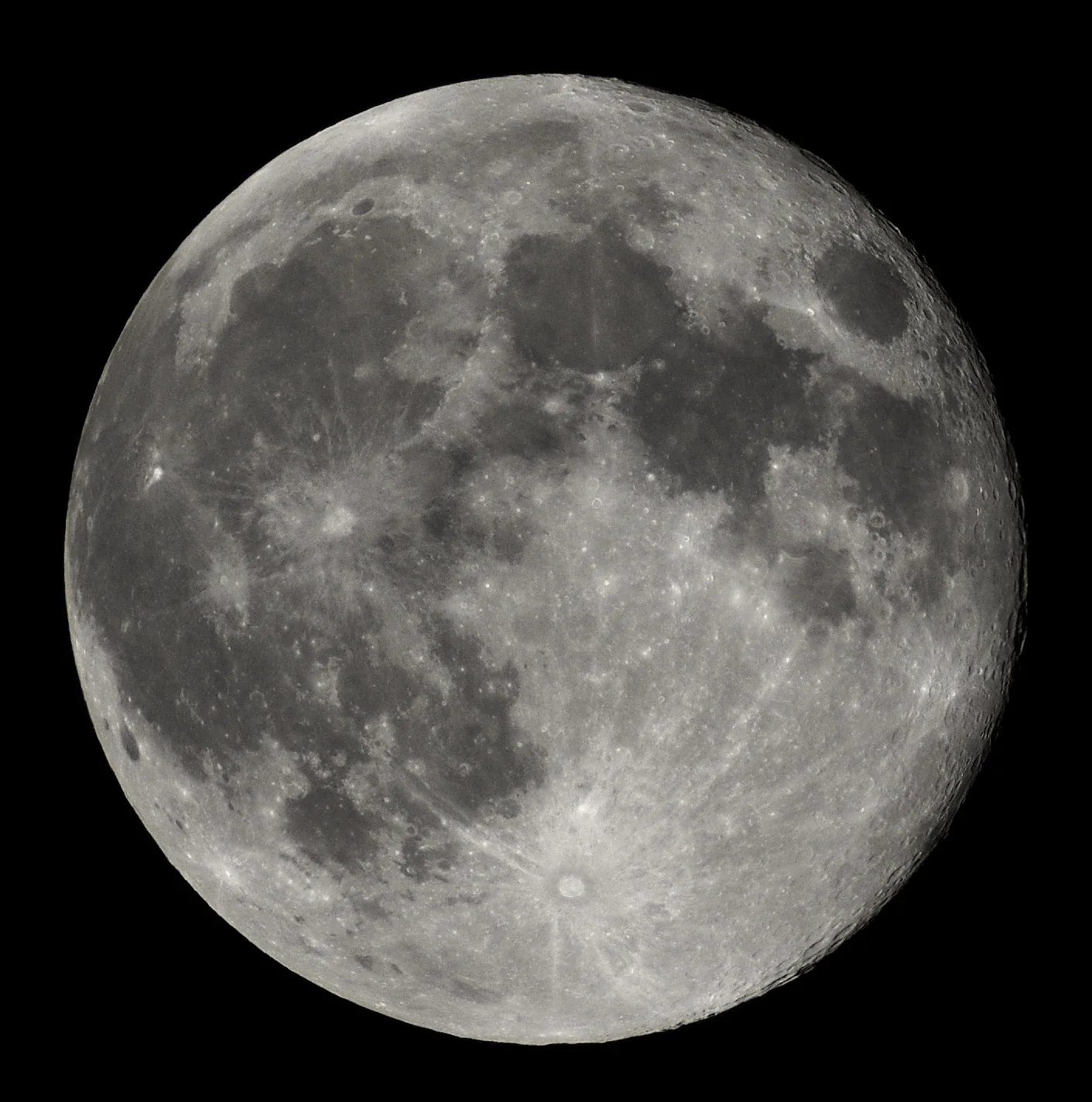
On average, light crosses the distance from Earth to the Moon in about 1.3 seconds. From the Sun to Earth it takes about eight minutes and twenty seconds. Sunlight reaching us has already been travelling for several minutes. Never look directly at the Sun: observation requires appropriate equipment and protection.
These comparisons help without turning the sky into a competition. The Moon, the Sun and Voyager belong to very different scales of experience. Putting a second, eight minutes and a day beside one another makes those billions of kilometres feel a little less abstract. With children, starting from a clock can be more effective than starting from a long row of zeroes.
Launched in 1977, still travelling
Voyager 1 launched on 5 September 1977. It studied Jupiter and Saturn, helping transform our view of the outer planets, before continuing towards ever greater distances. Its twin Voyager 2 followed a different trajectory, also visiting Uranus and Neptune. The missions began together, but their itineraries are different.
Distance from Earth does not increase like a car’s mileage on a straight road: our planet is also moving around the Sun. This is why a precise date and a precise measurement matter. The light-day milestone concerns the separation between spacecraft and Earth at that moment, rather than simply all the distance accumulated since launch.
What does interstellar space mean?
In 2012 Voyager 1 crossed the heliopause, the boundary beyond which the solar wind no longer dominates the surrounding environment as it does within the heliosphere. It has been exploring interstellar space ever since. This important physical boundary concerns the plasma and fields that scientific instruments can investigate.
It is not the same as leaving every region gravitationally associated with the Sun. The Solar System’s outskirts extend much farther than the eight planets lined up on a classroom poster. Words such as beyond and outside are convenient, but they deserve a follow-up question: beyond which boundary, exactly?
An ageing machine with a very present job
Available power declines over time, and managing the mission requires increasingly careful choices. On 14 November the team detected a problem with the transmission of scientific and engineering data: the carrier signal could be received, but the data were missing. The distance milestone and the state of communications are separate aspects of the mission.
The journey does not stop because an information packet fails to arrive. Yet understanding the spacecraft’s condition and continuing to use its instruments requires interpretable data. That is a reason to follow the mission’s updates, remembering the practical effort involved in maintaining a vehicle so far away even while celebrating its achievement.
A record carrying a little of us
Both Voyagers carry the Golden Record, containing images and sounds from Earth. Its significance is cultural as well as scientific: choosing how to describe our planet means deciding what matters to us. A voice, a landscape, a piece of music. Which fragment would you entrust to a journey longer than your own lifetime?
Turn the question into a family activity. Each person chooses an everyday sound they would like to preserve: rain on the balcony, laughter, a coffee pot bubbling. Then explain the choice. It is a way of looking more closely at what is nearby while a distant spacecraft helps us think about immensity.
A video to give wonder a scale
NASA’s light-day film compares signal speed and distance. Watch it without rushing: the number becomes a journey, and the journey becomes time. The Eyes interactive visualisation also lets you explore communication delays, following the mission from a perspective less constrained by the dimensions of a screen.
For more skyward curiosity, discover the planet whose transits disappeared and our guide to recognising stars and constellations with your phone. Voyager keeps putting distance between itself and us. Somehow, it still brings us closer to a wonderful question: how far can our curiosity travel?
▶ Watch NASA’s one light-day video
SOURCES AND FURTHER READING
Did this story touch your heart?
Psst… you’ll like this too!
TRICK OR SPACE ROCK? HALLOWEEN HAS A VISITOR IN THE SKY, TOO
Read the story ↗Share this story