SPAGHETTI WITH SUCKERS? THE SEA SURPRISES US AGAIN!
They seem to come out of an imaginative design, and instead they come from the bottoms of the Indian Ocean. Two new species, a genus never described before and a detail to be observed closely: those small structures that recall suction cups.
A plate of spaghetti at the bottom of the sea? The image makes you smile, but the nickname has a precise reason. Some sea worms have many thin and elongated tentacles that recall threads of pasta. And among the specimens studied in the Indian Ocean, researchers have found something that deserves a zoom: suction cup-like structures on the lower body.
Two species and a new place in the tree of life
The new genus is called Terebellosuctoria and includes Terebellosuctoria jimii and Terebellosuctoria keelingensis. The research is signed by Elena Kupryanova and an international group of specialists. It was published in July 2026 on Records of the Australian Museum; the Australian Museum and CSIRO told the public on October 14.
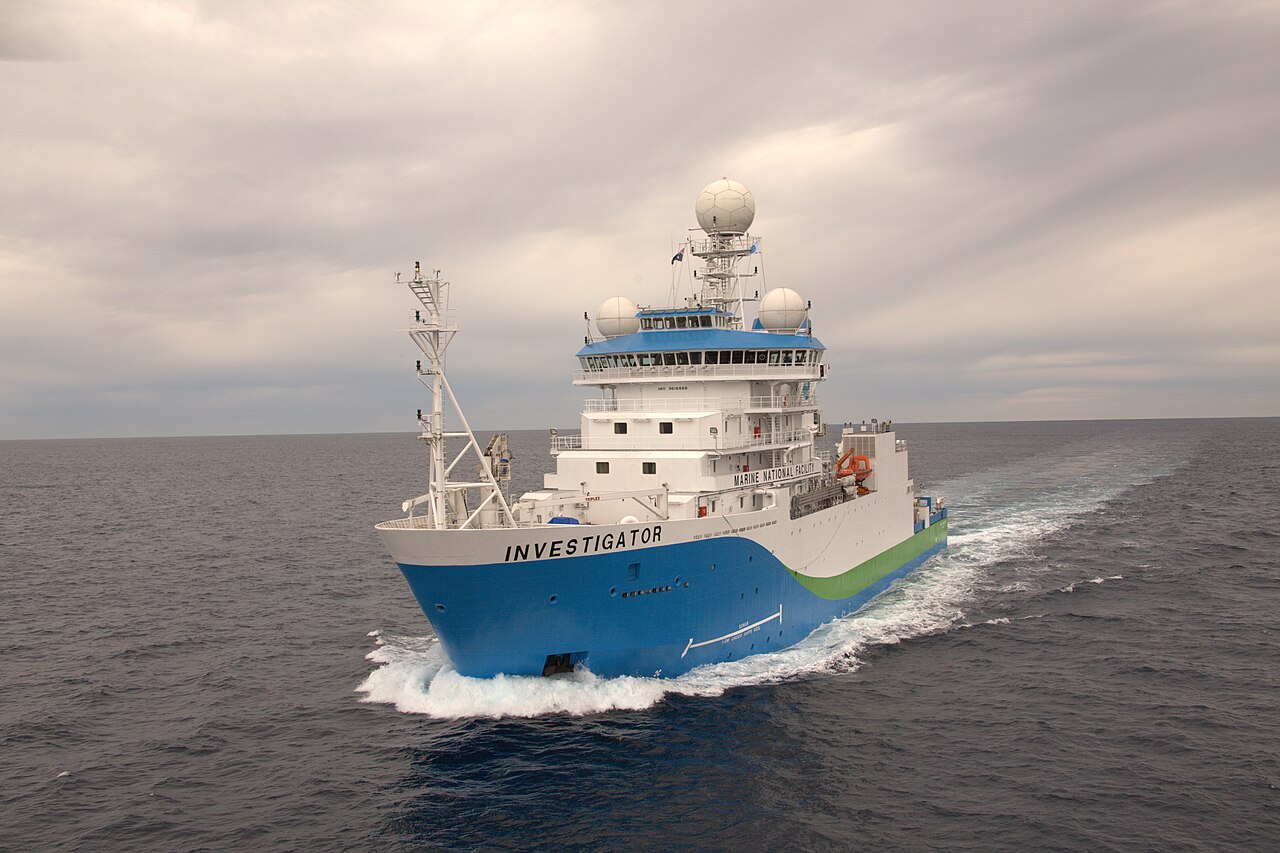
It is worth distinguishing between the two dates: these animals were not collected this week. The news comes from years of work on samples. The expeditions date back to 2021 and 2022 and took place on the research ship Investigator of the CSIRO, with the guide of Museums Victoria.
The journey begins near submerged mountains
The places explored are the submarine reliefs around the Christmas Island and the Cocos Islands (Keeling), in the Australian territories of the Indian Ocean. One of the specimens described in the Museum's account was collected at over 670 meters of depth.
Saying "fundal" may suggest a uniform expanse. Here, instead, submersible mountains come into the scene: environments that require specific means and tools even to be explored. A scientific collection then brings those samples to the lab tables, where another journey begins, much less spectacular to film and equally important.
What's the point of those gonna be?
It is the detail that has made the new genre particularly interesting. The researchers suggested a hypothesis: these structures could facilitate anchoring in environments where sediment is scarce, such as the slopes of submarine reliefs. This is an explanation proposed by scholars, to be distinguished from a function observed and demonstrated directly.
Also the name Terebellosuctoria recalls the structures similar to suction cups. The species jimii is dedicated to the biologist Naoto Jimi, who had described similar structures in another marine worm. Scientific names may seem to be tongue-spoken; however, they often keep a clue about what struck the observer.
Those spaghetti serve to eat
According to the explanation of the Australian Museum, spaghetti worms build pipes in sediment and use long tentacles to collect small food particles on its surface. Some of the observed worms were orange and reached 75 millimeters, i.e. 7,5 centimeters.
The group compared the shape of the animals, studied DNA and used scanning electron microscopy. It is the intersection of these analyses that has allowed them to be placed in a new genre. Overall, the study describes seven new species of annelids belonging to three families.
Science also needs patience
There is something beautiful in this story that risks escaping among the most curious photographs: between collecting an animal and describing it pass checks, comparisons and discussions. For taxonomy, the discipline that identifies and classifies bodies, a sample is the beginning of applications. Does it look like something we know? What characters distinguish him? Does DNA confirm what the shape suggests?
We can take this curiosity even outside the article: look at a scientific photograph, look for the scale of the dimensions, read how it was obtained. They are small ways to notice the work behind news and not just stop at the initial exclamation.
Amazement also comes from what is tiny
In Christian sensitivity, the beauty of creation invites gratitude and care. This discovery can become a pause for wonder: give us a few minutes for something that exists far from our immediate paths and needs. A small animal, a distant backdrop, people who spend years understanding it.
Next time you look at the sea, maybe you'll also picture those thin threads and tiny structures. Under a surface that seems familiar to us, there are still many stories to know. And this one, with his name a little complicated, just found his page.