THWAITES KEEPS LOSING ICE: WHAT DOES THE NEW STUDY REALLY SAY?
A computer experiment removed ocean-driven melting. Its results help explain how long changes in a glacier can persist.
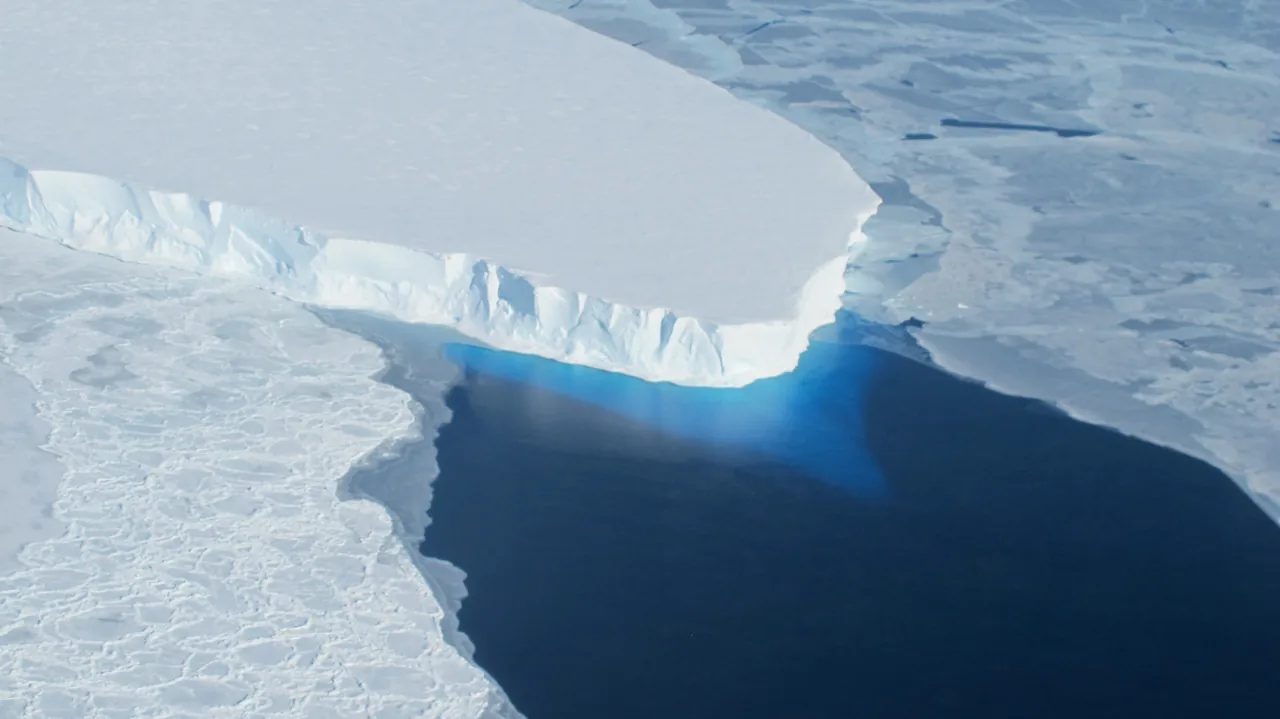
Could a large glacier recover if the ocean stopped melting it from below? British Antarctic Survey research presented on 13 October explored that question for Thwaites and Pine Island in West Antarctica.
An experiment that removed ocean melting
Researchers switched off ocean-driven melting beneath both glaciers in three independent computer models and ran 150-year simulations. They did not cool the actual ocean: this was a theoretical experiment designed to isolate a process.
Two glaciers, different responses
Pine Island thickened and advanced. Thwaites continued losing ice throughout the simulations, although loss slowed as it thinned. The authors interpret this as evidence that past changes can have persistent consequences.
150 years is not a countdown
The experiment’s duration is not a date for the glacier to disappear. It does not predict a single collapse exactly 150 years from now, or an instantaneous jump in sea level. Simulation length, rates of loss and long-term scenarios are different things.
The international Thwaites research programme combines field observations and modelling to improve understanding of retreat mechanisms and timescales. One striking photograph or dramatic nickname cannot explain Antarctica.
Does cutting emissions still matter?
Yes. BAS stresses that further greenhouse-gas emissions can worsen ice loss. Evidence that some changes are persistent does not make future choices irrelevant. Mitigation and preparations by coastal communities remain important.
Reading the next glacier headline
• Check whether it describes observations or simulations.
• Look at the timescale: years, decades and centuries are not interchangeable.
• Find the research group and its original explanation.
Wonder at creation includes wanting to understand change carefully, before the loudest headline carries us away.
Source: British Antarctic Survey ↗