The Dolomites’ sky turned pink! The aurora has returned to the Alps
On Saturday 10 October 2026, the sky above the Dolomites turned pink. From Passo Giau to Lorenzago di Cadore and Tambre, three photographers captured the surprise: an aurora above Italy’s mountains.
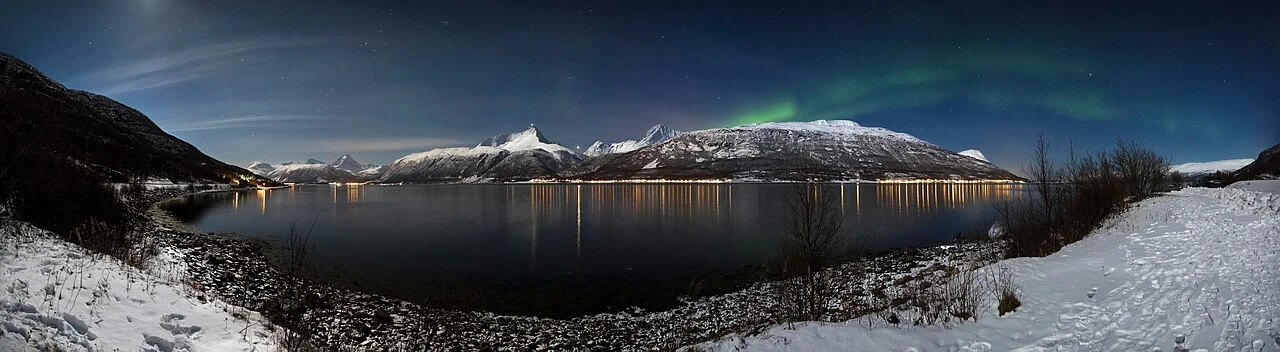
Lapland and Norway are famous destinations to observe the dawn. But the phenomenon can appear, more rarely, even at our latitudes: a surprise that invites you to raise your eyes from the phone and then, perhaps, to use it to photograph.
Where you've seen it
The aurora appeared along the Alpine arch, especially in Belluno. The photographer Alessandra Masi immortalized it above the Tofane, near Cortina d'Ampezzo and the Passo Giu. Giorgia Hofer photographed it from Lorenzago di Cadore. From Tambre, in Alpago, Tita Lorenza Fain caught a pink veil in the clouds.
Three photographers, three viewpoints and the same wish to capture that sky. The image chosen for CHIARA! shows Ra Gusela and the Tofane from Passo Giau, beneath stars and a wash of pink.
But why does the dawn come to us?
It all starts from the Sun and its magnetic activity. Coronal mass ejections, or CMEs, are large plasma and magnetic field emissions into space. If they reach Earth, they can disrupt the magnetosphere, the region dominated by the Earth's magnetic field.
These interactions can provide energy to particles that, driven by the magnetic field, reach the high atmosphere. When the atmospheric gases are hit, they make them emit light: it is the dawn. In the northern hemisphere we call it boreal; in the southern hemisphere.
During strong geomagnetic storms the region in which the dawn appears can extend towards lower latitudes, making the phenomenon observable even far from the poles.
A Surprise in the Tops
Forecasts in the preceding days pointed to a possible moderate, G2 geomagnetic storm. Seeing an aurora from Italy was far from certain.
The storm on 10 October was described as G3, or strong on the NOAA scale. The photographs preserve the loveliest part of that evening in the Alps: a sky changing colour above the peaks.
The Sun has a rhythm, but not a perfect calendar
The activity of the Sun varies according to a cycle of about 11 years. NASA and NOAA announced their entry into the maximum cycle period 25 in October 2024. This does not mean that every night there is a dawn, nor does it allow us to fix with certainty the moment of a future appearance: the real conditions of the storm and the sky count.
How to try to see her next time
Follow the news about the Sun. The pages of the INGV warn when a geomagnetic storm arrives.
Look north. At our latitudes the phenomenon can appear low on the horizon: choose a point with a clear view and control the local conditions.
Run away from the city lights. Mountain and country are the best places.
Let your phone help. Night mode or a long exposure can capture colours that are hard to see with the naked eye. Sometimes the pink appears when you look at the photo: photography can teach us to observe too.
Wow, what a creation!
An explosion on the Sun, a journey of millions of kilometers, and finally a pink sky above our mountains. The heavens narrate the glory of God, says Psalm 19. Saturday night in the Dolomites they did it with a new color.
Questions and Answers
Can you see the northern lights in Italy? Yes, under particular geomagnetic conditions. The Dolomite photographs from 10 October 2026 offer a beautiful example.
Where did you see it on October 10? Especially in Belluno: Cortina d'Ampezzo, Passo Giau, Lorenzago di Cadore and Tambre in Alpago.
Why do you see different colors? They depend on the gases involved and the altitude: oxygen can emit green and red, nitrogen also blue and pink. The oxygen emits red at altitudes higher than about 200 km; from a photo, however, one cannot attribute every nuance to a single gas.
How do you photograph it? With the night mode of the phone or a long exposure, looking north, away from the lights.
To continue exploring: where does the solar wind come from? ↗ And why does the Moon change face? ↗