Wake up, Halley’s calling! October’s Orionids light up the sky
The Orionids peaked on the night of 21–22 October, but Halley’s comet debris is still crossing the sky: NASA lists activity until 7 November.
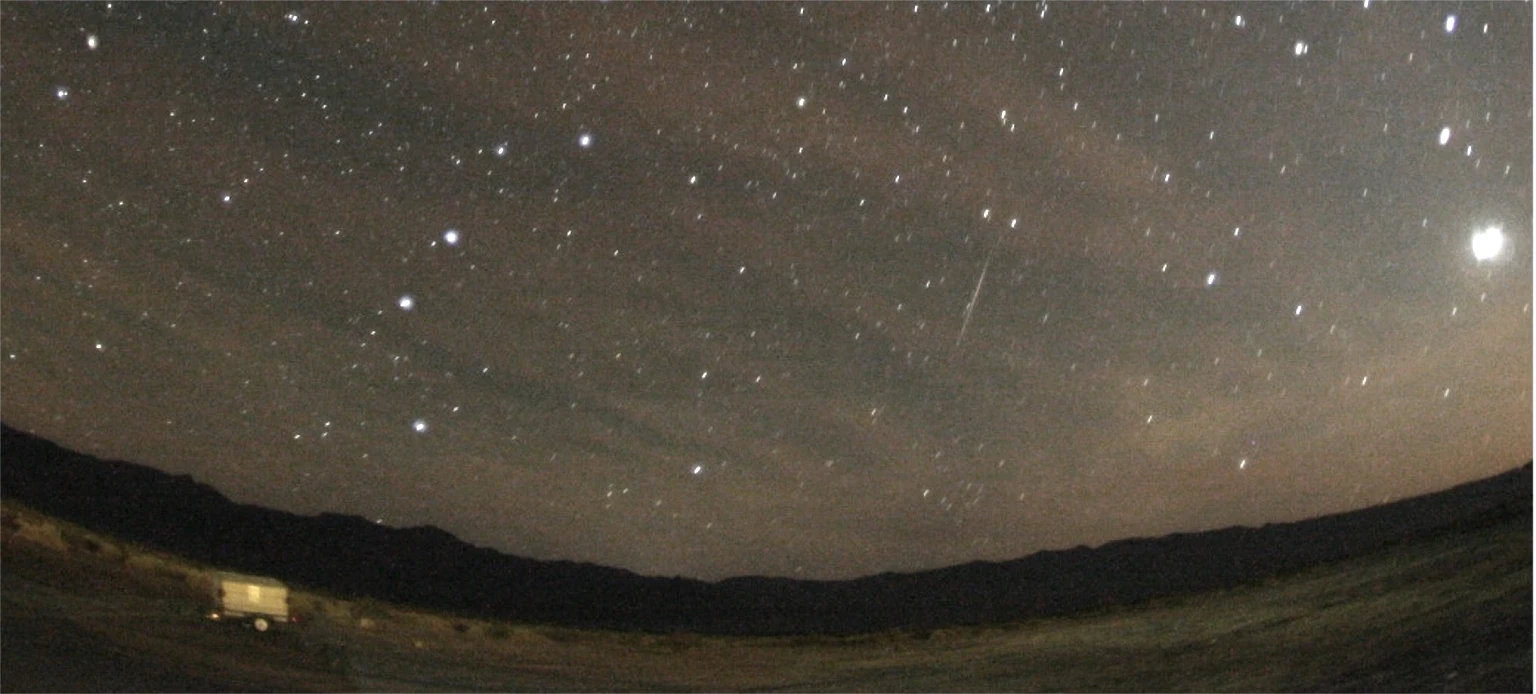
Your phone can wait. For once, the most interesting thing could be above your head: a swift streak of light across an autumn sky. Meet the Orionids, the meteor shower connected to Halley’s Comet.
When are the Orionids in 2026?
NASA lists activity from 2 October to 7 November, peaking on the night of Wednesday 21 to Thursday 22 October. Nearby nights are worth trying too.
After midnight, before dawn
Observe after midnight and before dawn, from a clear, dark location. The American Meteor Society lists a 74% illuminated waxing Moon on the peak night. Moonlight will hide fainter meteors while it is above the horizon: check moonset for your location and favour the later part of the night.
NASA suggests about 10–20 meteors an hour under dark skies. That is an estimate for favourable conditions, not a guarantee: clouds, streetlights and moonlight can greatly reduce the number you see.
Halley leaves dust; Earth meets the show
Small comet particles entering our atmosphere create these meteors, travelling at about 66 kilometres per second. They appear to radiate from the region of Orion, but trails can cross a much wider area.
Your kit: eyes, blanket and patience
Find an open view away from lamps. You do not need binoculars or a telescope. Bring warm clothes and a blanket or reclining chair. Give your eyes around half an hour to adapt and keep bright screens off.
Choose a safe, accessible location, preferably with company. If clouds spoil the view, try a nearby night.
A minute looking up
Psalm 19 speaks of the heavens declaring God’s glory. Here is our invitation: make room for wonder. No competition to count the most meteors. Just you, the sky and something beautiful to wait for.
Source: NASA Jet Propulsion Laboratory ↗