THE MOON CHANGES ITS FACE. ITS SHAPE STAYS THE SAME!
A lamp, a ball and a home experiment explaining crescents, quarters and eclipses.
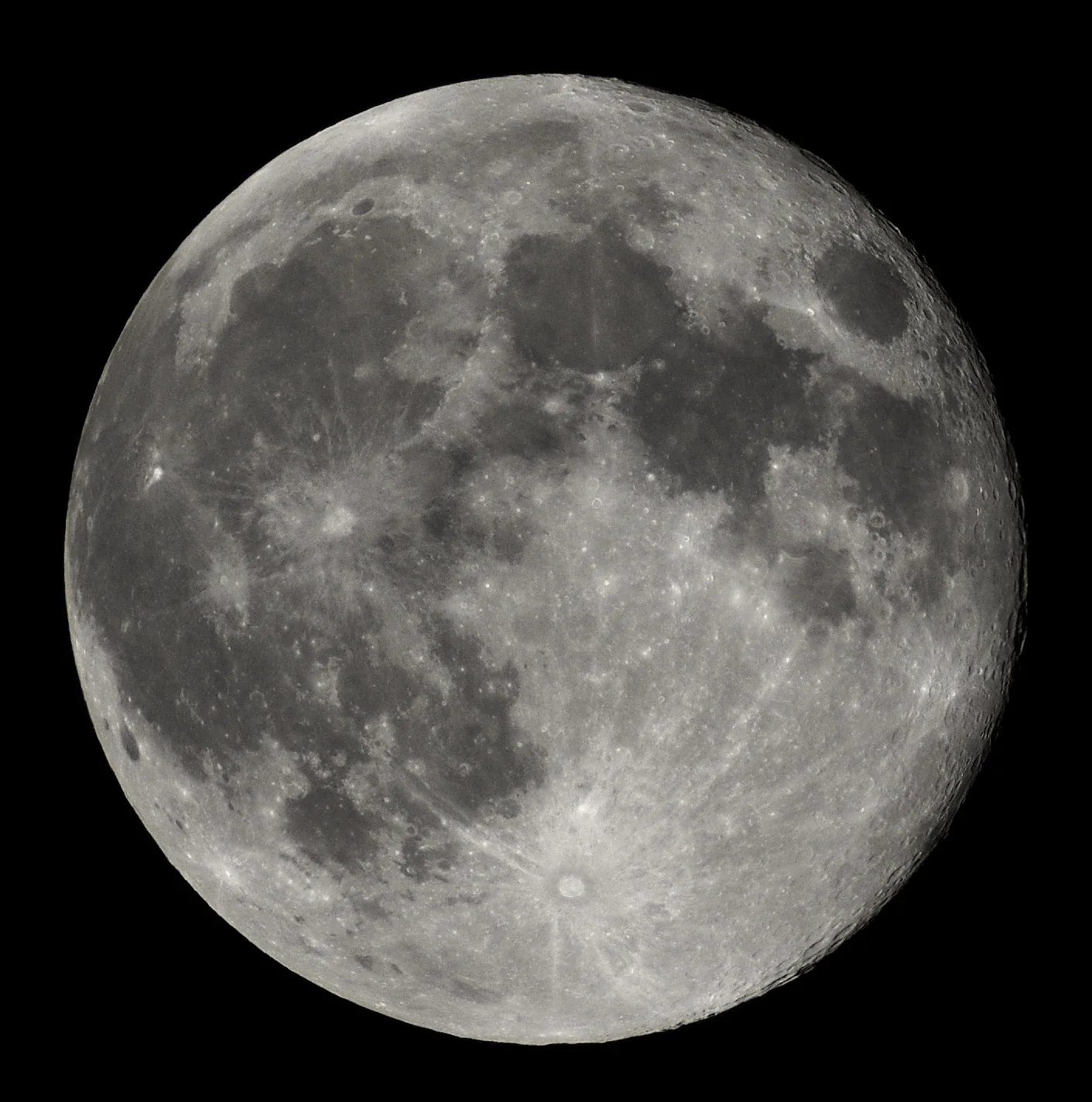
Yesterday a thin crescent, today a larger slice. The Moon remains a sphere; only the illuminated portion visible from Earth changes. You can understand it without a telescope.
The Sun is a lamp!
In a dim room, use a pale ball. The lamp represents the Sun, the ball the Moon and your eyes Earth. Half the ball stays illuminated, but changing position reveals different portions.
The model demonstrates geometry rather than real sizes or distances. Move if your head casts a shadow on the ball. Never repeat the experiment by looking at the real Sun!
Why does a “quarter” look like half?
At first quarter, half the disc appears illuminated; the name describes the cycle’s stage. Waxing gibbous, full Moon, waning gibbous, last quarter and waning crescent follow. New Moon to new Moon takes about twenty-nine and a half days.
Ordinary phases are not Earth’s shadow. That reaches the Moon during an eclipse, when Sun, Earth and Moon align. The Moon’s tilted orbit prevents this happening every month.
You can see it by day, too
Visibility depends on phase and position relative to the Sun. Generally first quarter is well seen in the evening; the full Moon rises around sunset. Check precise times for your city.
A week as an astronomer
For seven days note time, approximate direction, shape and cloud cover. Write “not observed” when absent. Comparing days shows how observing time changes what you see.
With supported binoculars, the terminator—the boundary between light and shadow—highlights mountains and craters. Full Moon is spectacular, but other phases show relief more clearly. Always choose a safe observing place.
Source: NASA Science ↗ · Open the original video ↗