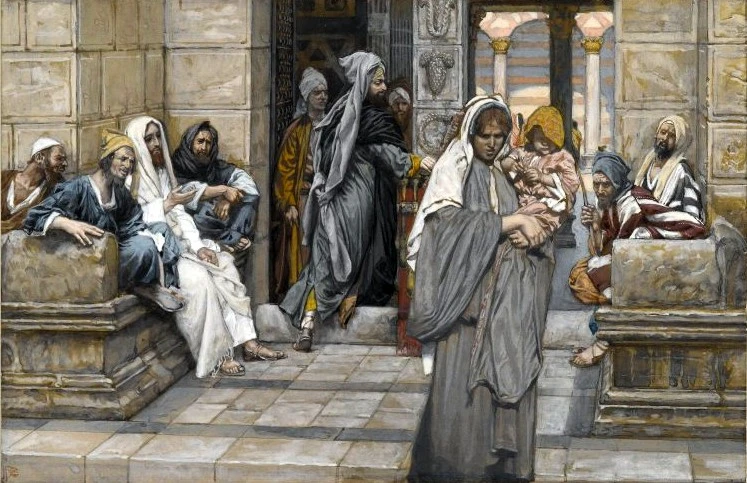
Jesus overturns the tables. But which temple is he talking about?
The money changers’ coins hit the ground. Jesus overturns their tables and tells the people selling doves to take them away. Then he is asked for a sign to justify what he has done. He speaks of a temple he will raise in three days. The people in front of him think he means the building: forty-six years to put it up, and three days to raise it again? That’s when John tells us where to look. Jesus is talking about his own body.
It’s the most striking turn in the scene. A moment ago we were looking at animals, tables and people who had come to Jerusalem for Passover. Now the person speaking is at the centre of the story. While his listeners are counting the years it took to build the temple, Jesus is already speaking about his death and resurrection.
Why does Jesus drive the merchants out?
John tells us that Jesus goes up to Jerusalem for Passover. In the temple he finds people selling cattle, sheep and doves, and money changers sitting at their tables. The words he addresses to the dove sellers tell us why he acts: his Father’s house has become a marketplace. He calls it his Father’s house. In the middle of all that activity, he says plainly what the place is for.
Tell the story too quickly and you can end up stopping at its loudest moment. The overturned tables are easy to remember. But John gives us a second question: what sign can Jesus give for what he has just done? That’s where the story changes direction. The people who ask are expecting an answer about what is happening in the temple. Jesus gives an answer that will make sense in light of what happens to him.
The number forty-six makes the misunderstanding almost visible. You can imagine someone pointing to the walls: look how long that took. With a building in front of you, it’s natural to talk about walls. John lets us in on something the people in the scene haven’t understood: the temple Jesus means is his body. The three days point to Easter. A scene that seemed to be about how a place was being used now tells Christians where they encounter God: in Jesus.
The disciples understand later
There’s a kindness in the way John tells the disciples’ part of the story. He doesn’t have them nod along as if they’ve understood it all. He says that after Jesus rose from the dead, they remembered what he had said. Then they believed the Scriptures and his words. Easter gave them a way to go back to a sentence they had heard before and understand it.
There are words that stay with us even when we don’t know what to do with them at the time. We pick them up again after something happens that lets us hear them differently. Here the Gospel describes something specific: the resurrection sheds light on what the disciples had heard. I like that John gives himself room to tell us how long it took.
Why is this Gospel read on 9 November?
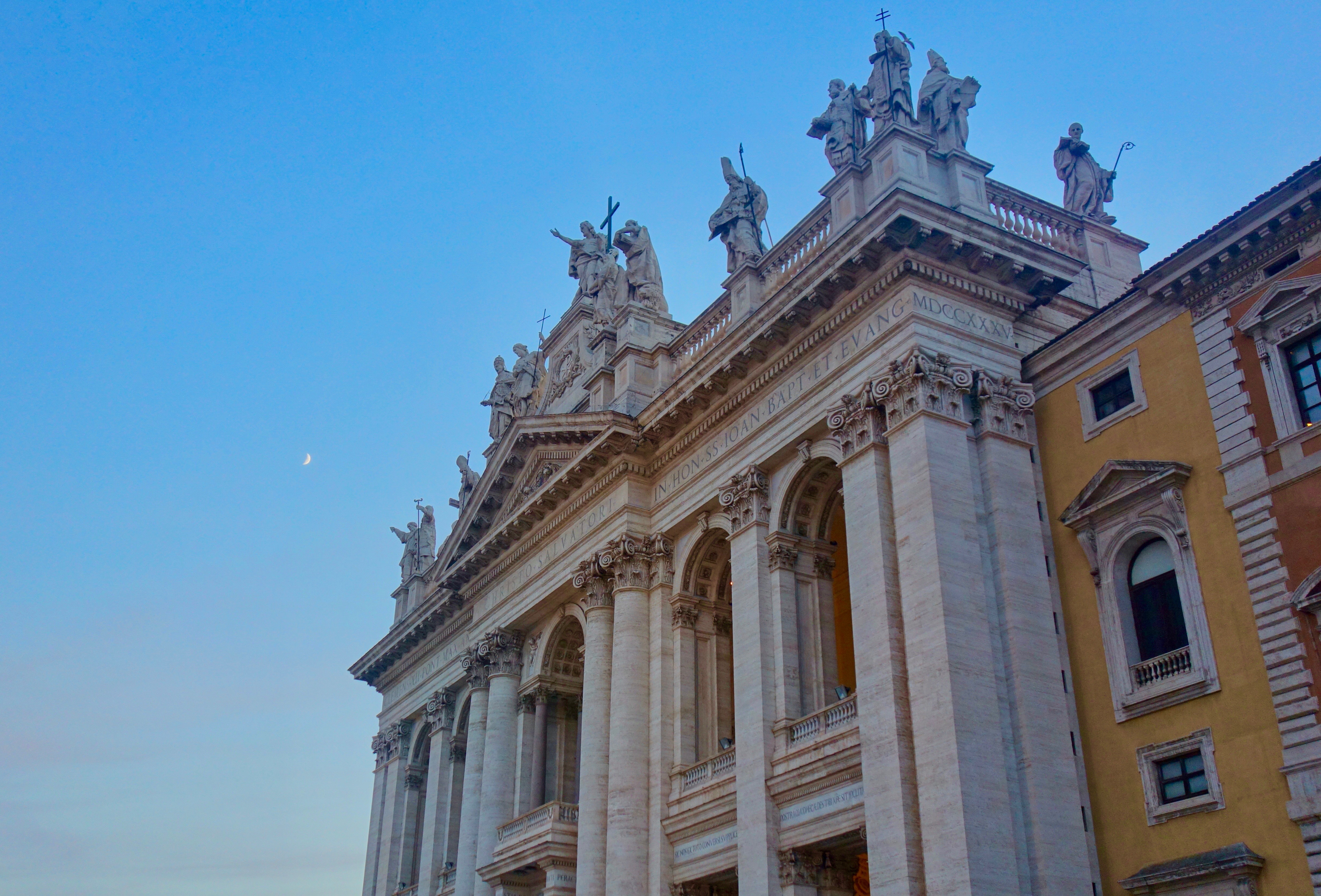
On 9 November the Roman liturgy celebrates the Dedication of the Lateran Basilica. To dedicate a church is to set it apart for the worship of God. This feast remembers the dedication of Saint John Lateran, Rome’s cathedral. The bishop of Rome, the Pope, has his cathedral seat there. That’s why the feast is celebrated far beyond Rome, in churches with quite different histories and buildings.
It can seem like a curious choice: on a feast that remembers the dedication of a basilica, we hear about Jesus overturning tables in the Jerusalem temple. The key is what he says about his body. Speaking on the same feast, Benedict XVI explained that the church built of stone is a sign of the Christian community, built on Christ. The walls shelter a place where people gather to pray, hear the Gospel and celebrate the Eucharist. The reading brings our attention back to the person at the centre of that gathering.
At Mass on 9 November, there is also an option to hear a passage from the First Letter to the Corinthians. Paul uses the image of a building to speak about the community. The people he addresses are the place where God’s Spirit dwells, and Christ is the foundation. The readings take two connected steps: John draws our attention to Jesus’ body, and Paul asks us to look at the people building their lives on him.
Perhaps there’s a pew you nearly always sit in at your church, or a door you’d recognise by the sound it makes when it closes. A place that familiar can help you hear this passage again. On 9 November, when the reading gets to those forty-six years, stay for a moment with the people looking at the walls. Then listen for the turn: John is asking us to look at Jesus.