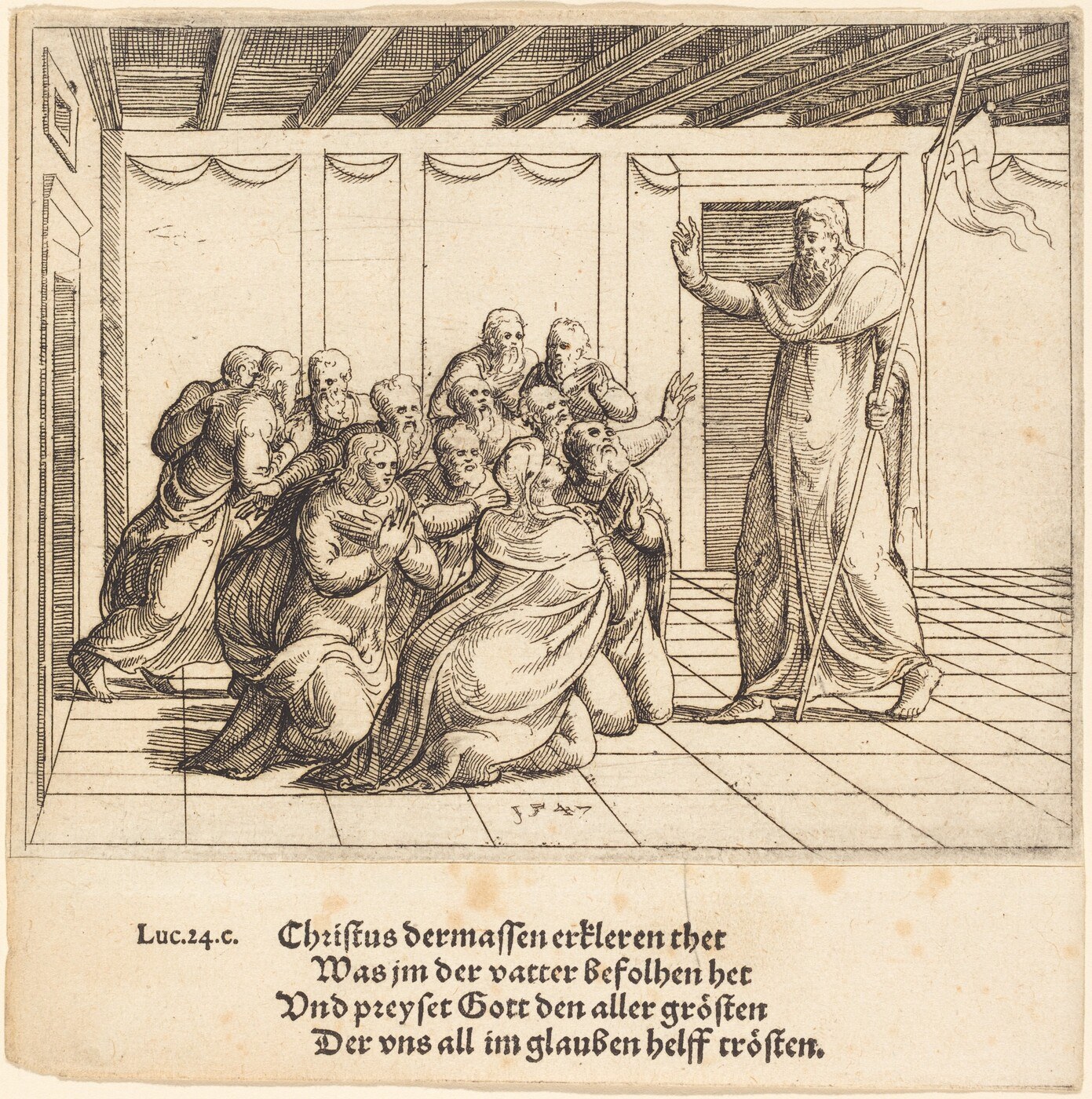
BENT OVER FOR EIGHTEEN YEARS. JESUS CALLS HER NEAR.
You arrive, say hello and sit down. Somebody asks whether you brought the document, can move a chair or have finished the work. Nothing unusual. Yet on the way home you realise nobody asked how you were. Perhaps you did not ask the person beside you either.

Some days, feeling invisible is this quiet. No slammed door: simply a series of encounters in which we are useful but struggle to be present as whole people. The Gospel account of the bent-over woman, in Luke 13:10–17, approaches that question through a particular meeting.
The woman in Luke’s Gospel
It is the Sabbath and Jesus is teaching in a synagogue. Luke describes a woman who has been infirm for eighteen years and cannot stand straight. Jesus sees her, calls her over and heals her. The account records no previous request from her: in this scene, Jesus takes the initiative.
The synagogue leader objects to the healing taking place on the Sabbath. Jesus responds and calls her a daughter of Abraham. Her belonging to the people of the promise comes to the centre of the conversation. She is not somebody whose presence can simply be postponed until another day.
The Gospel narrates an actual healing in its own terms. We should not reduce it to a metaphor for a difficult afternoon. Nor can we make it a promise that everybody who believes sufficiently will recover in the same way. Illness does not measure the quality of a person’s prayer.
Jesus sees her: why that first gesture matters
Our reflection begins with that first movement: seeing. Before the argument and the comments, noticing that somebody is there and is more than the difficulty they carry. This concrete attention can question how we move through an office, home or community.
Think of knowing somebody only through what happened to them. The woman who separated. The man who lost his job. The colleague with a health condition. Sometimes we know many details but have stopped asking simple questions: what would you enjoy doing? How would you like me to help? What would you like to talk about today?
Even concern can become restrictive when it decides beforehand who someone is. A person may want to discuss their illness or prefer an afternoon talking about something else. They may need assistance while also having an opinion, a project or a wonderfully funny remark. We can ask rather than guess.
A person before a problem to solve
At home this changes small habits. Addressing someone directly instead of always asking another person to answer for them. Waiting for a sentence to end. Keeping private information private rather than explaining to guests why somebody seems quieter today. Care includes respecting what people wish to keep to themselves.
In a parish it might mean checking whether a gathering is accessible, whether its timetable allows somebody to attend or whether a newcomer has been greeted. The Gospel does not give technical instructions for every circumstance. It does place a person before us who deserves attention before our organisation decides that time has run out.
This is not about becoming everybody else’s saviour. We may realise we do not know the right gesture. Asking, hearing the answer and accepting a refusal can be more respectful than an enthusiastic intervention. Doing good does not require the other person to perform gratitude for us.
When you are the one who feels unseen
Perhaps today you read from the position of somebody waiting. You wish someone would notice your difficulty without needing the whole explanation again. That wish makes sense. You can bring it to prayer in simple words, without making another person’s silence proof that God has forgotten you.
You can also tell somebody trustworthy: I could really use a little listening today. Asking for presence is not defeat. Sometimes those who love us have not understood or are occupied with something else. Sometimes their response really is disappointing. Prayer can accompany the search for relationships offering more attentive welcome.
You do not have to tell everything to everybody to deserve consideration. You do not have to find a meaning immediately in what hurts. Those eighteen years remain named in the Gospel: suffering’s duration is not erased by a hurried sentence.
There may also be things you want to keep ordinary: choosing your own food, deciding where to sit or talking about a film you enjoyed. Being taken seriously can include those everyday preferences. Attention becomes more personal when it leaves room for your choices rather than assuming that care means deciding everything for you.
Who could you really meet tomorrow?
Perhaps begin with someone with whom you usually exchange only information. Allow time for an answer, remember something entrusted to you or ask before offering assistance. A limited, concrete gesture, without expecting to change the person’s entire life.
You may discover a conversation you did not expect. Or simply learn that today they would rather be quiet. Listening includes making room for that answer too. Another person does not become less worthy of attention because they cannot give you an encouraging ending.
If tonight you are too tired even for that, you can pause before this Gospel page. There is a woman Jesus sees and calls near. Her story does not explain every pain. It invites more attention to the person before you, including the person you are.