THE RISEN JESUS ASKS FOR FOOD. A DETAIL THAT BRINGS HIM CLOSER.
You have set the table without doing anything special. Two plates, water, something that has cooled because you began telling each other about your day. Sometimes a person sitting opposite is enough to change the sound of an evening. Life passes through this too: somebody is here, takes some bread, listens.
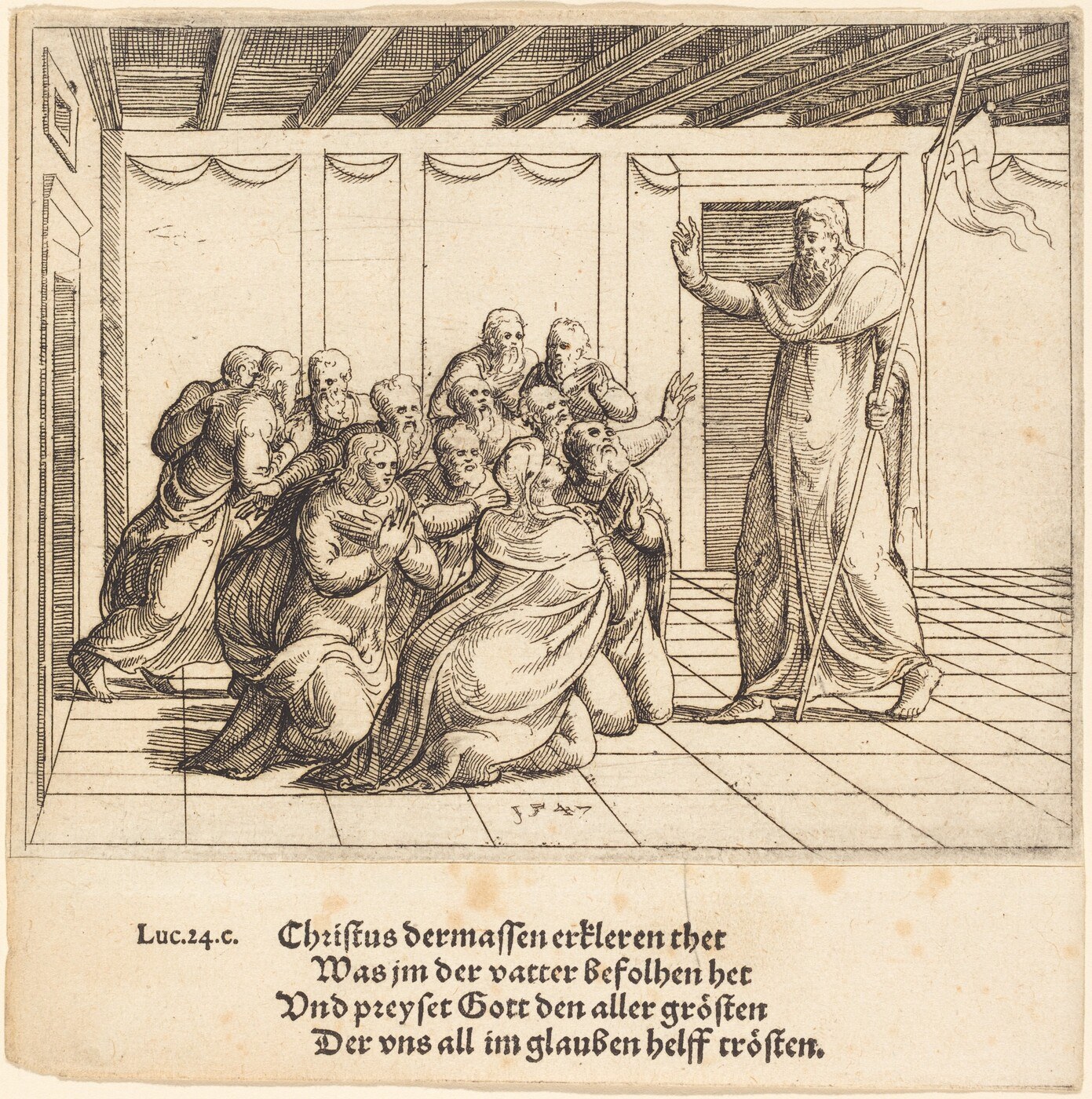
In Luke's Gospel there is an encounter in which a request for food comes amid immense wonder. Jesus appears to the disciples after the Resurrection. They are shaken, afraid, struggling to understand who stands before them. And he asks whether they have anything to eat.
Do we really know this scene? Perhaps we remember the greeting of peace or the wounds he shows. The piece of grilled fish may remain in the background, a domestic detail. Yet Luke recounts it precisely: they offer it, Jesus takes it and eats before them.
The disciples are not immediately at ease
The passage is Luke 24:36–43. Jesus stands among the group, but his presence does not produce instant understanding. The disciples think they are seeing a ghost. He invites them to look at his hands and feet and recognise his identity.
This page helps us avoid imagining the first witnesses' faith as ready-made serenity. The account includes fear, questions and joy so great they still cannot believe. The encounter reaches them while they are trying to understand.
This does not make every doubt of ours identical to theirs. We are reading apostolic testimony within the Church's faith. Yet we can be struck by the time the text allows these people: the Risen One makes himself known without the narrator erasing their distress.
That fish says something decisive
Jesus is more than someone affectionately remembered. Christian faith proclaims that he has truly risen. Eating, alongside showing his hands and feet, belongs to this concrete affirmation: the one who was crucified is alive.
Section 645 of the Catechism also recalls the meals through which the Risen One establishes relationships with the disciples. It speaks of the reality of his body and his new condition together. The Resurrection is not simply a return to his previous life, destined to end in death again.
So we must not reduce the plate of fish to an appealing phrase about conviviality. Before any application to our own dinners comes this proclamation. The closeness we feel while reading also arises because Luke does not leave the encounter suspended in a vague atmosphere: someone offers food, Jesus receives it.
Life with God includes the body
Perhaps we instinctively separate what we consider spiritual from what occupies our hours: eating, sleeping, walking, paying attention to pain. Then we are surprised when prayer becomes difficult while we are exhausted or have skipped lunch.
Even someone who prays has a body: tired, hungry, needing rest and closeness. We can speak to the Lord as we are, carrying everything the day has left with us.
We can remember this when supporting somebody too. An important conversation may need a chair, water or a pause. Recognising a practical need does not diminish listening. Sometimes it gives listening a place where it can live.
Offering is beautiful. Receiving has its place too
In the scene, the disciples have something to give. Jesus takes what they offer. Luke describes no elaborate preparation: there is a portion of fish available at that moment. It is enough for the gesture the Gospel wants to show us.
Here we can begin a reflection of our own. How hard do we find receiving? Accepting that somebody cooks for us, accompanies us or notices our tiredness. Sometimes we know how to support everyone and feel embarrassed as soon as we become the person offered something.
We do not need to turn every dinner invitation into a lesson. You can sit and accept the plate. Say thank you. Let someone who loves you express affection through a simple gesture too. Reciprocity grows when nobody must always be the person supporting everybody else.
The scene continues with a word to hear
You can read the whole passage slowly, returning to the words that surprise you.
After that gesture, Luke recounts how Jesus opens the disciples' understanding of Scripture and entrusts them with a testimony. The meal belongs within an encounter leading to mission. The passage does not end in a pleasant interval removed from the world.
When you read it again, pause at the detail you normally hurry past. The Risen One asks for something to eat. The others offer it. There is joy still struggling to find words, and meanwhile a gesture really happens. Perhaps the scene will feel closer: at the centre of the Church's faith is the living Jesus, encountering whole people, including their wonder.