WHEN YOU CANNOT GET UP, SOMEONE CAN HELP CARRY YOU.
You read the message. Your friend has cancelled again: she cannot face it. You want to help but fear intruding. So you leave a heart and think: she will contact me when she feels better.
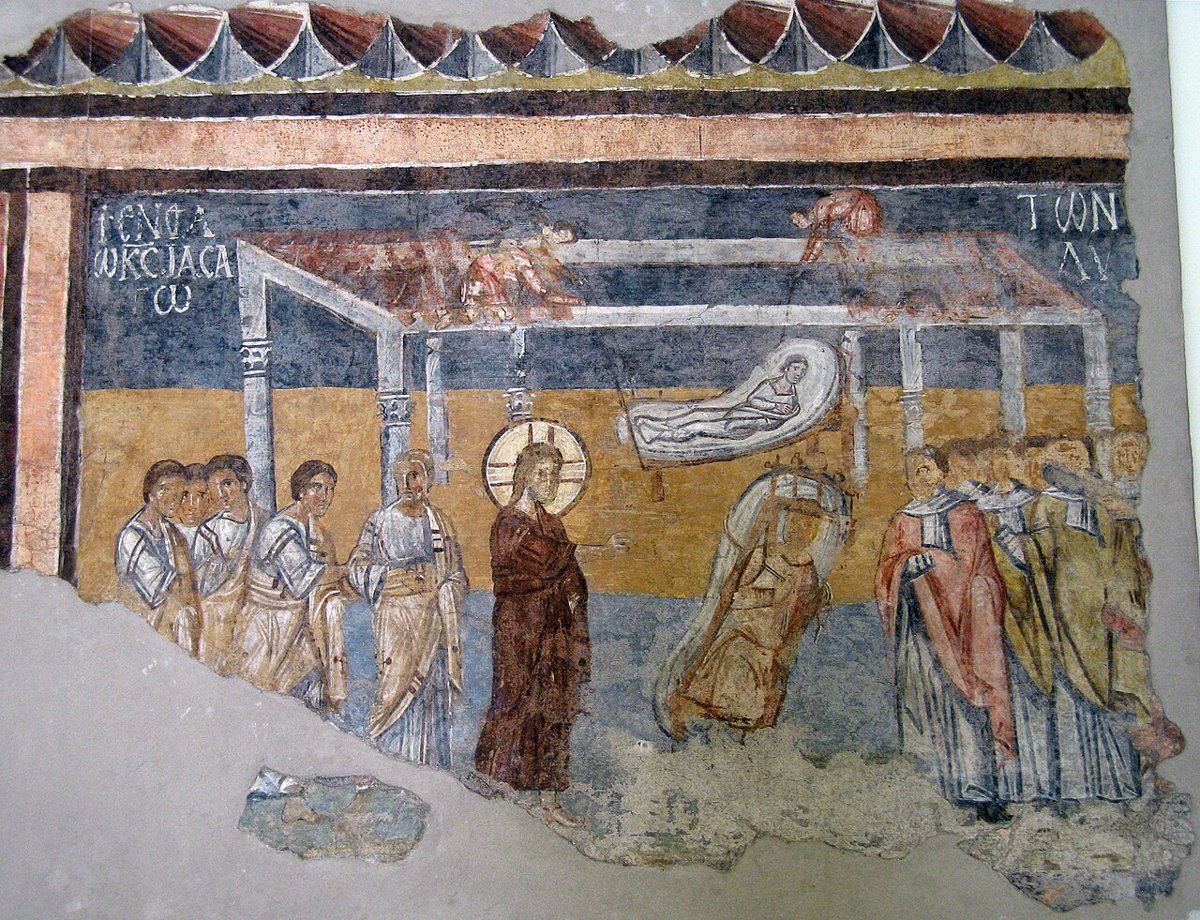
Sometimes waiting is respectful. Sometimes a person cannot even put a request into words. Mark’s Gospel gives us a crowded house, a man on a stretcher and four people carrying him. The doorway is blocked. The story continues.
When the entrance is blocked
In Capernaum, Jesus is preaching and people gather around him. Four people bring a paralysed man. Unable to get through, they open the roof above Jesus and lower the stretcher.
Mark gives neither their names nor the precise relationship between them. We call them friends in the headline to connect the scene to our lives; the Gospel describes their practical accompaniment. Jesus recognises the faith made visible in their action.
The story continues with forgiveness, the scribes’ objections and healing. It also concerns Jesus’ authority, beyond an example of organised kindness. Within that encounter, someone has carried the weight of a journey.
Help needs a practical shape
Today the stretcher might be an exhausting errand, an appointment someone fears attending alone, or a difficult week when making dinner feels impossible.
Offer something small and specific: can I go with you on Tuesday? Bring something? Would you prefer a short call or quiet company? A clear question can be easier to answer than a huge, vague offer.
Helping gives no right to take control. The other person keeps their choices and privacy. A refusal is not a roof to break through. The Gospel does not permit us to override someone’s freedom.
Being carried can be difficult too
If you have always been reliable, accepting help may feel like defeat. You minimise, apologise and promise to repay it, as though a relationship needed its accounts balanced immediately.
The Gospel scene allows a different position: for a while, you can be the person receiving support. Having less strength today does not diminish your worth. Christian mutual care is not reserved for those able to repay it.
That is why a network matters. No friend should become the only support or replace professional help when needed. Sharing tasks, asking for guidance and recognising limits make support more reliable.
No easy promises about suffering
The man in the Gospel is healed. This does not let us promise the same outcome to anyone with faithful enough friends. Illness is not evidence of insufficient faith; treatment outcomes do not measure God’s love.
We can choose to remain beside someone facing what we cannot solve. Pope Francis’s message for the 2024 World Day of the Sick recalls the importance of relationships in vulnerability.
Today your gesture may be modest: arriving when agreed, keeping a confidence, returning next week. An open door and a willing hand can mean someone does not have to make the whole journey alone.