TWO SMALL COINS. AND AN AWKWARD QUESTION ABOUT THE MONEY OF FAITH.
The collection basket passes along the pew. You search your bag for a coin and find a receipt, your keys and a hair tie. Then you look at what you can give and it seems terribly little. Has that happened to you? Before turning the moment into a test of goodness, let us meet a woman in the Gospel.
Jesus notices two small coins
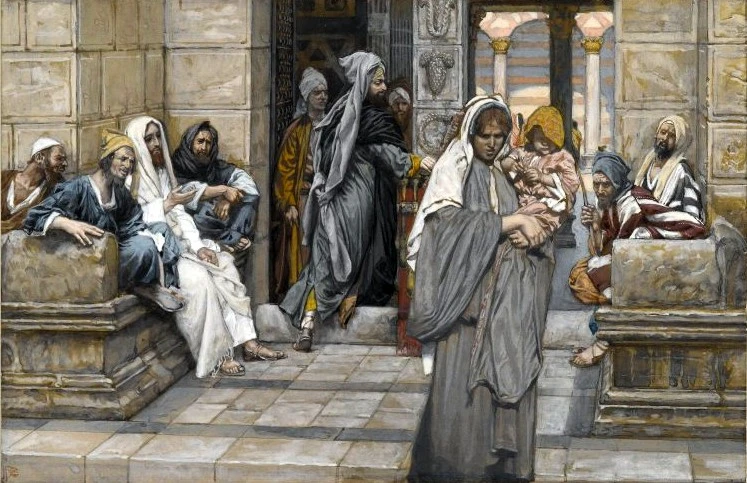
In the Gospel of Mark, 12:41–44, Jesus watches people contribute to the Temple treasury. A poor widow arrives and gives two small coins. He tells the disciples she has given more than the others: they contributed from their surplus; she offered what she had to live on.
Jesus does not calculate like a cash register. He sees the person and the gift’s weight in her life. But we should not read this passage alone. Shortly beforehand, in the same chapter, he condemns scribes who exploit widows while displaying their religious importance. The proximity of these passages deserves our careful attention.
In his Angelus of 7 November 2021, Pope Francis recalls both ways of looking: guarding against hypocrisy and noticing the widow’s trust. Religious appearances can coexist with exploiting vulnerable people. An almost invisible woman, meanwhile, can make an enormous trust visible through an action the crowd barely notices.
This is not a contest in becoming destitute
The Christian invitation to give can be radical. Those collecting money must not use it to pressure people who have very little. The widow’s decision authorises nobody to demand the money somebody needs for food, treatment or their children. Admiring her faith does not remove responsibility for how appeals are made.
Giving freely and asking others to sacrifice carry different responsibilities. Those receiving a gift must protect the giver’s freedom, too. Trust grows when people can ask, understand and decide without guilt.
If you cannot give money this month, you do not have to leave the community out of shame. You can bring your story, pray and ask for help. If you need material support, you do not have to repay it immediately with volunteer hours to deserve assistance. Human dignity is not an account to settle.
A question that need not be embarrassing
“What will this collection support?” is a legitimate question. It can arise from wanting to understand rather than wanting to accuse. A concrete answer helps people choose: which project is involved, who manages it, how spending will be reported, and what will happen if its purpose or target changes along the way.
Collections vary in size. Repairing a parish roof and financing a large humanitarian operation require different tools. In both cases, the explanation should let people understand. Trust grows through understandable decisions and commitments kept, as well as through requests for confidence. People need enough information to connect an appeal with the work it supports.
You can look for an available report, read the stated purpose and contact the responsible person through official channels. If something remains unclear, you can wait. Urgency does not make a donation more Christian. One particular doubt also does not justify deciding that every priest, volunteer or project is behaving dishonestly.
Money pays the electricity bill too
Discussing money in the Church means discussing ordinary realities: buildings, staff, bills, assistance and educational activities. Pretending spiritual life never encounters these costs helps nobody. The problem is not mentioning money. It is allowing it to measure a person’s value or to obscure decisions that have not been adequately explained to the community.
Giving a large amount does not purchase a place closer to God. Giving little should not expose somebody to jokes or comparisons. People offering skills, time or company should not be celebrated only when convenient either. Their resources deserve respect, good organisation and attention to the limits of each individual who contributes.
We can appreciate a project while continuing to ask questions. We can be disappointed by one experience without declaring every collection a trap. Between credulity and permanent suspicion there is somewhere to stand: learn, choose and check. Responsibility belongs to those administering resources too, rather than only to those deciding whether to give.
Before sharing an appeal, we can check its link, the recipient’s identity and its stated purpose. Sharing carefully respects both our friends’ trust and the people for whom assistance is being requested, without passing an unchecked claim onwards.
What the total cannot show
The widow is not reduced to the amount of her coins. From this passage we can learn not to reduce anyone to their contribution. A small offering may involve choices we know nothing about. An inability to give may reflect difficulties somebody has chosen not to explain publicly, and they owe us no performance of distress.
When the basket next passes, choose freely and according to your means. Outside church, the question continues: how do I treat somebody who cannot repay me? Which needs do I notice? Giving has many forms. No collection should ever make us forget the actual person standing in front of us and what their life requires.