THE BABY IS CRYING AT MASS. HOW DO WE LOOK AT THEM?
First she tries the dummy. Then a hand on his back, rocking the pushchair, a whisper meant to calm them both. The baby keeps crying. She looks up to see where she might move and meets someone's gaze. She cannot tell whether it is annoyed. Already, she feels she is in the way.
Some people will recognise their own Sunday in this scene. Others will remember struggling to follow a reading while a sound filled the entire church. Both experiences can be real. Where do we begin, so that worship does not become an endurance test or an examination for anyone arriving with a child?
The Gospel does not give us a rulebook for pushchairs. It does show us how Jesus responds when someone tries to keep little ones away. That way of seeing deserves a place in our communities too.
In the Gospel, children are not an interruption to remove
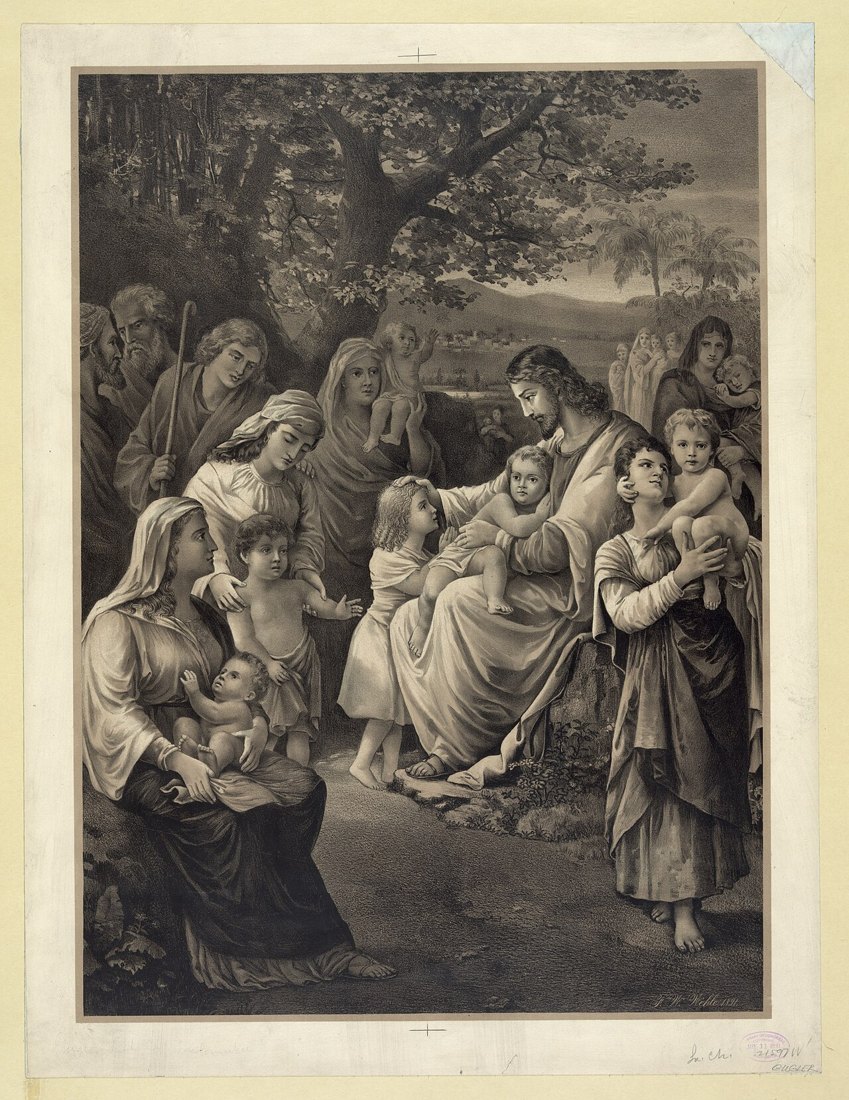
In Mark 10:13–16, people bring children to Jesus so that he can touch them. The disciples rebuke them. Seeing this, Jesus becomes indignant and asks that the children be allowed to come to him. The account ends with his embrace and blessing.
The passage gives children a place in the encounter. It does not say they can approach only when they know how to behave like adults. Jesus also speaks about receiving the kingdom of God: in this scene, children have something to teach those who thought they controlled access.
This raises a question for us. When a family comes in, do we see only a possible disturbance, or people who want to be there? A child does not yet have every skill needed to understand, wait and regulate their voice. The accompanying adult may already be trying very hard to help.
A face can welcome before a word does
We do not always need to intervene. A relaxed expression, some room made on a bench or an unspoken comment can lighten a difficult moment. A mother or father does not need parenting advice from everybody around them.
Practical help should also be offered rather than imposed. Holding a door, pointing out an accessible seat, asking whether someone needs a hand with a bag. Picking up or touching a child without asking can create another problem, even when the intention is kind.
We do not know what sort of night that family has had. We do not know about possible difficulties, disabilities or particular needs. Looking respectfully means leaving room for what we do not know, without inventing a diagnosis or immediately assigning blame.
Welcoming includes organising things better
A community can ask whether the entrance is accessible, whether a pushchair can fit without blocking an aisle and whether there is somewhere suitable to change a baby. Very practical details can make participation easier.
If a space close to the celebration is available, it can be offered clearly and kindly. Tone makes a difference: giving an option to someone who needs it differs from indicating where families should disappear. Solutions depend on the building and need to be agreed with the parish.
During a baptism celebration on 7 January 2018, Francis spoke naturally about babies crying and their needs. It was a specific setting, the Sistine Chapel. We cannot turn it into a rule covering every situation. We can recognise pastoral care that regards children as people who are present, with bodies and voices.
What if you are the one carrying that overflowing bag?
You can find out about available spaces beforehand and choose a seat from which it is easier to move. If you need to step outside for a few minutes to soothe your child, that is not a verdict on your parenting. And when you come back, you deserve to find a place.
Care extends to everyone else too: someone who struggles to hear, someone who finds concentration difficult, someone particularly sensitive to noise. Finding a balance takes cooperation. Pretending everyone's needs are identical does not help; treating each one respectfully does.
Perhaps next Sunday you will hear crying again. Before turning round, remember that someone there is trying to be present. Your expression may not stop the baby crying. It could help an adult breathe and feel that they still belong to the community. That too is a practical way of welcoming.