ST FAUSTINA: FROM THE CONVENT KITCHEN TO AN IMAGE THAT TRAVELLED THE WORLD!
A diary, two rays of light and everyday work. The story of Divine Mercy begins with a girl named Helena.
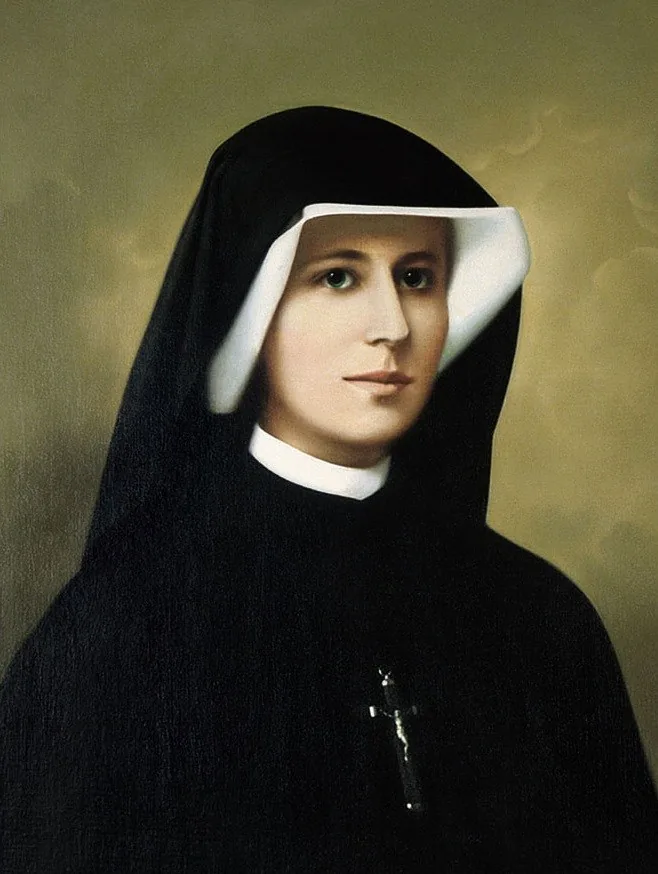
Cook, gardener, porter: Sister Faustina Kowalska’s jobs follow the rhythm of ordinary days. Yet her name is now linked to a worldwide image of Jesus, with two rays emerging from his chest. Between the cooking pots and that painting lies a story worth discovering.
Helena, the third of ten children
She is born on 25 August 1905 in Głogowiec, a Polish village. She attends school for only about three years and, as a girl, works for families to help support her parents. In Warsaw in 1925 she enters the Congregation of the Sisters of Our Lady of Mercy. Her communities include Płock, Vilnius and Kraków.
She did not paint the picture
Her Diary recounts a vision in Płock on 22 February 1931: Jesus in white, one hand raised, with a red ray and a pale one. In Vilnius in 1934, Eugeniusz Kazimirowski paints the first image following her instructions, with the help of Father Michał Sopoćko. Adolf Hyła’s versions come later.
John Paul II interprets the rays as the blood and water from Christ’s side, signs of Baptism and the Eucharist. The painting gives shape to Faustina’s account, but someone else holds the brush.
Mercy towards others, too
Her message brings together trust in God and mercy towards other people. The chaplet and prayer at three in the afternoon belong to this devotion. In 2000 the second Sunday of Easter officially becomes Divine Mercy Sunday.
Faustina dies on 5 October 1938, aged thirty-three, and is canonised in 2000. Her memorial is on 5 October. Her Diary recounts private revelations, which, according to the Catechism, neither complete nor replace the revelation of Christ.