MILAN NEEDED HELP. SAINT CHARLES SOLD A PRINCIPALITY.
You have almost finished sorting your wardrobe. Things you no longer wear go into the donation bag. But when you reach a jumper you still love, your hand stops. That is understandable. An interesting question begins there: how much of what we call generosity actually asks us to let something go?
Resources he could choose to share
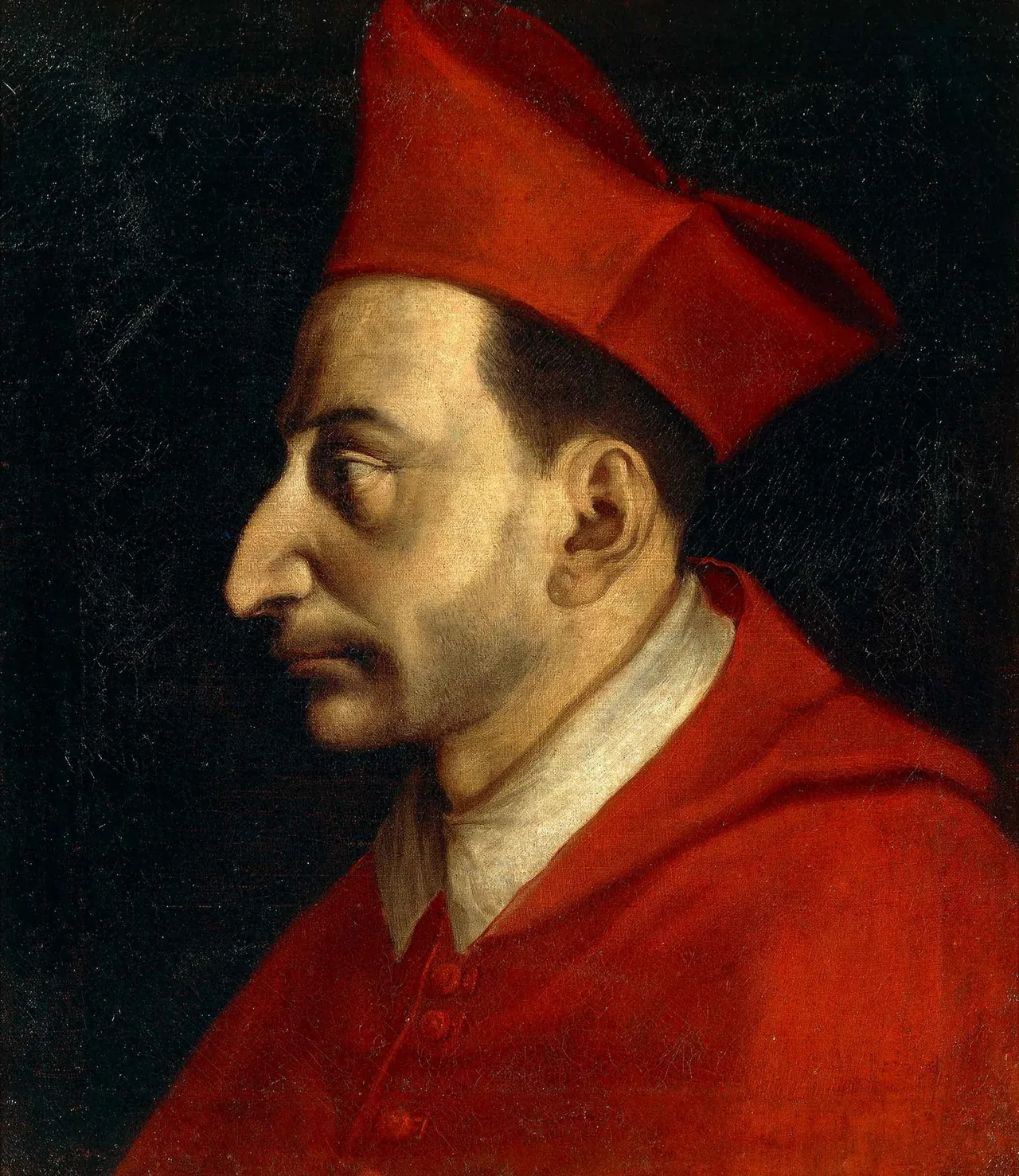
We can approach Saint Charles Borromeo through that question, without pretending a wardrobe and a plague-stricken city are comparable situations. Their scale is completely different. The question can still reach us: when somebody needs help, does my willingness involve anything I actually value and would rather keep?
Charles did not begin with nothing. He belonged to an influential family and had resources and connections. Holiness did not magically remove his position. It asked him to decide how to use it. That is a more concrete starting point than a distant portrait, safely disconnected from the choices we make.
The Church of Milan records that during the plague of 1576 he organised care in the lazaretto and emergency hospitals, committed diocesan resources and sold the principality of Oria to relieve poverty. Those are the historical facts. Invented conversations are unnecessary to give them force.
Helping also means organising
Selling a principality certainly catches our attention. But the other actions matter too: organising, allocating resources, making care possible. Generosity does not exist only in an extraordinary gesture. It needs people who keep things together and accept responsibility after the first rush of emotion has passed and ordinary work remains.
We know this on a smaller scale. Collecting donations needs somebody to check what is required, where to take it and when. A person facing difficulty may need one appointment you actually keep more than ten impressive promises. Care becomes believable when it takes a form another person can recognise and receive.
This does not mean measuring everything by efficiency. It means asking whether our gesture answers a real need. Before emptying a cellar, we can ask a charity which objects it can use. Before offering to do absolutely anything, we can choose a sustainable commitment and keep it, including when nobody is watching.
Giving without putting yourself at risk
Charles’s story can question our attachment to possessions. It does not become an instruction to empty our bank account or neglect people depending on us. Responsibility for our family and our essential needs remains part of life when we wish to help somebody. Generosity does not cancel those relationships or obligations.
You can consider this together with anyone sharing household expenses and responsibilities with you.
There is no suitable amount for everyone. One person can easily spare ten euros; for another, that is a significant part of the food budget. Time has different weights too. Somebody caring for a relative may have almost no free hours, without being less generous than a person able to volunteer frequently.
A helpful question might be: what can I freely share without creating a promise somebody else will have to carry? This is not an escape route. It takes both the person receiving help and our actual circumstances seriously. Even a small offer deserves clear words about what we can do and when.
What if the resource is influence?
A resource is not always money. It can be a connection, a skill or the opportunity to let somebody speak in a meeting. Sometimes we hold these things more tightly than objects because they make us feel important or indispensable. Sharing them can touch a very personal part of our sense of security.
Think of a colleague who has just arrived. Explaining a procedure properly means giving up the advantage of being its only expert. Helping a friend prepare an application can mean sharing something we worked hard to learn. It is not a heroic performance. It is a choice that changes a relationship in practice.
The Gospel of Matthew, 25:35–40, connects meeting Christ with caring for actual people. CHIARA!’s reflection grows from that perspective: somebody else’s need is not a decoration for our goodness. It asks us to make room for a life we cannot arrange entirely around our own preferences.
A question to carry into 4 November
Saint Charles Borromeo’s memorial on 4 November can become an occasion to choose one concrete gesture: a donation after checking the project, an agreed volunteer shift, a skill shared. You might begin with a telephone call to understand what is needed before deciding what your response should look like in practice.
Asking how resources are used is compatible with trust. A Christian community offering help also needs careful administration. Money intended for people who suffer does not become less important because somebody gave it lovingly. That intention is a reason to manage it with particular care, accountability and openness about where it goes.
Nobody is asking you for a principality. Perhaps today you can share an hour, an affordable sum or information you have kept to yourself. Before choosing, pause over one person’s need. Then look at what you have. Between those two realities, a decision can begin, small enough for you to actually make.