SHE WAS AFRAID OF WATER. CABRINI CROSSED THE OCEAN.
You have opened that page three times already. The course starts next month, the application closes on Friday, the project even has a name. Then you reach the point where something actually needs doing, and close it all again. Perhaps tomorrow. When you feel more ready, calmer, better able to face what you do not yet know.
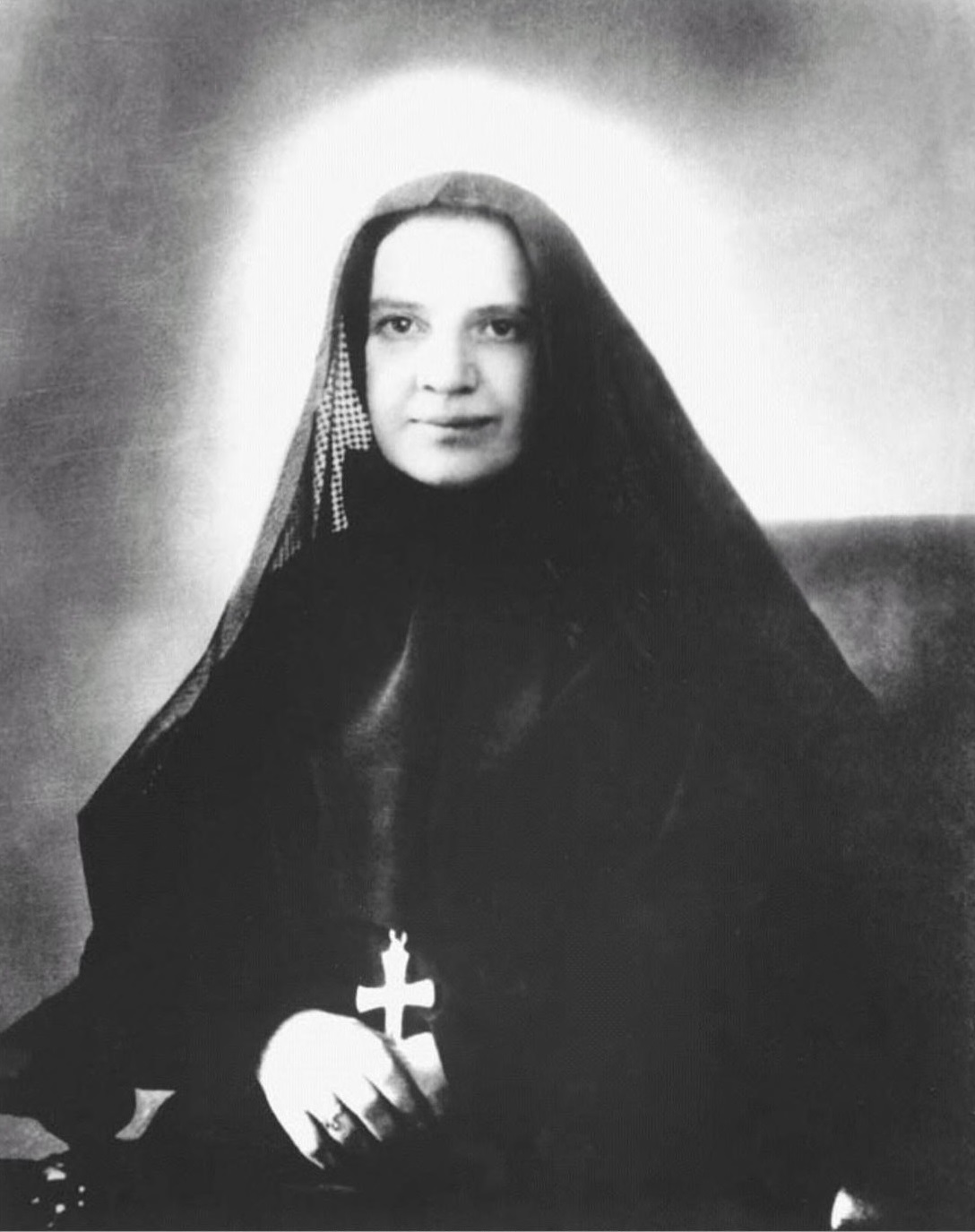
Sometimes that waiting becomes the difficulty. We imagine fear must disappear before we can take the first step. The story of Frances Xavier Cabrini suggests another possibility. This saint, whose life is so closely associated with journeys and migration, was afraid of water. A detail that feels rather different when you learn that she crossed the ocean nineteen times.
A detail that brings her closer
Speaking about Cabrini on 9 July 1946, Pius XII recalled a childhood accident and the fear of water that followed, then her many crossings. That is what strikes us: fear and travel belonged to the same life. Courage had not waited for fear to disappear.
Saints can feel distant when we imagine them perpetually ready, certain, equipped with reserves of energy we seem to lack. Here we can pause over something less monumental: a woman with real reasons to fear a departure, who also found important reasons to leave.
Cabrini was born in Sant’Angelo Lodigiano in 1850 and died in Chicago in 1917. Paying tribute to her in June 2026, Leo XIV recalled her as patron saint of migrants. Those details help us understand the reach of her journey. But the question we bring home can fit inside an ordinary Monday: what am I waiting to stop feeling before I begin?
When fear starts organising the diary
It might involve returning to education as an adult, making a work call, or considering life somewhere new. The desire remains, surrounded by perfectly reasonable delays. After the holidays. Once everything is sorted. When somebody can promise it will go well.
Nobody can guarantee that ending. And a saint’s story should not become an elegant way of pressuring ourselves. Some fears signal real danger; others call for time, information, or qualified support. Every departure is not necessarily a good idea. Pausing can also be a responsible decision.
We can, however, try to distinguish the different concerns. What is the actual risk? What can I prepare? Whose advice might help? A precise question often helps more than an instruction to be brave. If I am presenting a proposal, somebody can read it first. If I am considering a course, I can find out its costs and commitments. The step must fit the life I have, including its limitations.
Faith also enters the preparation
For a believer, praying about a decision means bringing both the desire and its difficulties before God. We can ask for light, hear advice, and consider the consequences for those who share our lives. Trust takes shape through these ordinary, unspectacular actions.
In Cabrini’s story, mission gave direction to her travels. Demonstrating fearlessness was hardly the whole point: there were people to meet, needs to answer, work to establish. That perspective changes our questions too. Alongside asking whether I am capable enough, I can ask what I want to offer my abilities to, with whom, and for whose good.
Unexpected difficulties will still arrive. Knowing why a project matters can help us recognise why trying might be worth the effort. It also leaves room for an uncomfortable truth: even a carefully considered choice can turn out differently from our plans. Prayer accompanies the moment when we need to change direction as well.
Your ocean can be an ordinary size
Perhaps there is no ship to board today. There is a form to complete, half an hour of study, an initial conversation to arrange. You could choose a small, reversible action, concrete enough to move the project beyond your bookmarks folder.
If you discover that route is unsuitable, you will have learned something. If you need longer, you can acknowledge that without insulting yourself. The value of your life does not depend on how quickly you overcome a fear.
Choose your company carefully too. Someone who listens without mocking your worries may help more than a dozen hurried reassurances. Ask for something specific: reviewing the steps together, accompanying you to the first meeting, talking afterwards. Accepting support lets you practise courage within a relationship, with somebody who also knows your less confident side.
That documented detail about Cabrini leaves room for a tender recognition. We can desire something good and feel intimidated at the same time. We can pray with an uncertain voice. We can ask for company. And we can begin with an action that would sound tiny if we described it to anybody else. For us, it might already be a departure.