THE ANNUNCIATION: BEFORE SAYING YES, MARY ASKS A QUESTION!
25 March celebrates the Annunciation of the Lord. Behind the famous paintings lies a conversation worth hearing.
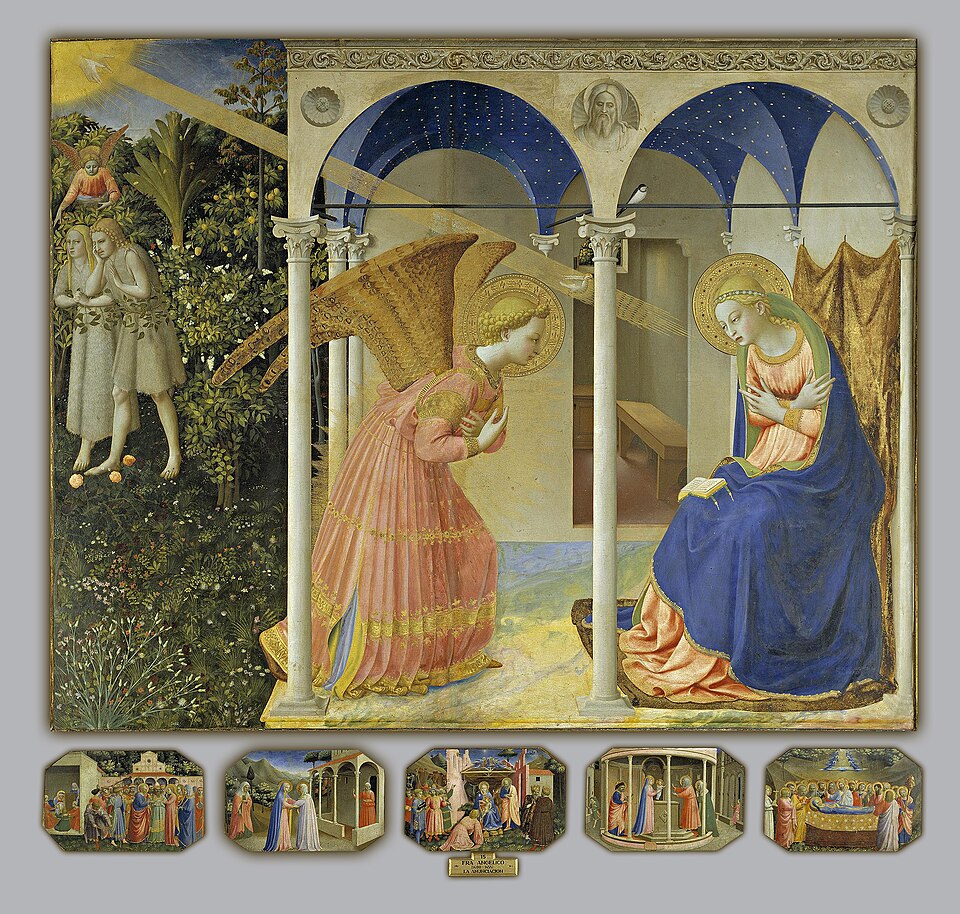
An angel, a reading desk, a lily: you recognise a painted Annunciation instantly. Open Luke chapter 1, though, and you find people and words above all. Gabriel reaches Nazareth. Mary is troubled, seeks understanding and asks how the announcement can happen. Her yes follows.
The heart of the feast
Nine months before Christmas, we remember Jesus’s incarnation. In Christian belief, the Son of God truly becomes human: the Compendium of the Catechism presents him as truly God and truly human. This is a feast of the Lord, with a meaning extending beyond Mary’s experience.
Luke names Nazareth, Mary and Joseph but neither describes the room nor gives her age. Artists add settings and symbols, often drawn from their own period.
Two conceptions to distinguish
Jesus’s virginal conception means he is conceived through the Holy Spirit. The Immaculate Conception concerns Mary, preserved from original sin from her conception. These are different Catholic beliefs.
A date with a history
The feast is attested in the East from the mid-sixth century and in Rome from the seventh. It usually falls on 25 March; when Holy Week takes precedence, the liturgical calendar moves it. Your diocese’s calendar gives the date.
Next time you look at an Annunciation, first reread Luke’s conversation. Then observe the lily, colours and imagined room: Gospel and art will reveal different aspects of the same feast.