ASSUMPTION OR ASCENSION? LET’S CLEAR IT UP!
15 August is Mary’s feast. Understand two distinctions before looking up at the paintings.
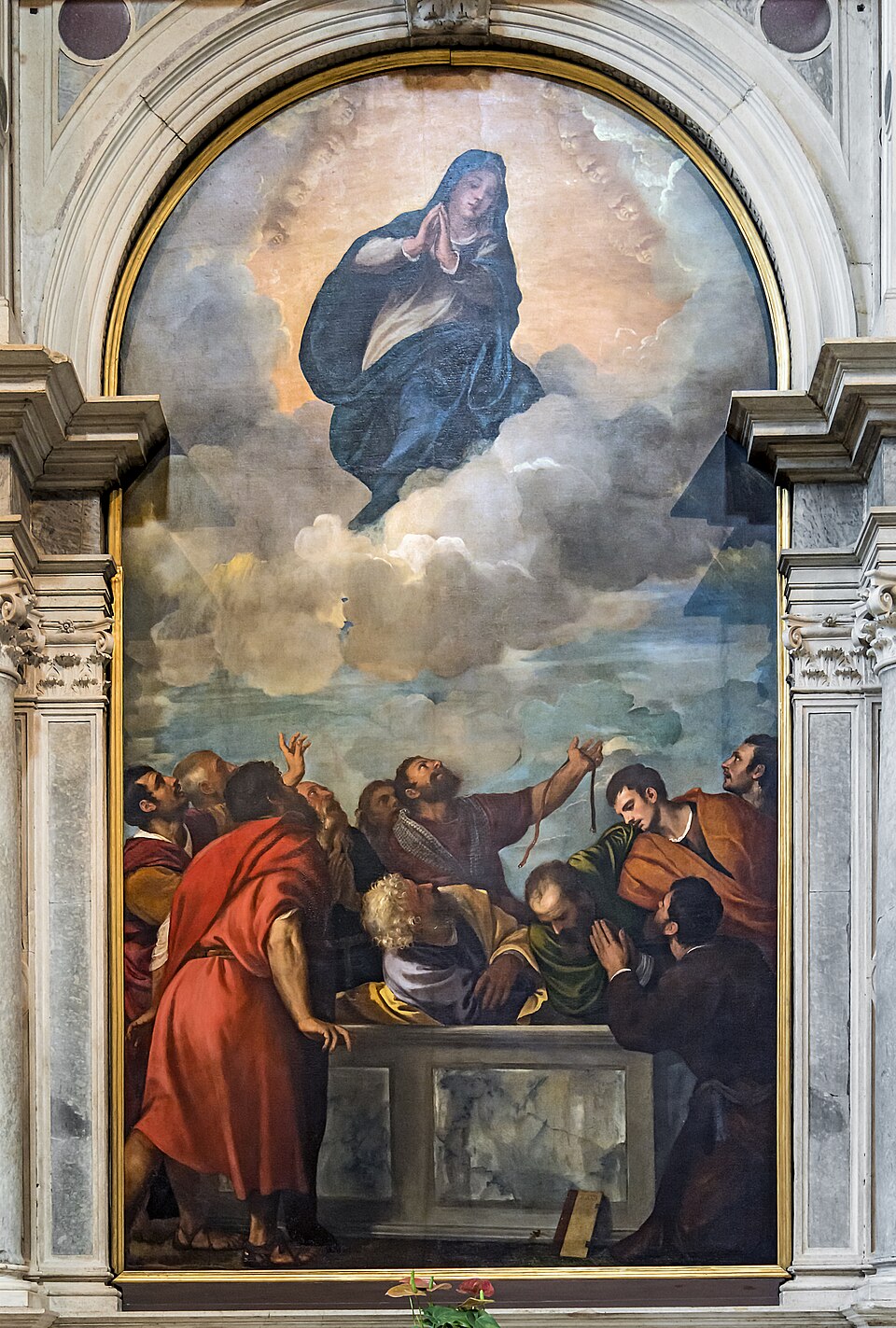
Mary among clouds and angels: we all recognise the Assumption’s image. But if you are thinking of the Ascension, that is another feast! The Ascension concerns Jesus. On 15 August the Catholic Church celebrates Mary welcomed, body and soul, into heavenly glory at the end of her earthly life.
Why mention 1950?
On 1 November 1950, Pius XII defines the dogma in Munificentissimus Deus. The devotion and feast existed long before: this is the date of the official proclamation.
The dogma’s wording does not specify where, when or how Mary’s final moments unfolded. Detailed accounts belong to other traditions; the Gospels do not describe the Assumption.
Body and soul together
The Catechism presents the Assumption as an anticipation of Christians’ resurrection: a hope for the whole person, linked to Christ. Mary is welcomed by God. Catholic doctrine distinguishes her veneration from worship, reserved for God alone.
The Dormition has an important place in Eastern tradition, with its own language and liturgy. Knowing the differences helps us appreciate them.
Look more closely at the painting
Clouds, angels and gestures make a belief visible. Where does the artist divide earth from heaven? How are our eyes guided? Who stands near Mary? These choices help you read an artwork, rather than a photograph of an event.
15 August can also be a chance to discover art: compare the scene with the feast’s meaning. Its name will become clearer—and the painting more interesting!