GRANDMA’S ROSARY. AND WORDS YOU CAN FIND AGAIN.
You were looking for something completely different. A key, a photograph, a button to sew back on. At the bottom of the drawer you find a rosary, and for a moment you seem to remember its sound before you have even picked it up. Beads slipping through fingers, a quiet voice, words said together.
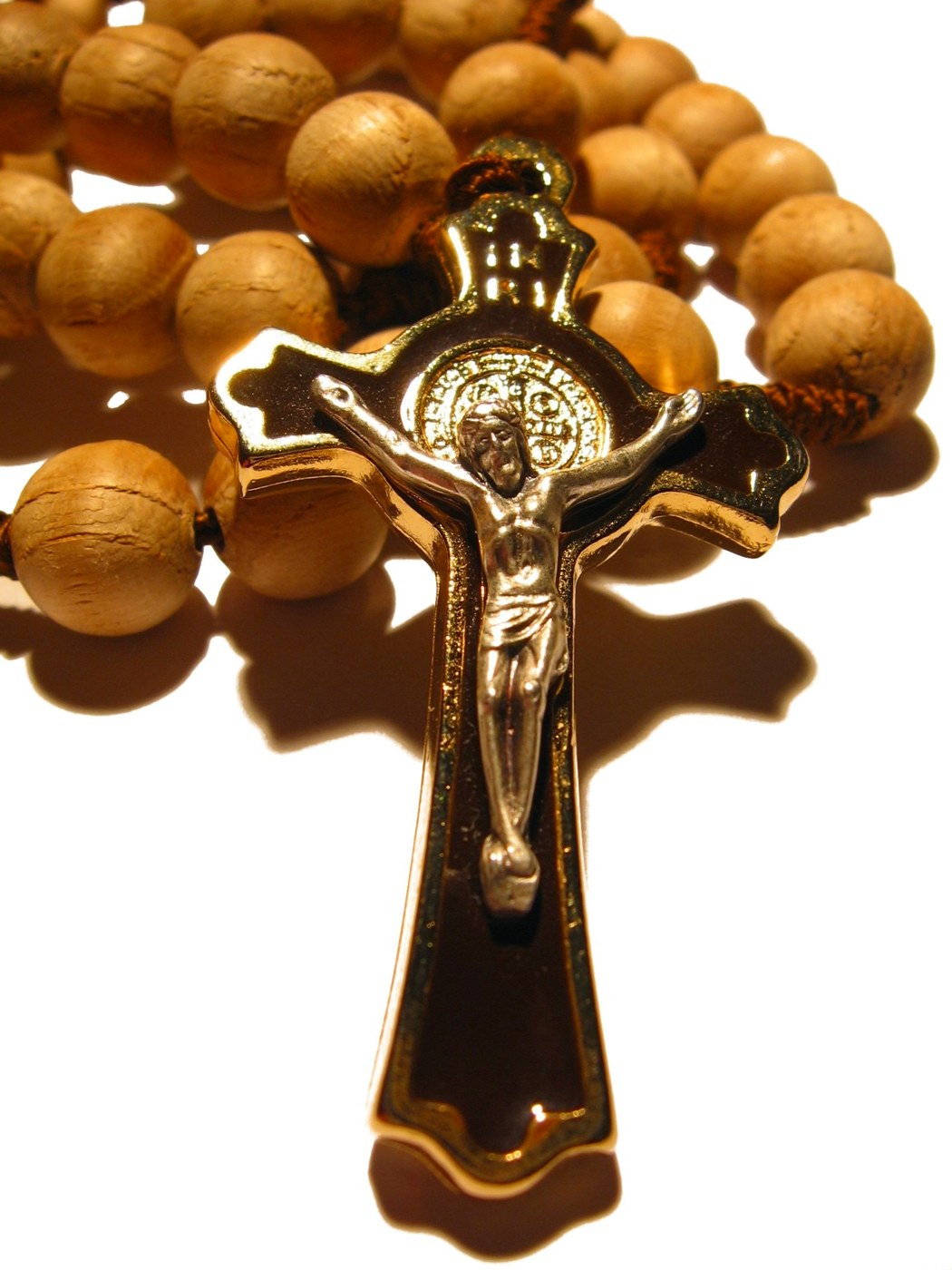
Perhaps it belonged to your grandmother. Perhaps your mother gave it to you, or someone you met on a journey. The person who gave it may still be here, and you could telephone to ask where it came from. Not every memory of faith begins with an absence. Some can become a lovely conversation today.
You realise it has been a while since you last prayed the Rosary. You remember the Hail Mary, perhaps not every step. You wonder whether taking it up again would be your own gesture or simply a way of returning, through memory, to that house.
A memory can open a question for today
Objects hold relationships. A rosary can recall someone who loved us, a particular moment, a family habit. It is natural for it to awaken tenderness before any decision about how to pray.
You can allow yourself that memory without asking it to resolve your whole relationship with God. The faith of those before you is not automatically transferred through an object. Yet it may have left a question, familiarity or a desire to understand something you only watched as a child.
If you can speak to the person who gave it, ask when they prayed, for whom and what helped them pause. Listen without imagining they were always serene. People whose devotion we remember also had difficult days and words that came at a cost.
Where the Rosary leads us
In Rosarium Virginis Mariae, John Paul II presents the Rosary as a prayer centred on Christ. With Mary, we contemplate the mysteries of Jesus's life. Its movement does not end in remembering the person who gave us the beads: it accompanies us towards Christ.
The document emphasises contemplation. Repeated prayers need a rhythm that makes room for listening and meditation. It is not a race, nor a matter of accumulating words until we obtain the outcome we want.
You can choose a mystery, read its Gospel passage and listen to what it recounts. Looking at the Annunciation, for example, you need not hurry to apply it to every decision of yours. First stay with the page, notice its words and let the account reach you.
Beginning again without pretending to remember everything
There is nothing embarrassing about looking for a reliable guide. You can use a parish resource, a shrine's proposal or the Church document. Knowing what you are saying can also help you want to continue.
To become familiar again, you could begin with one decade and a simple intention. This is a practical possibility for starting, without confusing it with the complete form of the prayer. You do not have to prove to Grandma, anyone watching or yourself that you immediately know everything.
If you become distracted, return gently to the words. If a passage raises a question, seek clarification. A familiar practice can become personal through new questions too, not only by perfectly repeating what your family did.
Entrusting an intention freely
Into the Rosary you can bring an encounter, a person, something you hope for or worry about. The Catechism explains the request for Mary's intercession: we ask her to pray for us. In Catholic faith, this differs from the worship owed to God.
The beads do not force events to follow our preferred course. They can accompany trust and petition without becoming automatic protection against every sorrow. Nobody should be blamed because a prayer did not have the outcome they hoped for.
You can pray alone or suggest it to someone, leaving them free. The family dimension of the Rosary, so dear to John Paul II, grows within respect for people. Remembering a gift together can bring closeness without everyone having to experience faith in the same way.
You can place it among the things of today
If the beads have a history you do not know, note who gave them to you and what you remember. Keeping track of their origins is a small act of care: it distinguishes actual memories from things we might have imagined over time.
Perhaps in the end you will choose not to leave them at the bottom of the drawer. You might keep them somewhere that helps you remember the time you want to devote to prayer. They need not become another presence reproaching you whenever you walk past.
Perhaps first you will make that telephone call. Ask Grandma whether she remembers giving them to you. Or quietly cherish the bond with someone you can no longer call. Then open the Gospel and begin with ancient words arriving today in your own voice. The gift you received can find room in the life you are living now.