MARY HAD TO LEAVE HOME.
Some keys stay with you even when you no longer open that door. In a box, a drawer, the bottom of a bag. Moving house is a happy project for some people. For others it means leaving somewhere without choosing to. In the Gospel, Jesus' family also experiences a departure driven by danger.
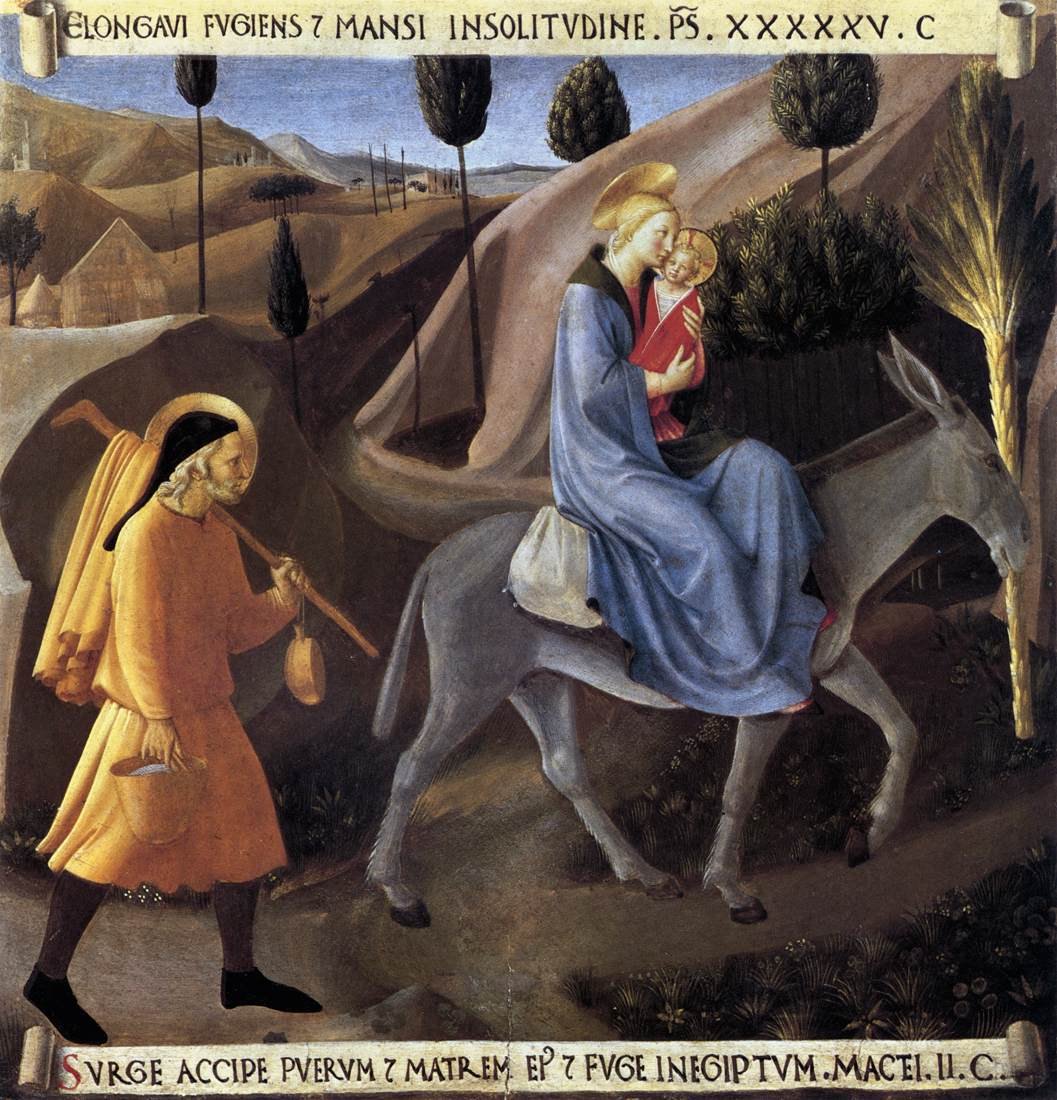
Mary does not belong only to pictures where everything seems still and safe. Matthew tells of a night when Joseph takes the child and his mother and leaves for Egypt. A real threat exists. A life needs protection. Before making that scene a reflection for ourselves, we should hear what the text actually says.
The flight into Egypt, without inventing a film
In Matthew 2:13–15, an angel warns Joseph in a dream that Herod seeks to kill the child. Joseph rises in the night and takes Jesus and Mary to Egypt. The following verses recount their return and arrival in Nazareth. This family is not organising a longed-for journey: they are taking shelter from a threat.
Matthew does not describe Mary's suitcase, report a conversation during the journey or explain how they supported themselves in Egypt. Such details may belong to artists' and storytellers' imagination, not to this Gospel passage. What we know is enough to stop us: the infant Jesus needed to be carried to safety, and his mother shared that departure.
A home holds more than belongings
Leaving a place does not mean losing only an address. You may miss a familiar sound, a neighbour's greeting, a street walked without thought. Departures have different stories. Fleeing war, moving for work, leaving a dangerous house or departing from a beloved city involve different conditions. We need not confuse them to recognise that the word home touches something deep.
Perhaps you experienced a move others considered a wonderful opportunity while you felt mostly sad. You can name that homesickness without feeling ungrateful. Loving the place you came from does not necessarily prevent affection for the place you have reached. Sometimes both attachments grow together, at a pace unrelated to the date on a contract.
Faith does not make danger impossible
The flight into Egypt interrupts the idea of a holy family automatically protected from every difficulty. The narrative shows protection passing through a decision and a departure. It cannot explain why some families find shelter and others do not. Using it to attribute someone's safety to greater faith, or suffering to insufficient faith, would be cruel.
We can recognise an invitation to act practically. When someone faces risk, their protection matters. Praying does not release us from taking the situation seriously and seeking appropriate help. Christian reflection can accompany responsibility without replacing those competent to intervene. We need not know an entire story before beginning to listen respectfully.
Welcome can begin with a question
Some people arrive in a neighbourhood and remain simply the newcomers for a long time. They may not know the services, opening hours or language for asking something simple. Welcome can begin with clearly explained information, a remembered name, willingness to repeat without making difficulty a burden. An encounter does not require pretending differences do not exist.
It asks us to avoid making someone's origin their entire identity. A person has habits, abilities, relationships and hopes. They are more than what they lack. If you want to help, ask what is useful and seek reliable local organisations. Offering help requires listening too: good intentions alone do not identify another person's needs.
Mary close to those beginning again
You can entrust a painful departure to Mary, a distant family, the wish to return or the difficulty of staying. This is prayer for closeness, not certainty that every journey will end as you hope. In Catholic faith Mary points us towards Christ; her motherhood accompanies us without asking us to erase the questions separation brings.
Perhaps you can pray for someone living nearby whose story you hardly know. You need not invent a tragedy to notice their existence. A discreetly opened door can offer friendship. At other times respect means not insisting. Welcome includes the other person's timing, right to privacy and freedom to choose how much to share.
A place where someone expects you
The keys can remain in the drawer. You need not throw them away to prove you have begun again. Let them hold a memory while you find new familiar gestures: a cup in its place, a learned route, someone who knows your name. Home is built through relationships too; often the first sign is no longer feeling a permanently temporary guest.
Matthew does not tell us the details of Mary's days in Egypt. He gives us a mother and child carried away from danger with Joseph. We can pause before this reality without embellishing it. And take one question into our day: who among the people I will meet is still looking for somewhere to feel safe and welcomed?