Mary, the most powerful woman in the world, is our mother
She comforts us when we are sad, embraces us in the darkness and shares our joy in the light. Mary’s strength comes from a love that reaches us everywhere. The Rosary gives us a prayer to accompany even our hardest struggles.
About twenty years ago, I had a dream.
I was at home, and a black cloud was chasing me. I ran towards the door, wanting to open it and leave. Then a gentle, kind voice said to me: “You must say the Hail Mary.”
I said the prayer. And the cloud disappeared.
Twenty years later, I still remember those words. Above all, I remember how they were spoken: gently. In that moment of fear, a kind voice pointed me towards the Hail Mary.
It is a personal memory I treasure. And today I want to begin there as I talk about her.
Because Mary has a place in even the most intimate parts of our lives, the ones we struggle to put into words. In our need for protection. In the tears we let fall only when we are alone. In the happiness we long to share straight away with someone who loves us.
Mary is our mother.
With her, we can stop trying to hold everything together. We can come tired and confused, with full hearts and no prepared speech. A mother’s love recognises us like this too.
Let yourself be held in her embrace
There are days when we need someone to care for us.
We have answered messages, done what needed doing and listened to others. Perhaps we have even smiled. Then evening comes, and we feel all the tiredness we had set aside.
It is in that weariness that Mary’s tenderness finds a place.
Mary comforts you when you are sad. She cradles you, caresses your face and embraces you in the darkness. In the life of faith, this motherly love can be intimate and deep: we can entrust ourselves to her, bring her our burdens and remain silent without feeling obliged to explain everything.
A mother understands the language of tears too.
Perhaps this is what moves us: before Mary, we can be children again. Even as adults, when everyone expects us to manage. Even when we are the ones caring for our families, offering reassurance and finding solutions.
We still need to be held close.
Her motherhood allows us to entrust this part of ourselves to her too, so fragile and so human.
Your happiness matters to her too
Then there are the good days.
Long-awaited news, someone found again, a love that grows. Relief after a worry. A small achievement that means little to others and so much to us.
Mary is there too. She shares our joy in the light.
It is beautiful to picture her sharing our happiness, as a mother does when she sees her child smile. We can bring her the good things without waiting for the next difficulty to seek her out.
At a wedding in Cana, Mary notices that the wine has run out. She pays attention to what might disturb the couple’s joy and tells Jesus. The Gospel shows her care in the midst of a celebration.
There is a wonderful tenderness in that gesture.
Our Lady, whom we turn to in the hardest moments, also cares about a family’s joy. She leads us towards Jesus with simple, decisive words: “Do whatever he tells you.”
The most powerful woman in the world
There is immense strength in her tenderness.
Mary welcomed Jesus with her yes. She carried him in her womb, raised him and followed him. At the foot of the cross, she remained beside him in the deepest sorrow.
The mother who comforts us knows the cost of love.
When we think of her power against evil, we can begin here: with her union with Jesus, her faithfulness and her motherhood, which continues to accompany her children. The Church recognises the strength of her intercession, drawn entirely from the salvation given by Christ.
Mary’s gentleness gives us the courage to entrust ourselves to her. Her strength sustains us in the struggle.
Because evil truly wounds. It enters relationships through cruelty, lies and the desire to humiliate. It feeds resentment, divides families and encourages us to treat people as though they had no worth.
Mary’s motherly love leads us in the opposite direction: towards Jesus, towards truth and towards the good we can still choose and do.
Even when beginning again is hard.
The Rosary: finding the strength to return to her
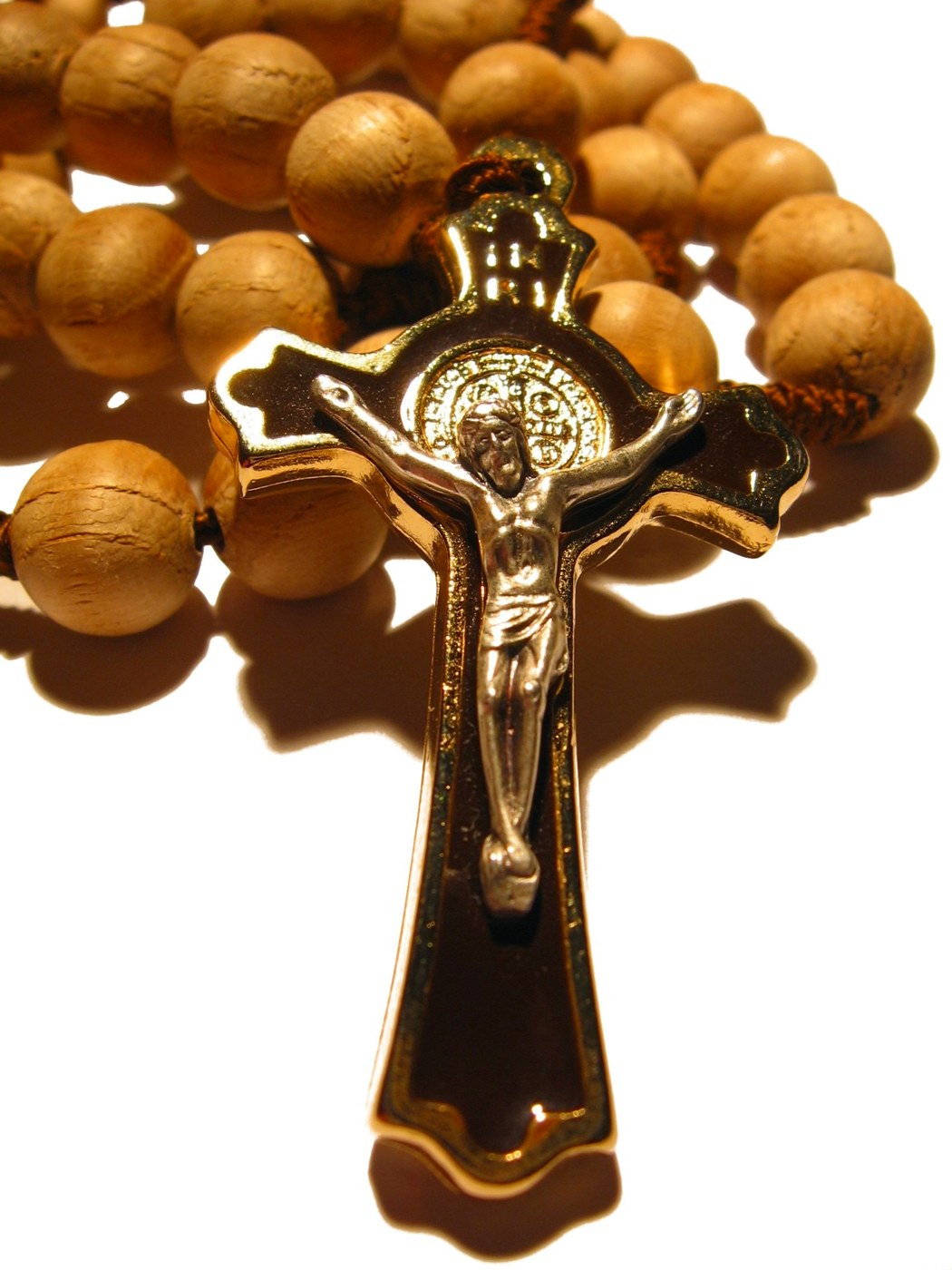
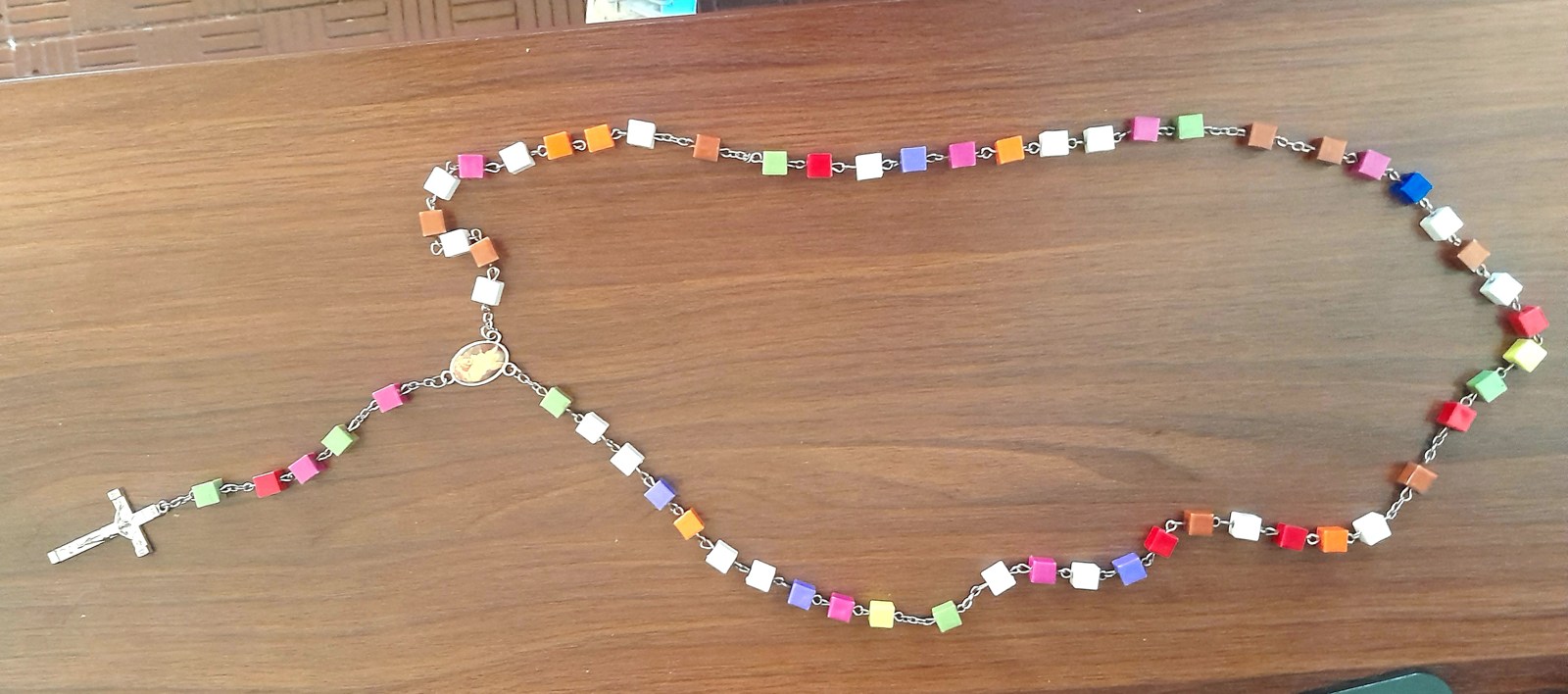
A set of rosary beads can fit in one hand.
It can rest in a coat pocket or beside the bed. It may have belonged to our family for years, carrying the memory of someone who prayed for us.
Those beads have accompanied generations: worried mothers, young people seeking a path, people who are ill and grateful families. Millions of names have been held within the same prayer.
Our names can find a place there too.
The Rosary leads us through Jesus’ life with Mary. Contemplating its mysteries, we pause at his birth, his mission, his Passion and the glory of his Resurrection. We bring before him what we are living through.
It is a powerful prayer against evil because it keeps us turned towards Christ and his victory.
When we say in our devotion that the Rosary destroys evil, we express this trust: evil can be resisted, sin can be forgiven and a heart can change. We can ask for the strength to turn away from hatred, resist temptation and protect those who are hurting.
Prayer also sustains us as we face what causes pain and seek the help we need.
Rosary beads in our hands can accompany one difficult step. And then the next.
A whole life within a Hail Mary
“Pray for us sinners, now and at the hour of our death.”
We may have spoken these words thousands of times. Yet when we pause to listen, we discover how deeply they concern us.
Now.
Right where we are. With today’s worries, today’s gratitude and the choices before us.
We entrust this moment to Mary, and then our whole life, to its final hour. We ask her to accompany us all along the way.
The repetition of the Hail Marys can become the rhythm of this trust. When we are distracted, we return. When we are tired, we continue simply. When we do not know what to say, we have a prayer in which to rest.
A child reaches for a mother’s hand again and again, even on a familiar road.
In the Rosary, we can rediscover that trust: allowing ourselves to be accompanied, one step at a time.
Mother of all mothers
A mother who entrusts her child to Our Lady gives her what is most precious to her.
That gesture holds love, hope and the fear of being unable to offer enough protection. It holds questions often hidden from everyone else.
Mary knows motherhood in joy and anguish. She searched for Jesus in Jerusalem. She followed him to Calvary.
That is why so many mothers feel understood by her.
Those expecting a baby. Those welcoming a child through adoption. Those facing enormous responsibilities alone. Those spending the night beside a sick child and still finding the strength to caress them in the morning.
And mothers who have lost a child: in that sorrow, Mary’s presence at the foot of the cross can feel especially close.
Being the mother of all mothers means this too: we can entrust to her a love too great to describe fully.
Her motherhood reaches us as daughters too. When our mother grows older and we begin to worry about her. When we wish we could make her life easier. When we miss her and long to hear her voice once more.
Our relationship with Mary also holds that need for love we continue to carry within us.
Queen of Peace, mother of a wounded humanity
Peace has the faces of children who can sleep safely.
Of families returning home. Of people who can meet without fear. Of mothers finally receiving the news they have been waiting for.
When the Church calls upon Mary as Queen of Peace, she entrusts these real lives to her.
John Paul II described the Rosary as a prayer for peace and for the family, inviting those who pray it to become peacemakers too.
Mary’s motherhood helps us open our hearts: to see others as people deserving protection and care, to take a distant family’s suffering seriously and to ask how we can help.
It reaches us in our own homes too, where peace can sometimes wear away amid harsh words and silence.
Prayer can be the beginning of a different gesture. Listening. Seeking a just path. Acknowledging a wound. Offering our presence.
The tenderness we receive becomes tenderness we give.
Our mother stays
I return to that dream of twenty years ago.
To the black cloud chasing me, to the door I was running towards. And to that gentle, kind voice: “You must say the Hail Mary.”
In the dream, I said the prayer and the cloud disappeared. The memory has stayed with me.
Today I place it beside what I feel most deeply about Mary: her strength and her gentleness can be held in the same embrace.
The most powerful and wonderful woman in the world is our mother. The one with whom we can share a joy and to whom we can entrust a fear. With whom we can cry without shame and find our smile again.
Every day, the Rosary offers us time to be with her and, with her, with Jesus.
We can take it in our hands, holding a person, a question or a thank you in our hearts. We can begin again even after a long time.
Like children returning to their mother, knowing they can tell her everything.