ZELIA MARTIN HAD A BUSINESS. LOUIS CHOSE TO HELP HER.
She ran a lace business. He left his business to work with her. A detail of the life of the parents of Saint Teresina who also speaks to our projects.
You have an idea that lights you up. You talk about it while you make the coffee, think about it on the way home, you saved notes that maybe you haven't let anyone read yet. It could become a job, a business, something to build. When you tell it to the person you love, you especially hope in one thing: that you understand how important it is to you.
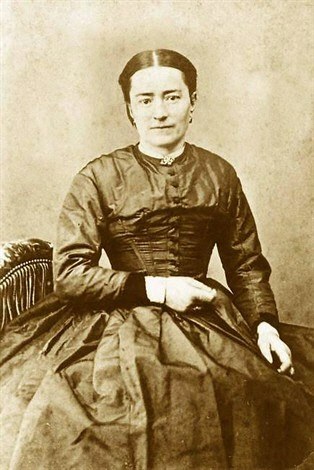
Then, looking among the stories of the saints, you meet a woman who was really directing an activity. Zelia Martin worked in lace. He had a small company. And her husband Luigi, in 1870, left his watch business to help her. The particular is reported in the biography of the Dicastery of the Causes of the Saints.
It is a beautiful image to keep next to our ideas on holiness. A woman with a competence and a job to carry on. A man who changes his organization to work with her. Inside a couple, a person's project can become something the other person takes care of.
First of all, he could do something right.
The biography published by the Holy See tells that Zelia specialized in the point of Alençon and started a production of lace, obtaining success. It was not a hobby in the margins of his life: with the income he contributed to the support of the family. Its history includes preparation, skills and professional responsibilities.
Zelia and Luigi are the parents of Saint Teresa of Jesus Child. They were canonized together on 18 October 2015. Their Christian life, according to official sources, included prayer, participation in the sacraments and family care. The work belonged to the same life, with its concrete commitments.
We do not know from these few data all the conversations with which they decided to collaborate. However, we can stop at the documented fact. A capacity of her was also recognized and supported by a choice of him. Sometimes a detail tells more than one portrait full of adjectives.
"I'll help you" can mean something change.
You may well know the difference between loving encouragement and support that finds its place in the week. When you prepare an important exam, project or application, someone may ask you what you need. A free afternoon, a discussion on an idea, a responsibility to share for a period.
That requires talking. The other person may not imagine what the most tiring part is. You may want to listen and receive advice, need time, and hear that you should organize yourself better. Giving a name to a need can be the first way to make it agreeable.
Martin's history doesn't require a spouse to quit work. Each family has its own constraints, economic possibilities and desires. It allows us to ask: what concrete choice would it show that the project of the other interests us? And what can we really support, without impossible promises?
Your passion is entitled to a serious conversation
There are still fragile ideas that can be hurt by a joke. If you're guarding them, maybe you're afraid of telling them enough to feel naive. You can look for a first confrontation with those who know how to listen and then help you look at the difficulties. Taking a dream seriously includes the courage to ask specific questions.
How long would that take? What skills are lacking? What risk can you afford? A project takes on consistency even when it becomes less perfect than it appeared in the clipboard. It can change shape, slow down, meet a limit. None of these passages determine how much you're worth on your own.
A couple's confrontation can hold together enthusiasm and prudence. To say that spending is not sustainable today is different from mocking the idea. Asking for a time to understand is different from assuming that one person's passion always comes after everyone else's commitments.
Faith also enters into daily agreements
For those who live Christian marriage, mutual care goes through very normal decisions. How do we use time? What labors are we always leaving to the same person? Can we rejoice at the other's abilities even when they ask us to change a habit?
We can bring these questions into prayer without expecting a professional plan already ready. Ask God for freedom from confrontation, attention to whom we love and honesty in assessing possibilities. Then come back and talk about it, maybe in front of next week's calendar.
Even those who do not live in pairs can recognize themselves in this story. A professional vocation often grows thanks to a network: a friend who reads a page, a family member who encourages, a competent person who signals an error with respect. Knowing how to get support is part of building something.
What if the project this time is yours?
Perhaps today you are the person entrusted with an idea. You can try to postpone judgment for a moment. Asking how she was born, what makes her important, what first step would be possible. Listen enough to understand before you decide if it convinces you.
Zelia and Luigi didn't know our computers or our online meetings. But that particular of their work reaches us very well: loving someone can understand making room for what he knows how to create. The next time the person next to you will say "I would have thought something" it might be a good time to stop and listen.