Meet the Sun’s “great-grandmothers”: stars up to 12.5 billion years old!
A familiar chemical composition and a much older age: an Italian-led study opens a window onto the Milky Way’s early history.
Jump to what you need
- The family resemblance is chemical The study published in Astronomy & Astrophysics was led by Riano Giribaldi of Italy’s National Institute for Astrophysics, with Laura Magrini, Marco Palla and Carlos Viscasillas Vázquez. It examines ancient stars whose chemistry and movements are associated with the galaxy’s thin disc, the component that also contains our Sun.
- Starlight preserves a history Stars form from gas, and that gas leaves a chemical imprint that can help trace the history of their birth environment. Iron, silicon and magnesium are among the elements involved. Astronomers describe elements heavier than hydrogen and helium in a particular way: this is about atomic composition, rather than an object’s weight in your hand.
- Two ways of reading a star The team combined spectroscopic data from the Galah DR4 survey with distance measurements from the European Space Agency’s Gaia mission. Spectroscopy helps reveal properties encoded in starlight. Distance information helps place the objects and interpret their characteristics.
- How do you date a star without a birthday? Stars have no label showing when they were born. Astronomers reconstruct their ages from observations and models. For very old stars, relatively small changes in some parameters can make a substantial difference to the result. Their ages therefore remain scientific estimates with uncertainties.
- A less tidy galactic family album The Milky Way has a thick disc containing many old stellar populations and a thin disc that also contains younger stars such as the Sun. In the traditional picture, formation of the thick disc began first. The stars in this study add evidence that a population with thin-disc characteristics may have very ancient origins too.
- Ingredients for planets are an invitation to investigate If some elements useful for rocky planets were already available, we can ask how early worlds of that kind might have formed. It is a captivating implication. Having ingredients, however, does not show that a finished planet exists around a particular star.
- Tonight’s sky has another layer You do not have to identify the research stars with your own eyes to enjoy this story. Find a patch of sky and pause. What looks like one distant backdrop contains different ages, journeys and compositions. Learning to distinguish them makes the wonder deeper.
- A minute inside the Milky Way
The Sun is about 4.6 billion years old. That makes almost any wait seem short, even waiting for the message that never arrives. Yet our galaxy contains stars with a similar chemical composition and estimated ages reaching 12.5 billion years. Almost three times as old. We might affectionately call them the Sun’s “great-grandmothers”.
That is a way to picture their age, rather than a claim that they are its direct ancestors. The surprise is that some of the ingredients associated with our star were already present in stars born long before it. The Milky Way’s past becomes more intriguing, and an ordinary evening sky seems to hold even more stories.
The family resemblance is chemical The study published in Astronomy & Astrophysics was led by Riano Giribaldi of Italy’s National Institute for Astrophysics, with Laura Magrini, Marco Palla and Carlos Viscasillas Vázquez. It examines ancient stars whose chemistry and movements are associated with the galaxy’s thin disc, the component that also contains our Sun.
“Like the Sun” does not mean perfect copies with identical planets. The connection here is chemical. Finding familiar ingredients in a much older recipe tells us something about the material available when those stars formed.
Starlight preserves a history Stars form from gas, and that gas leaves a chemical imprint that can help trace the history of their birth environment. Iron, silicon and magnesium are among the elements involved. Astronomers describe elements heavier than hydrogen and helium in a particular way: this is about atomic composition, rather than an object’s weight in your hand.
Generations of stars have helped enrich interstellar material. Finding Sun-like chemistry in very old stars suggests that enrichment was already well advanced in some parts of the Milky Way long before the Solar System formed. Some familiar ingredients were available surprisingly early.
Two ways of reading a star The team combined spectroscopic data from the Galah DR4 survey with distance measurements from the European Space Agency’s Gaia mission. Spectroscopy helps reveal properties encoded in starlight. Distance information helps place the objects and interpret their characteristics.
A beautiful photograph alone cannot do that job. The research brings different measurements together. It also used an infrared-flux method to determine stellar temperatures accurately, an important part of estimating ages. Behind that striking figure of 12.5 billion years sits a sequence of careful comparisons.
How do you date a star without a birthday? Stars have no label showing when they were born. Astronomers reconstruct their ages from observations and models. For very old stars, relatively small changes in some parameters can make a substantial difference to the result. Their ages therefore remain scientific estimates with uncertainties.
The researchers compared samples and analytical approaches to check their estimates. Understanding that process makes the discovery more interesting: even an astonishing number rests on patient work before it becomes a headline.
A less tidy galactic family album The Milky Way has a thick disc containing many old stellar populations and a thin disc that also contains younger stars such as the Sun. In the traditional picture, formation of the thick disc began first. The stars in this study add evidence that a population with thin-disc characteristics may have very ancient origins too.
That invites further work on the timing of its formation. Think of finding a family photograph dated earlier than you expected. The rest of the album still matters; the new image helps you ask better questions about how its story fits together.
Ingredients for planets are an invitation to investigate If some elements useful for rocky planets were already available, we can ask how early worlds of that kind might have formed. It is a captivating implication. Having ingredients, however, does not show that a finished planet exists around a particular star.
The study does not establish that these stars host habitable planets or that life has been discovered. Its result concerns stars and the galaxy’s chemical history. That is a remarkable finding in itself: the window for investigating the early conditions for rocky worlds becomes broader.
Tonight’s sky has another layer You do not have to identify the research stars with your own eyes to enjoy this story. Find a patch of sky and pause. What looks like one distant backdrop contains different ages, journeys and compositions. Learning to distinguish them makes the wonder deeper.
Psalm 19 begins with the heavens proclaiming God’s glory, words that can accompany awe while science continues asking its questions. You can carry that pause into 365 days with God. Above tomorrow’s plans, the Milky Way still holds traces of a past almost beyond our imagination.
A minute inside the Milky Way
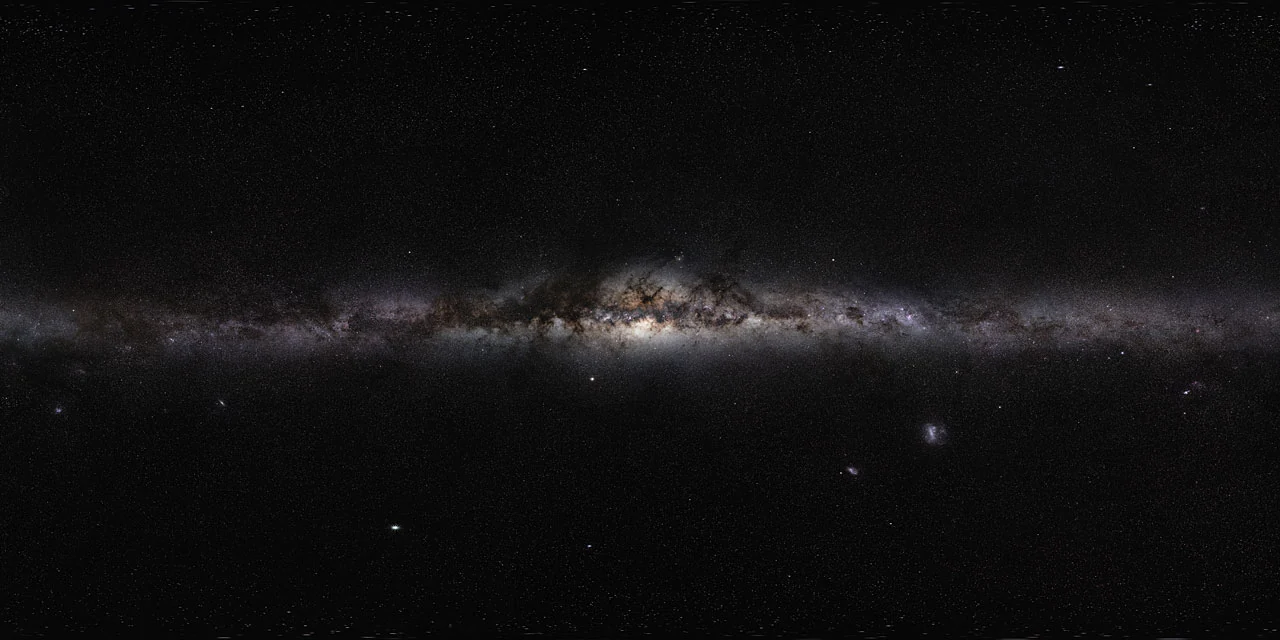
Voyage in the Milky Way (2009): a journey through our galaxy’s panorama. Watch the video. ESO/S. Brunier. Music: John Dyson (from the album “Moonwind”).
SOURCES AND FURTHER READING
Did this story touch your heart?
Psst… you’ll like this too!
Could animals be 200 million years older than we thought?
Read the story ↗Share this story