The leaves are telling us about the air we breathe!
In Florence, hackberry leaves carry traces of traffic, both on their surfaces and in the way they work. An Italian study invites us to look at city trees with fresh eyes.
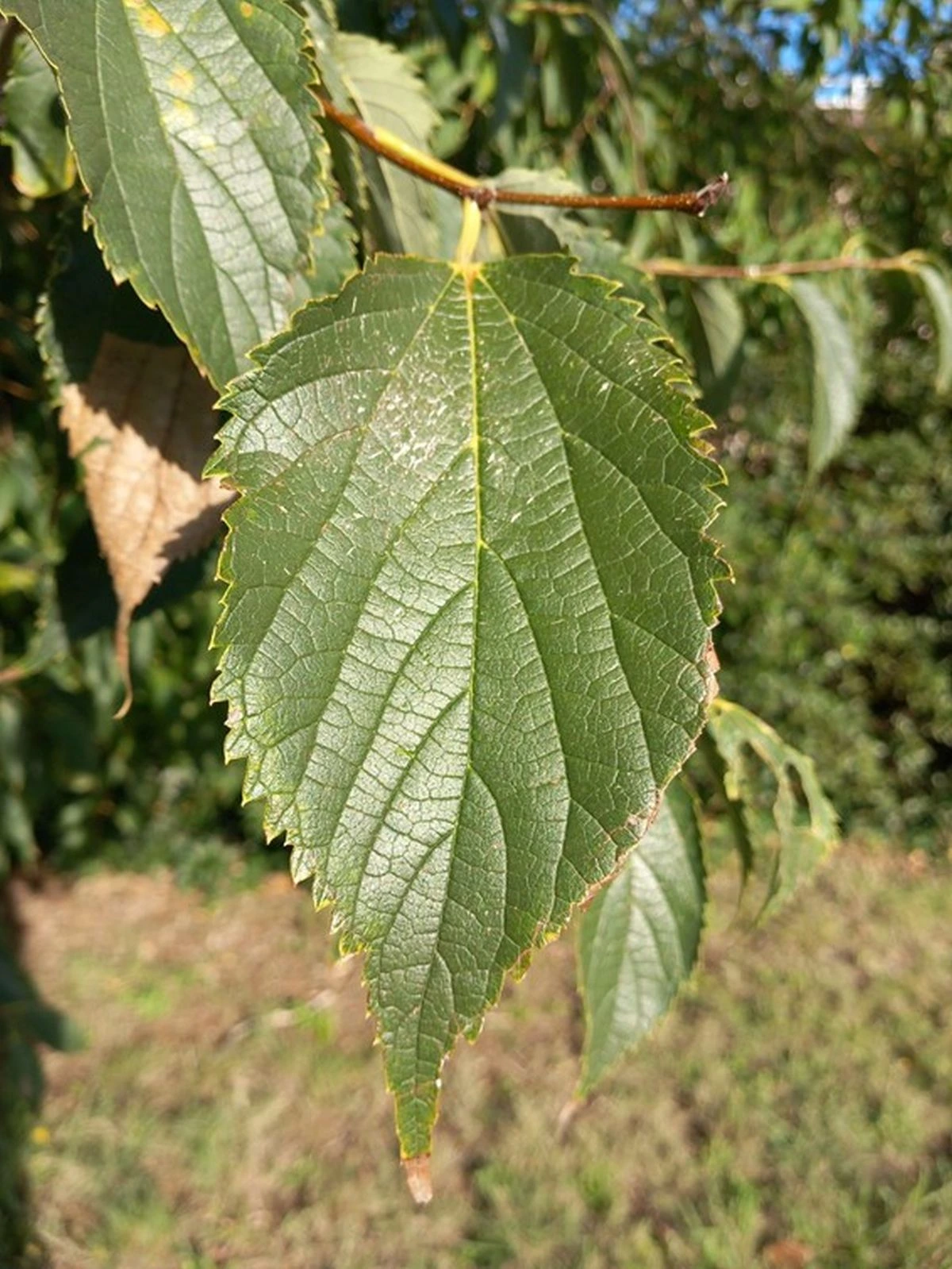
Have you ever paused beneath a tree while the city carries on rushing past? The traffic lights change, a bus pulls away, someone crosses the road with a phone pressed to their ear. Above that everyday scene is a canopy that seems to offer nothing more than shade. Yet it also holds information about its surroundings. In Florence, hackberry leaves have become the focus of research into the relationship between traffic, airborne particles and the lives of urban trees.
The findings, presented on 20 November 2026, add another dimension to the idea of urban greenery. Plants help intercept pollutants and show measurable responses to the environments in which they grow. Their surfaces and their inner workings provide two different views of the same street. For anyone walking along a familiar avenue, this is an invitation to pay closer attention: the city's living greenery deserves a second look even when nothing seems to be happening.
One species, eight corners of Florence
Our protagonist has a scientific name, Celtis australis, and a more familiar one: Mediterranean hackberry. It is a deciduous tree with a broad, rounded crown and green leaves with sharply toothed edges. In autumn, the foliage turns yellow before falling. There is no need to imagine a rare inhabitant of some distant forest. This story begins in the vegetation that accompanies urban life, among everyday routes, residential neighbourhoods and green spaces.
To compare different conditions, eight sites were selected across Florence, ranging from busy roads to historic parks and suburban areas. Three mature trees were sampled at each site. The comparison therefore involves the same species growing in different settings. That approach helps reveal variations across the city, while recognising that a heavily used road and a quieter green space expose their trees to different surroundings. Looking at the same species makes the contrast more meaningful.
A tiny imprint of the city
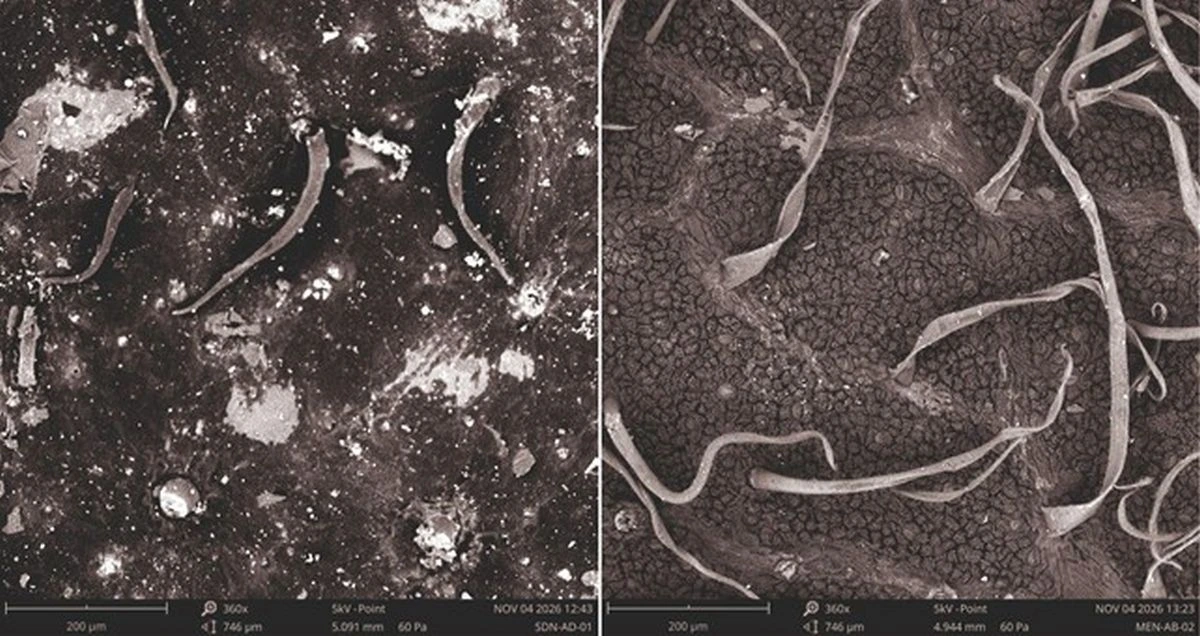
Airborne particulate matter is a mixture of particles suspended in the air. Some of those particles reach leaves and settle on them. Looking closely at the deposits can reveal what has accumulated and how that changes from place to place. In this study, microscopic analyses identified differences in both the amount and composition of material on the leaves. Sites with heavier traffic showed an enrichment of iron-rich particles, particularly in the finest fractions.
The microscope photographs make the story especially vivid: something easily missed with the naked eye becomes a surface full of detail. An apparently ordinary leaf can therefore be a valuable sample. Its colour, viewed from a park bench, is only the beginning. Reconstructing the evidence requires instruments, a defined sampling method and comparisons between locations. The interest lies in connecting those tiny details with the wider setting in which each tree is growing.
Leaves also tell us how they work
A plant is a living organism, and its leaves are much more than surfaces collecting dust. They carry out essential processes, including photosynthesis and exchanges with their surroundings. The analyses also examined chlorophyll fluorescence, the shape of stomata and the isotopic composition of carbon. These provide different ways of looking beyond the material deposited on the outside and considering the functional responses taking place within the leaf itself.
Stomata are tiny openings involved in gas exchange. At high-traffic sites, the research found differences in their morphology, together with reduced photochemical efficiency and changes in carbon indicators. These findings associate environmental exposure with changes in leaf functioning. The city leaves its mark at several levels. A green canopy remains a welcome sight, but its colour alone cannot tell the full story of the conditions in which a tree lives and grows.
Magnetism comes into the garden
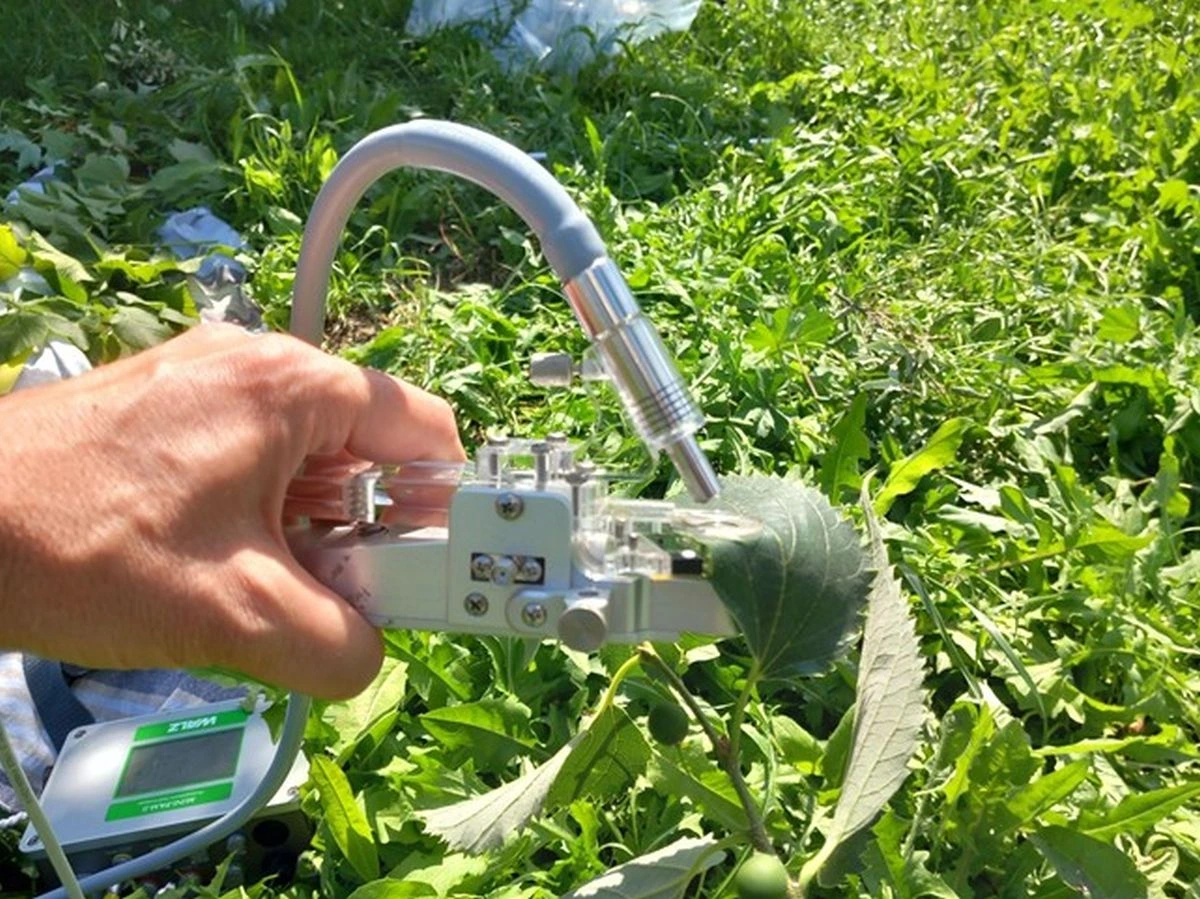
Another stage sounds more like a physics experiment: measuring the magnetic susceptibility of the leaves. Put simply, this examines how a sample responds to an applied magnetic field. The presence of iron-rich particles makes this measurement useful when comparing traffic-related deposits across the sampled locations. Something that seems remote from the ordinary experience of a tree can help researchers read the environment around it in a different way.
The strength of the approach is the combination of methods. Microscopy, magnetic measurements, isotopes and physiological indicators answer different questions. Reading them together produces a fuller picture. It is rather like looking out through several windows into the same space: each view adds information. Here, that space is a leaf, and the wider significance concerns how we study the green infrastructure woven through our cities, from individual trees to whole avenues and parks.
How to check today's air quality
For air-quality data in Tuscany, a useful practical starting point is the ARPAT daily bulletin. The monitoring network produces measurements of pollutants that are checked and published through dedicated services. Leaf biomonitoring adds information about exposure and plant responses. Monitoring-station data remain the appropriate reference for the available pollutant concentrations in different areas. These approaches contribute different pieces of information, helping us ask better questions about the same environment.
On your next walk, begin with a simpler question: which trees share my neighbourhood? Looking at their crowns, recognising their leaves and noticing the space around them is already a small exercise in attention. For another journey through gardens and urban wonder, explore Villa Borghese, where the sky puts down roots. Next time you are waiting for the lights to turn green, look up. Another living thing is experiencing that same city, right above your head.
SOURCES AND FURTHER READING
Did this story touch your heart?
Psst… you’ll like this too!
Meet the Sun’s “great-grandmothers”: stars up to 12.5 billion years old!
Read the story ↗Share this story