Two artists and a flower you can hear at Villa Borghese
From 17 November 2026, Liu Wanming and Andrea Lelario exhibit at the Pietro Canonica Museum and the Uccelliera at Galleria Borghese. The two venues have different closing dates.
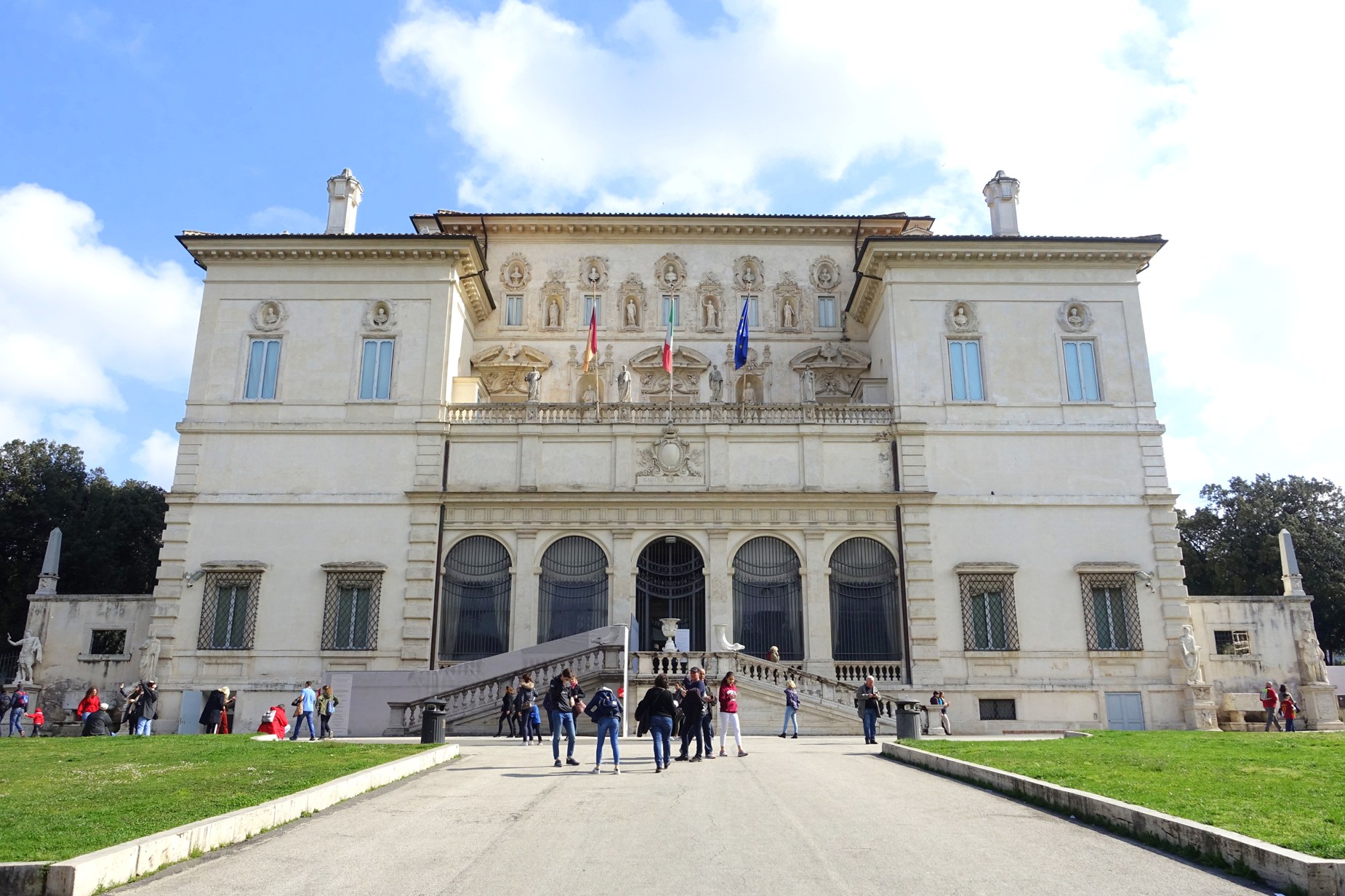
Rome’s exhibition «Dove il cielo mette radici. Risonanze artistiche, un ascolto comune» opens on 17 November 2026. The Uccelliera at Galleria Borghese hosts its section until Sunday 29 November. The Pietro Canonica Museum section continues until 31 January 2027. To see both, plan a visit by 29 November and check each venue’s admission arrangements separately.
Both venues open Tuesday to Sunday from 10 am to 4 pm. The entrance to the Uccelliera is outside Galleria Borghese, on the side facing Viale dei Daini, with last admission at 3.15 pm. A Galleria Borghese ticket gives you free access to the Uccelliera exhibition. If you only want to see the Uccelliera, check the arrangements with the gallery box office before setting out. The Pietro Canonica Museum has its own admission arrangements, listed below.
Start with the paper
What happens when two artists make marks on the same sheet? Start with what each does alone. Liu Wanming paints animals, flowers and details of the natural world with a few strokes of ink. In some works he uses his fingers. Follow the edge of a figure and watch where the stroke thins: that is where the gesture can become easiest to read.
Andrea Lelario also works with copper plates. In his «Taccuini» series, the sheet may look almost blank at first. Closer up, tiny marks emerge alongside figures and landscapes where shadow directs the eye. Looking at one piece from two distances is a good way to see how much the image changes.
A mark can spread or be cut into a plate
Ink and copper ask for very different movements from the hand. Ink gives you clues about the speed of a gesture as it sits on the surface: a line that tapers, a stroke where more colour has gathered, a stretch that leaves the support visible. A copper engraving begins with a plate. Printing makes the work done on the plate legible on paper. Those differences give you something to look for when you return to a detail you barely noticed on the way into a room.
When Liu Wanming paints an animal, a branch or a flower, the open areas help establish the distance between things. Follow a figure to where the density of the stroke changes and you can sense movement even in a nearly empty space. In Lelario’s works your eye often travels in the other direction, beginning with a dense patch and gradually picking out a figure, a tree or an outline. With the «Taccuini», simply getting closer to the paper lets you discover how much was there all along.
Two artists on the same surface
In their collaborative pieces both artists face a practical question: how much room to leave the other. In a pastoral scene painted by Liu, Lelario introduces a bare tree. Follow the outline of its branches and return to the landscape around them. That one intervention shifts where you pause. Another work includes a Labyrinth of Solomon and a reference to Dürer’s rhinoceros. The exchange carries over to six blue-and-white porcelain vases. As you move around each vase, part of the picture can disappear. The object itself determines what you can see from each side.
Two pieces to look at together
The bare tree in the pastoral scene is a good place to see where the two practices meet. Take in the scene as a whole on your first look. Then isolate the space occupied by the tree, notice the direction of the branches and return to the figures around it. You can ask yourself whether the tree first registered as part of the scenery and how it reads once you recognise the second artist’s gesture.
In the other collaborative composition, the Labyrinth of Solomon and the reference to Dürer’s rhinoceros lead your eye in different ways. A maze sets you looking for a route through it. An animal can make you slow down to see how its form is put together. In both pieces, the place where an artist chooses to enter the existing picture matters. A shape joins what is there and can move the centre of the composition.
The six blue-and-white porcelain vases add a curved surface. On a sheet of paper you can find a detail again at a glance. On a vase the outline hides part of the composition and gives it back when you move. Choose one vessel, take a step to the side and look for a mark that continues beyond the profile you saw at first. That small movement is part of how you read the collaborative work.
A jasmine flower in two versions
Both venues play two records dedicated to «Mo Li Hua», the Chinese jasmine flower song. One version draws on the traditional song. The other uses the transcription that informed Puccini’s «Turandot». The record graphics are part of the project, too. The discs recall the record sent into space aboard the Voyager probes in 1977. After listening to both versions, see which musical phrase stays with you as you continue looking around.
The show brings together kinds of work that hurry makes easy to miss. An engraving asks for a few moments up close. A vase gets you to move your feet. A record needs at least the length of a musical phrase. Even with time for just one venue, you can choose one small work, one that unfolds in space and a minute to listen.
How to see both sections
If your visit falls by 29 November, you can begin at the Uccelliera, whose exhibition finishes sooner, and use the walk through the park as a break between the two venues. Keep both visitor pages handy when planning the day. The regular exhibition hours have a 3.15 pm last admission. Some areas of the Canonica Museum have earlier admission cutoffs, and 24 and 31 December have shorter opening hours. From December onwards, you can focus on the Canonica section, which runs through 31 January.
If you are visiting together, each choose one detail to point out to the other person. It might be a branch, the point where blue wraps around the side of a vase, or a phrase from «Mo Li Hua». Finding something like it after you move from one venue to the other gives you a way to carry the visit with you through the park.
There is also a catalogue published by De Luca Editori d’Arte. It is a way back to the artists once the rooms have closed, especially if one work sends you looking for more. Note the name of that piece when you see it. A single title is often easier to find again than a quick description typed into your phone after the visit. A second look at a reproduction can even make you remember where you were standing when a detail first caught your eye.
Planning your visit
The Pietro Canonica Museum on Viale Pietro Canonica opens Tuesday to Sunday, 10 am to 4 pm, with last entry at 3.15 pm. It opens 10 am to 2 pm on 24 and 31 December and is closed on Christmas Day. Standard admission for non-residents is €7.50, with a €6 concession rate. Residents of Rome and its metropolitan area, MIC cardholders and other eligible visitors enter free. Check Galleria Borghese admission separately. Marco Tonelli and Yu Yang curated the exhibition.
SOURCES AND FURTHER READING
Did this story touch your heart?
Psst… you’ll like this too!
Salerno Luci d’Artista 2026: dates and a walk from fairy tales to the sea
Read the story ↗Share this story

