Even plants grow better with company!
A study of climbing peas reveals faster movements, stronger growth and chemical signals linked to having a neighbour. The surprise begins in a very small pot.
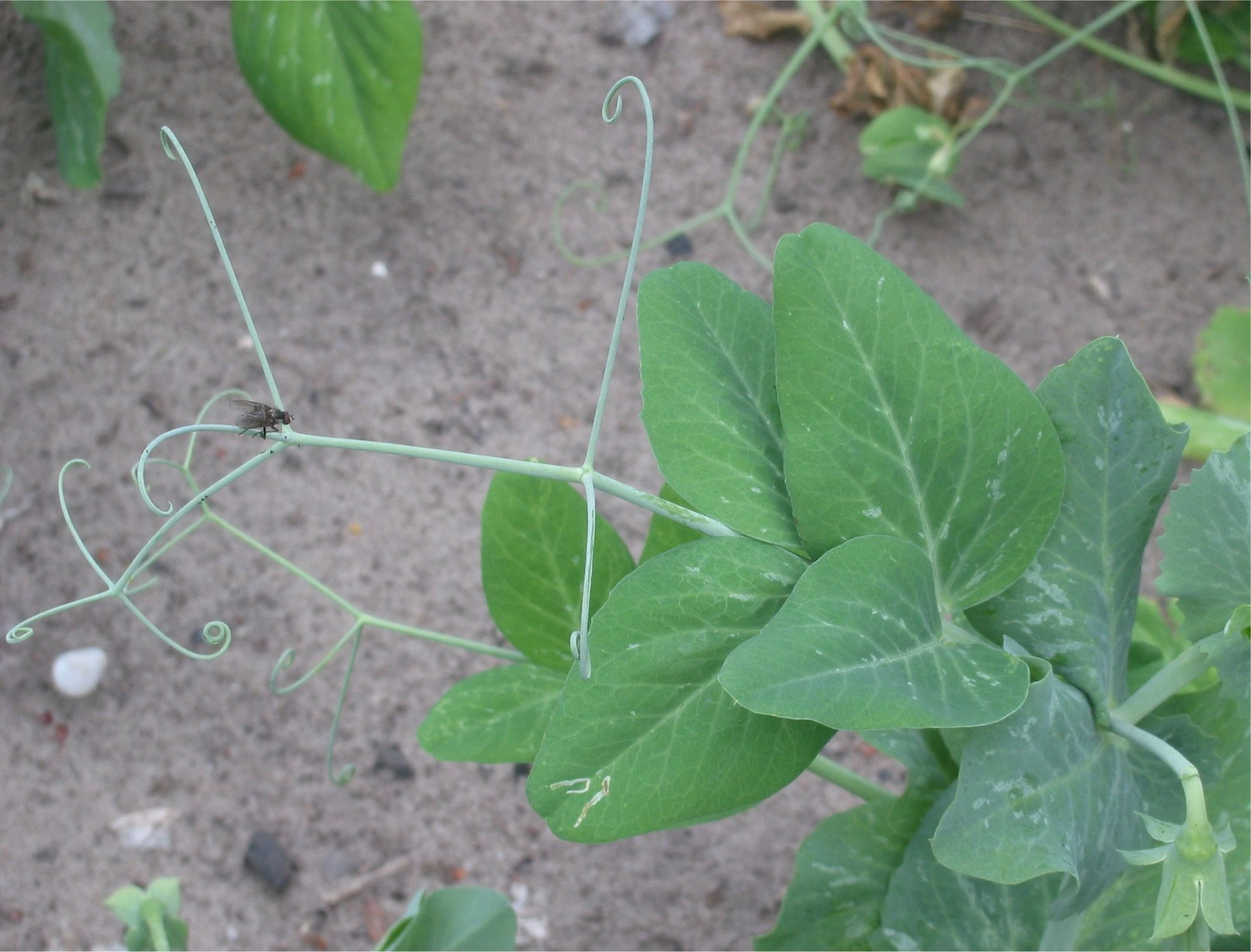
Two young plants, a support to reach and enough time to notice what usually escapes us. One seems simply to be stretching upwards. So does the other. But slow down, follow their paths and compare them with a plant growing alone: a different picture emerges. Among the climbing peas studied at the University of Padua, having a neighbour changed how plants moved, explored the space around them and grew during the experiment.
It is the kind of finding that sends you back to your windowsill with renewed curiosity. Published in Current Biology on 11 November 2026 and presented by the university the following day, the research enters a living world that moves at a different pace from ours. The results concern pea plants observed under experimental conditions: a small starting point, and a wonderful reminder of how much remains to be understood about plant life.
Plants move without taking a step
A climbing plant needs to reach something it can hold on to. Its growing shoots explore the surrounding space, and a tendril can come into contact with a support. For people used to recognising movement in a running animal or a flying bird, this part of the scene is easy to miss. The plant remains rooted, yet its growth traces paths that become visible when they are recorded over time.
The interesting comparison here is between two situations: growing alone and growing beside another individual. There is no need to turn a pair of pots into a romantic comedy. A neighbour is a feature of the environment, and a plant's behaviour can vary in relation to that presence. Measuring the difference takes a familiar question into a controlled experiment, with instruments capable of following changes too subtle to spot during a passing glance.
Two tools for a slower world
The research combined three-dimensional reconstructions of movement with measurements of volatile substances released into the air. Recordings allowed the team to follow where shoots moved and how quickly they explored their surroundings. A mass spectrometer recorded chemical signals during the same observation period. Movement and air could then be considered as parts of one unfolding sequence, with their timing compared rather than examined as entirely separate features.
That matters because a photograph would capture only a moment. It might reveal a position or a difference in height, while missing the route taken to get there. Following an experiment through time reveals the dynamics: when movement speeds up, how much space is explored and how events are distributed. The plant's story is about the journey towards a support as well as the point eventually reached, and that journey deserves to be watched.
A neighbour makes a difference
Under the conditions tested, paired plants moved faster and explored a larger area than plants growing alone. Growth also increased, while the upper leaves contained more chlorophyll, the pigment involved in capturing light for photosynthesis. Having another plant nearby therefore accompanied several differences, affecting both the paths traced by the shoots and their development. These are measurable features of the plants' growth, rather than impressions based on how lively a pot happens to look.
The timing and coordination of movements also differed. That combination makes the research especially interesting: several observations describe changes in exploration in the presence of a neighbour. It encourages us to consider the setting in which a plant grows, rather than treating it as an object that behaves identically regardless of its surroundings. Even a small experimental container can contain a much richer set of relationships than a quick look would suggest.
Another part of the story is in the air
The most intriguing detail concerns seven volatile chemical signals. When another plant was present, they briefly increased before movement reached its peak speed. This temporal relationship did not appear in isolated plants. It is a specific association between what was recorded in the air and what happened along the growth trajectories. Timing matters here, as well as the signals being measured, because the observations belong to the same developing sequence.
The distinction is straightforward: finding two events linked in time does not establish that one caused the other. Experiments designed to test causation will help clarify the role of the compounds. The finding already offers something valuable: a relationship worth investigating. There is no need to translate it into human words, intentions or emotions. Plants can surprise us when their lives are described on their own terms, with all the detail that makes them different.
Should every houseplant have a partner?
This experiment does not provide a universal recipe for plants at home. Species, light, water, space and growing conditions all matter. The comparison concerned climbing peas in a laboratory; an orchid in the sitting room and a cactus on a balcony have different requirements. The useful response is to learn about the plant we are growing and meet its needs, rather than treating a result from one species as a rule for every pot.
If you have a poinsettia at home this season, start with our guide to where to put it and how to water it. For another everyday green idea, explore home composting. Watching a new leaf unfold or a tendril search for a support requires time and attention. Perhaps that is one of the loveliest gifts of research: it restores our curiosity about something we had been far too quick to call motionless.
Inside the laboratory watching plants
The video below introduces the ROOMors project and its work on plant movement. Made in 2024, it offers a look inside the laboratory and its research questions, separately from the findings published in November 2026. Watch how the perspective changes when the timescale of plant life becomes visible.
Eleonora Passarella / Scientificult · 2024 ↗
SOURCES AND FURTHER READING
Did this story touch your heart?
Psst… you’ll like this too!
A DINOSAUR BONE HELD ON TO SOMETHING THAT LOOKS LIKE BLOOD
Read the story ↗Share this story