SIMONA ATZORI: CAN YOU PRAY THROUGH DANCE TOO?
When words are not enough, can the body express a thank you? The public testimonies of Simona Atzori open a question on faith and art.
A song you know starts. As you set up a room, the rhythm reaches you even before you decide to listen to it: move a foot, accompany a note, for a few moments you notice the body in a different way. You don't have to get on a stage to know that a gesture can tell something.
Can he do so before God? The application goes through the public testimonies of Simona Atzori, dancer, painter and author. In his story art meets faith, and the body becomes part of a personal way of expressing gratitude.
Dance, painting and faith meet in Simona Atzori’s story. Her public testimonies and the writing on her own website offer a way into that connection.
Faith told through an artistic language
In the interview with the Journal of Dance of 1° March 2017, Atzori speaks of the support received by faith and body as a means of expressing gratitude through dance, painting and writing. He also tells of the expressive freedom he finds in the movement and the inner search that accompanies his work.
These are words entrusted to a precise context, which deserves attribution. We can listen to them without making them an automatically valid phrase for every believer. A personal witness shows us how someone lives an experience; it does not ask us to reproduce it in order to prove that we have the same faith.
Maybe you don't dance. Perhaps you love singing, drawing, writing, or listening to music as you walk. However, you can recognize that question: at what moments do I feel present at what I do? What language helps me to express what I can't say yet?
The remembrance of the Jubilee on its website
In the text Jubilee 2000, published on its website on 5 May 2025, Atzori returns to an experience of dance and prayer. It tells the tension before the performance, a moment of recollection and gratitude lived through the movement. The account presents the spiritual significance that she attributes to those memories.
In another personal text, Meeting with the Pope, published on the same date, evokes the dance on the Magnificat and the painting prepared for Francis. He describes the offering of his art as an experience of prayer. Here, too, we listen to his life, without adding dialogues, emotions or details that he has not told.
These pages hold together artistic preparation and interiority. They allow us to look beyond the instant of the performance: a visible gesture can lead a path of work, waiting, research. Not everything that matters in a person is seen as you observe it.
Looking at an artist beyond the first impression
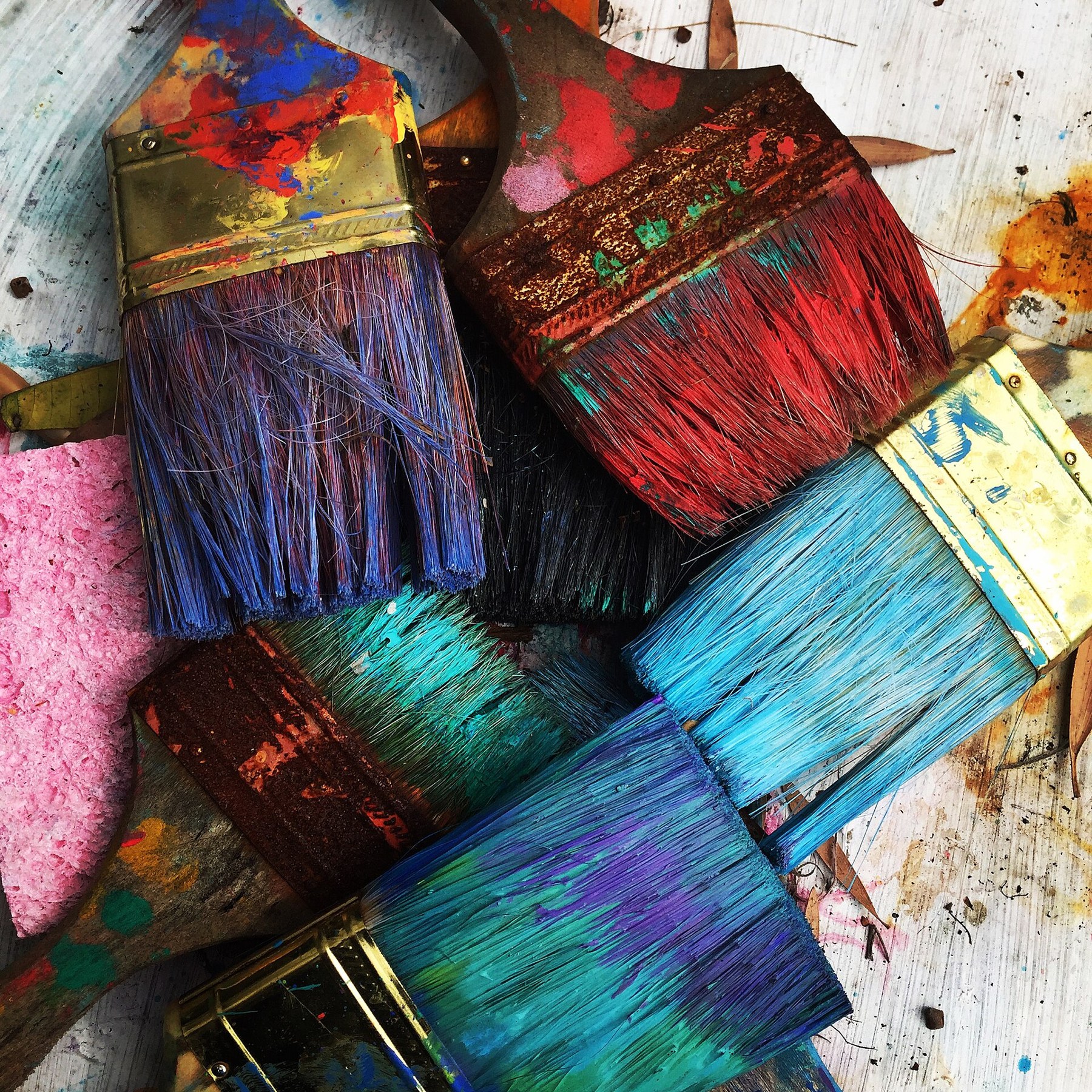
Atzori, born without arms, presents on his site an activity that includes dance, painting, books and meetings. In the page dedicated to painting he also retraces his training in visual arts. Knowing his work therefore requires giving space to works, languages and artistic choices.
Disability is part of his experience. He does not authorize those who tell to make of his life a comparison with that of others: if she succeeds, then you have no excuse. Such a phrase takes away space from both the person being observed and those facing a different strain.
We can be curious. Watching how a movement meets music, what happens in a painting, what questions a page leaves open. Accepting a story also means allowing it to have more content than the message we would like to get right away from it.
What if your body's hard to live in today?
There are days when you don't feel spontaneous gratitude for the body. He may be tired, sore, limited in something he wants to do. It may seem exposed to your eyes or changed faster than you can accept.
The testimony of an artist does not put an end to these feelings. You can be impressed by what he tells you and, at the same time, recognize that your experience is different. You must not bring joy to deserve listening, nor seek immediately the positive side of a difficulty.
In prayer you can take this too. Finding a possible position, entrusting to God a struggle, asking for companionship. Sometimes the expression that corresponds to the day will be a gesture; at other times a word, silence, willingness to let you help.
A Personal Expression of Faith
When Atzori tells dance as a prayer, he speaks of his relationship with God through art. He is not providing a general liturgical rule. Distinctive of these plans allows you to listen to your experience without assigning to it statements other than those you have made.
You can go to the sources, read his words and observe the work he presents. Then let your question arise, without expecting an immediate answer. What part of your life do you keep out of prayer because you don't think I have the right language?
Perhaps you will find a song to listen carefully, a page to fill, a small gesture to offer. Perhaps a new curiosity towards an artist. This is also a good meeting: someone tells their way and you find the space to look more carefully at yours.
SOURCES AND FURTHER READING
- Giornale della Danza, La mia preghiera è la danza: intervista a Simona Atzori, 1° march 2017
- Simona Atzori, Giubileo 2000, racconto personale pubblicato il 5 may 2025
- Simona Atzori, Incontro con il papa, racconto personale pubblicato il 5 may 2025
- Simona Atzori, sito ufficiale e presentazione dell’attività artistica
- Simona Atzori, Pittura: percorso e formazione