One child in eight lives in poverty. Here, in Italy
UNICEF Italy and Istat explore growing up in Italy: fewer young people leaving education early, more sport and inequalities that continue to shape children’s lives.
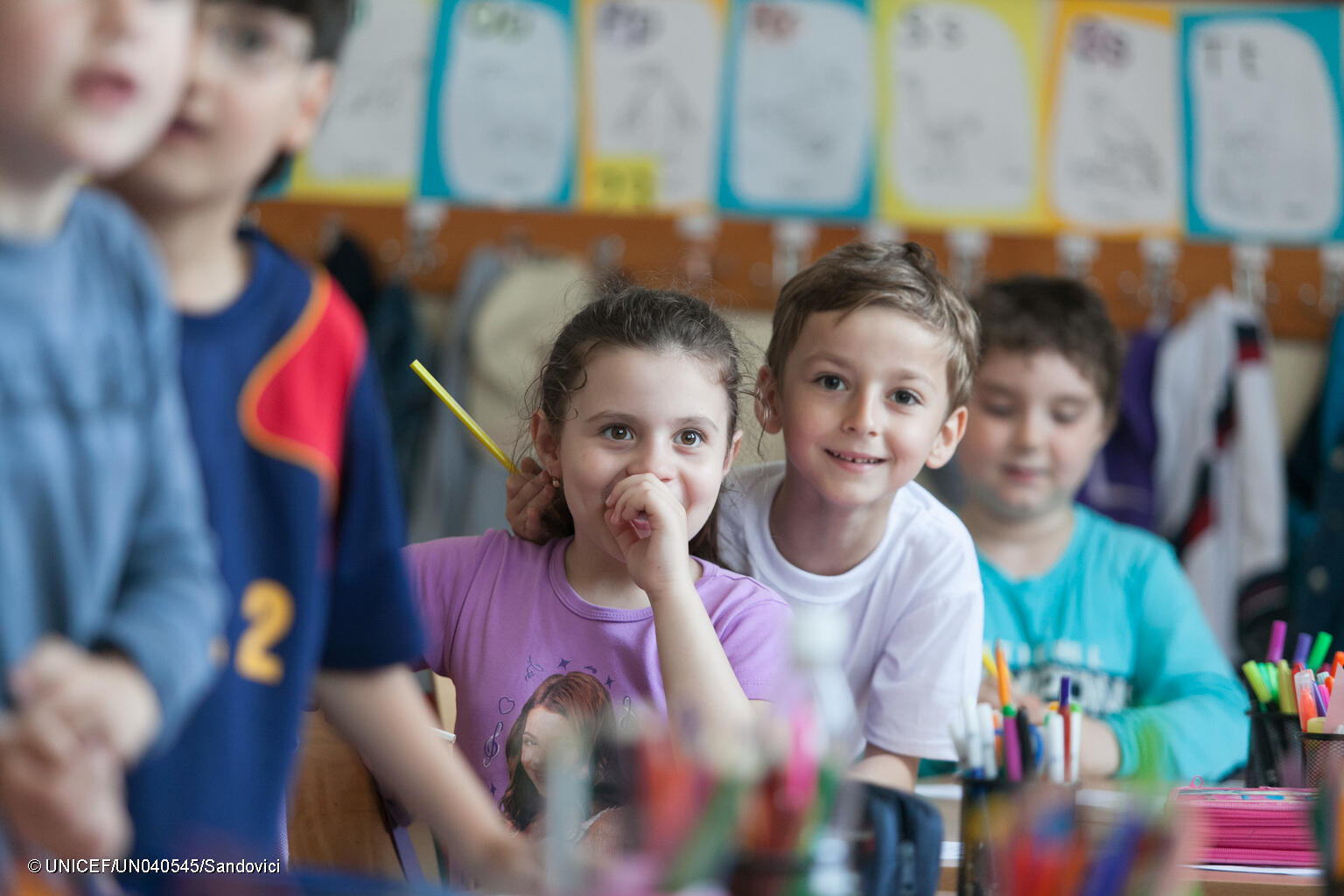
A class at School No. 64 in Bucharest, Romania. © UNICEF/UN040545/Sandovici
One child in eight lives in absolute poverty. In Italy in 2025, that meant over a million children and teenagers: 12.5% of under-18s. The history of childhood in Italy includes major advances in health and education alongside deep inequalities that remain.
UNICEF Italy and Istat have brought it together in “I diritti dei bambini e degli adolescenti”, part of the “Storie di dati” series. The publication was presented at the Chamber of Deputies on 19 November 2026, at the initiative of Michela Vittoria Brambilla, chair of the Parliamentary Commission for Childhood and Adolescence. It marks UNICEF’s 80th anniversary and 35 years since Italy ratified the Convention on the Rights of the Child.
Home, food and everyday needs
Absolute poverty is measured through household consumption: spending falls below the threshold required to purchase essential goods and services for a decent life. The basket includes food, a suitable heated home, clothing, transport, education and health. The threshold varies with household composition and local prices.
Children are more exposed than the population overall: 12.5%, compared with 9.3%. Over the past twenty years, the incidence among children and teenagers has more than tripled, although the trend has been uneven.
Where a child grows up also matters. In southern Italy, the rate exceeds 15%; in central and northern Italy it is around 11%. Among children with foreign citizenship, roughly one in three is affected. Growing up in the same country still means starting from very different circumstances.
Reading, understanding and working with numbers
Finishing primary school means preparing for lower secondary school, new subjects and greater demands. Yet in the 2025/26 school year, 27.4% of fifth-year primary pupils had inadequate literacy skills, which also concern understanding texts. In mathematics, the proportion with insufficient skills reached 36.7%.
Difficulties have increased since 2018/19, particularly in numeracy. They are also unevenly distributed: there are regional differences, a disadvantage for girls in numeracy and a gap linked to migration background. Among first-generation pupils of foreign origin, inadequate skills affect almost 60%.
Understanding an instruction, following an argument, explaining what they have read: these abilities help a child become more independent. Supporting children while they learn gives them tools they will also use outside the classroom.
Further along the educational journey, there is encouraging news. Between 2000 and 2025, early leaving fell from 25.1% to 8.2%. This concerns 18–24-year-olds with no more than a lower secondary qualification who are outside education or training. Many more young people continue studying. The next task is to make sure every young person learns.
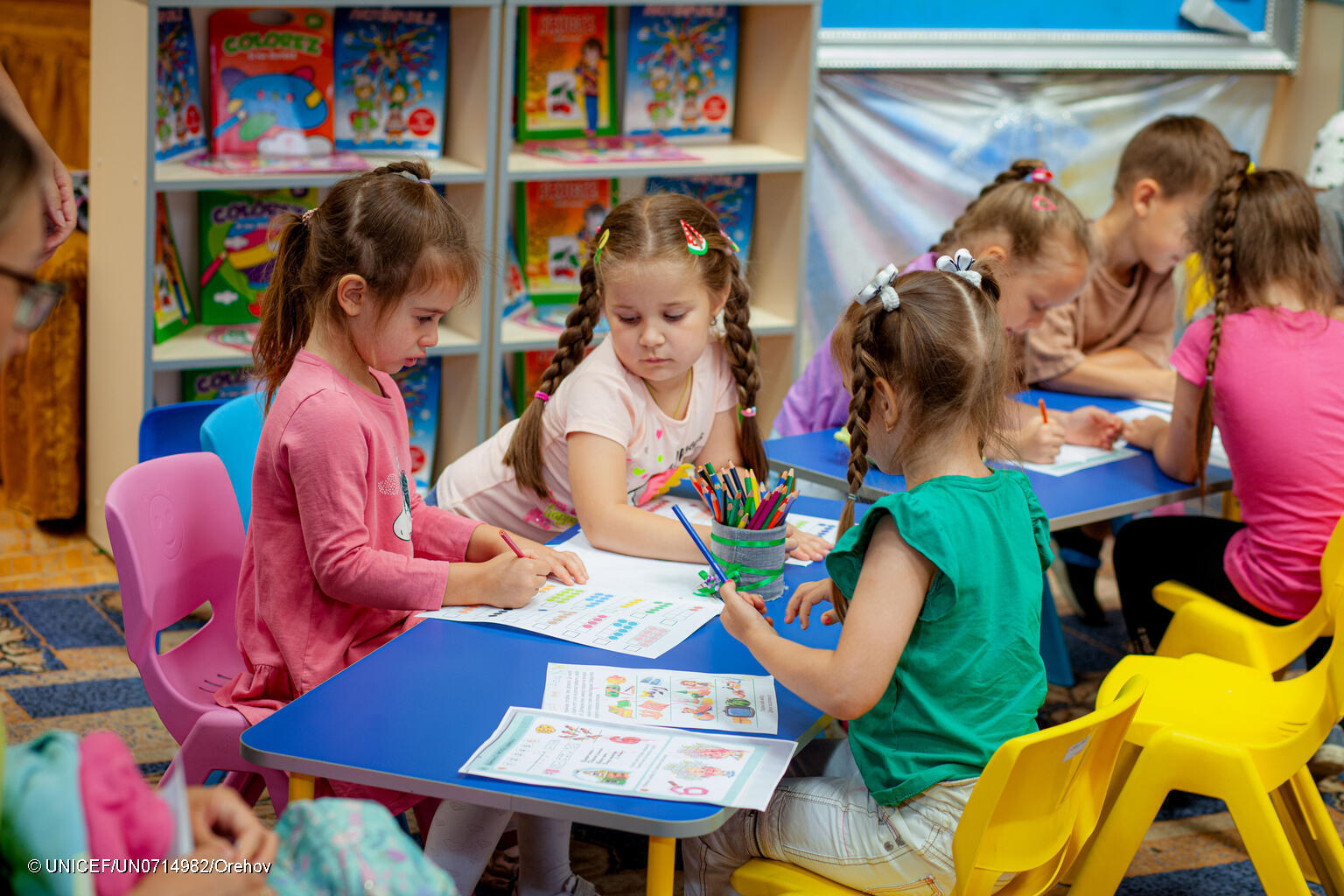
Children from Ukraine and Moldova taking part in a creative activity at the Licurici theatre in Chișinău, Moldova. © UNICEF/UN0714982/Orehov
A place on the team
A training session has a time, teammates and someone expecting you. For many children, sport is also that regular appointment in their week. Between 1995 and 2025, participation among 3–17-year-olds rose from 46% to over 60%.
Among those who play sport, 91% do so regularly. That percentage refers to participants, rather than to all children. Over time, the gap between boys and girls has narrowed too.
Participation increases with age up to fourteen and declines afterwards: the transition into adolescence also deserves attention in young people’s relationship with sport.
Growing up has become safer
In 1960, there were 44 deaths during the first year of life per thousand live births. By 2024, the rate was 2.5 per thousand. Progress in medicine and living conditions has profoundly changed children’s chances of surviving those early months and growing up.
Health continues to reflect social and geographical differences. Between 2010/11 and 2024/25, the proportion of 3–17-year-olds living with overweight or obesity fell from 28.5% to 26%. In the more recent period, it was 21.1% in northern Italy and 33.5% in the south. There has been progress, with substantial gaps remaining between areas.
Someone there for you at home
Families have changed too. Among households with children under eighteen, those with one parent rose from 5.5% in 1983 to 20.2% in 2025. In 84% of cases, that parent was a woman. Paid work, childcare and running a home all meet within the same day: service hours and accessibility matter when trying to fit them together.
There are also children and teenagers growing up away from their families of origin. In 2024, just under 13,000 were in foster care and around 30,000 in residential services. Of the latter, almost 10,000 were unaccompanied foreign children, predominantly teenagers.
Fewer children. Just as much need for a place
On 1 January 2026, 8.6 million under-18s lived in Italy, accounting for 14.6% of residents. In 1986 there were 13.5 million, almost 24%. Today, teenagers aged 13–17 number 2.8 million, while there are around 1.9 million children aged 0–4.
There are fewer of them, while their needs remain: learning, playing, receiving care and finding adults they can rely on. Taking children into account means doing so when organising a school, a neighbourhood or a service.
Through Go Blue, UNICEF has brought children’s rights into illuminated public squares. The Convention also brings them into everyday decisions: protection from discrimination, consideration of children’s best interests, and the right to life and development.
Then there is the right to express views and be heard in matters affecting them. “What do you think?” Every child has the right to be asked that question. With an adult ready to listen to the answer.
SOURCES AND FURTHER READING
Did this story touch your heart?

Share this story