Wedding music for 2027: from your entrance to the last dance
Build a wedding soundtrack around the ceremony, drinks, dinner and dancing, with practical advice on live music, DJs and clear quotes.
In this article
- Start with four moments rather than a hundred songs
- In church, music belongs to the celebration
- Civil and symbolic ceremonies need clear cues
- Three practical ways to organise the music
- Dinner needs breathing room too
- Give your DJ a short, useful brief
- What belongs in the written quote
- Plan the sound for your season
- Make the final check a week beforehand
- Ask this during the site visit
Your song starts and, for a moment, everyone knows that you have arrived. Later come conversations over drinks, a toast, the sound of cutlery and the dance floor you hope never to leave. Wedding music accompanies several different occasions. One long playlist cannot organise them all. For a 2027 celebration, build a day that sounds good, using performers, volumes and equipment suited to each space. Your choices should feel recognisably yours while helping guests enjoy the whole event comfortably.
Start with four moments rather than a hundred songs
Divide the programme into the ceremony, drinks, dinner and dancing. Give each stage a desired feeling and a practical purpose. For the ceremony, think attention and clearly heard words. At drinks, aim for energy and conversation. Dinner needs warmth and space to talk; dancing needs momentum. Add three songs that represent you and three things you do not want, such as microphone games, constant interruptions or a particular musical genre. You already have a useful brief for a professional.
In church, music belongs to the celebration
For a Catholic wedding, agree the programme with the celebrant and parish music coordinator. The marriage rite calls for music appropriate to the liturgical action and expressive of faith; the responsorial psalm has a particular place. A romantic song is not automatically suitable for Mass. Discuss your preferences before printing the order of service. If your personal song does not fit the rite, give it a meaningful moment at the reception.
Agree the entrance, sung elements, accompaniment and exit. Ask where performers may stand, whether an organ is available and when a rehearsal can take place. If you want a solo singer, listen to a recording made in a comparable building: a studio performance does not reveal how clearly words travel down a nave. Explain any transfer to the reception so that leaving church does not clash with an impossible setup schedule elsewhere.
Civil and symbolic ceremonies need clear cues
For a civil ceremony, confirm the music and permitted timings with the relevant office and celebrant. A symbolic ceremony can offer greater storytelling freedom, but still needs simple direction: someone cues the entrance, someone checks the microphone and the technician knows when to lower the backing track. An important reading should not depend on a guest’s phone while that guest is taking photographs. Keep an accessible copy of the schedule and assign responsibilities before the day.
Three practical ways to organise the music
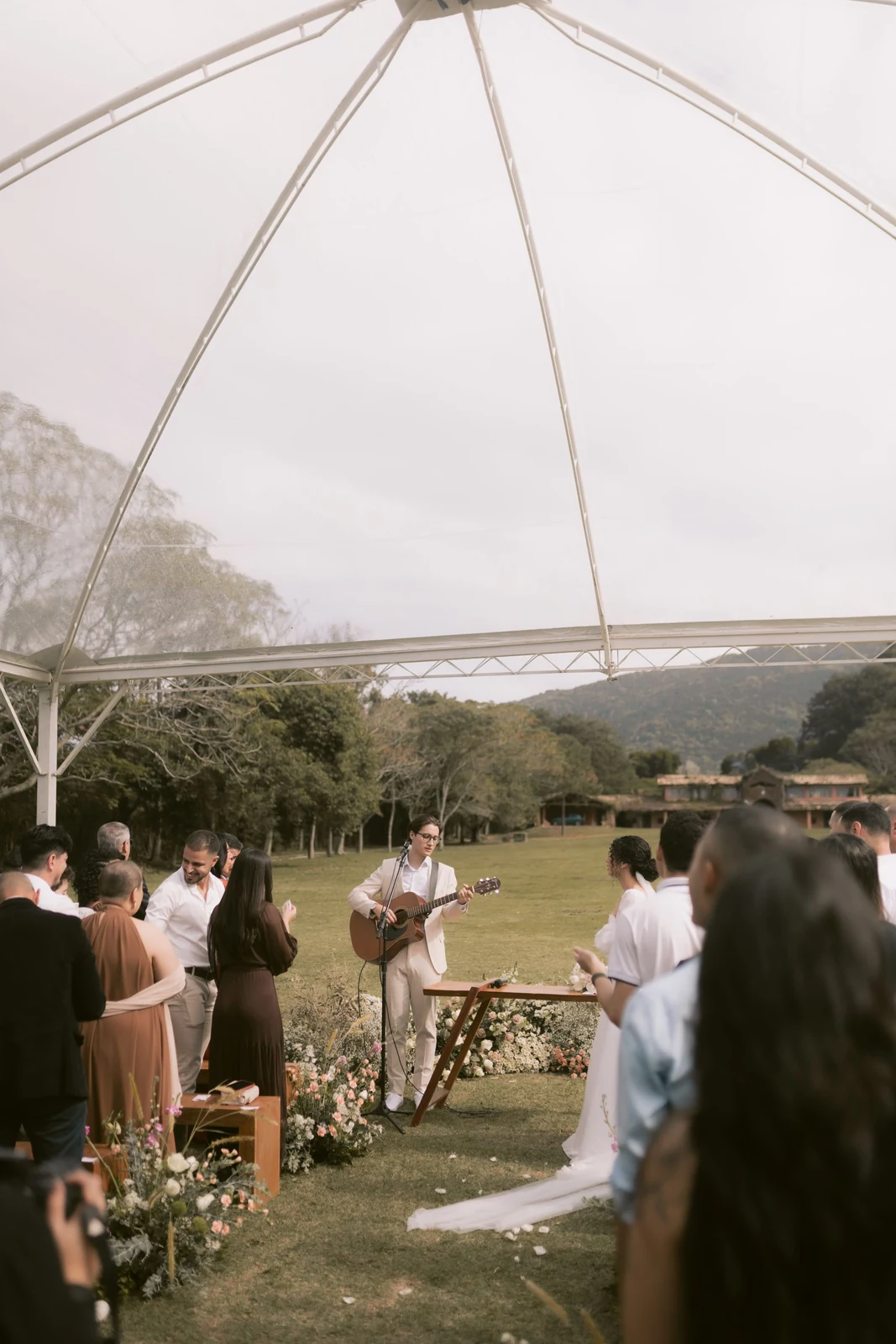
For thirty people at a restaurant, consider a short live performance during drinks and an appropriate sound system supervised by a technician or DJ for the following stages. For sixty at a villa, a singer and instrumentalist can welcome guests while the DJ prepares to take over later. For a hundred with a band, request the actual duration of each set and find out who covers the breaks. Silence during dismantling should be a conscious choice rather than a surprise. These are planning examples to obtain quotes for, not packages with universal prices.
One supplier can simplify handovers if the proposal identifies the people and their roles. A musician performing during drinks is not automatically also the dinner sound engineer and the late-night DJ. If you hire several professionals, arrange for them to exchange technical requirements, timings and contact details. Establish who supplies speakers, mixing equipment and microphones at each location. Equipment needs transporting and setting up; it cannot simply appear in the garden and the indoor room simultaneously.

Dinner needs breathing room too
Choose background music that lets people seated together hold a conversation. Check the experience from the seats nearest and furthest from the speakers rather than only from the dance floor. For speeches, ask friends to agree a length and contact a designated organiser beforehand. A surprise can remain a surprise while the restaurant manager knows when to pause service. A toast lands better when everyone hears the words and nobody is trying to pass with a hot plate.
Give your DJ a short, useful brief
Prepare a concise must-play list and a do-not-play list. Include preferences for the opening, the most energetic section and the final dance. Leave the DJ room to respond to the floor, particularly when guests have different ages and tastes. Agree how guest requests will be handled: a dedication does not need to become an automatic instruction. For music connected to a family or culture, share the correct versions and name pronunciations. Personal moments then arrive naturally instead of requiring improvised explanations over the microphone.
What belongs in the written quote
Request one total covering attendance hours, sets, breaks, sound equipment, travel, setup, dismantling and overtime. Add the indoor weather plan and the venue’s sound restrictions. SIAE prices consulted on 19 November 2026 show €272.58 for live-only music and €384.73 for recorded or mixed music at weddings with fewer than 200 people, VAT included. Check the applicable permission when arranging your 2027 event. Name the person responsible and establish whether the fee is already included in your supplier’s service.
Plan the sound for your season
In spring and autumn, have the indoor move included in the quote rather than relying on friends to help. In summer, agree shaded working conditions for performers and equipment. In winter, ensure the setup leaves circulation between dining room and cloakroom clear. The venue’s technicians should check power provision and cable routes. If weather changes, the decision must arrive early enough for a proper setup. A rain plan that is only discussed when guests arrive will struggle to protect the performance.
Make the final check a week beforehand

Read one shared running order together: contacts, timings, special songs, speeches, cake and last dance. Confirm the contractual closing time and who can authorise an extension. Check pronunciations and ensure the celebrant, venue and musicians have the same version. Then stop adding songs merely to fill every second. Your soundtrack exists to help you enjoy being with people you love. Some of the loveliest sounds of the day will be conversation and laughter between the songs.
Ask this during the site visit
Bring a plan showing the seats and ask where the microphone will stay when it is not in use. If somebody speaks from their table, agree who brings it over and collects it. If speeches happen at a fixed point, check that it is accessible without difficult steps. Decide where guests can sit when they want a break from the party volume and keep the route clear. For families with children, discuss rest periods with the responsible adults before finalising the sound layout. A technical rehearsal should answer these questions while there is still time to change the arrangement, instead of adding equipment to correct a badly planned room.
Return to the 2027 wedding guide to connect outfits, styling and planning. The Wedding Special also includes the four seasonal guides.
SOURCES AND FURTHER READING
Did this story touch your heart?
Psst… you’ll like this too!
Wedding décor 2027: beautiful settings with room to enjoy them
Read the story ↗Share this story