A wedding that tells your story, one thoughtful detail at a time
A place, a song, a familiar ritual: turn your story into a personal celebration with practical choices and a controlled budget.

In this article
- Start with just three memories
- A complete example: two cities and a shared table
- Protect the budget with one reusable design
- Welcome guests who do not know every chapter
- Give words and music a definite moment
- In church, personal history meets the rite
- Four seasons, four practical interpretations
- Photographs, heirlooms and absent loved ones
- Before the day, remove what feels heavy
- Give your keepsake box a named keeper
Your story does not begin with a floral arch. Perhaps it begins with a missed train, a coffee that turned into dinner or a walk in the rain. A personal wedding can begin there too, with real details that mean something without needing an announcement. For a 2027 wedding, narrative design is a useful approach to interpret rather than a compulsory package to buy. Personalisation has existed for a long time. You can make it more coherent by letting invitations, music, tables and hospitality tell parts of the same story.
Start with just three memories
Take a sheet of paper and separately list five memories from your life together. Then choose three that make you both smile. Give each an object, a sound or a flavour: a travel ticket, a song from the car, a Sunday breakfast. You do not need to narrate every chapter. Look for a thread that fits within a day and leaves room for the people sharing it. If a detail requires a lengthy explanation, keep it as a private memory or simplify the way you present it.
A complete example: two cities and a shared table
Imagine a couple who met in Milan and took their first holiday in Sicily. An original invitation illustration could combine two small architectural details they have chosen; the same drawing returns on the menu. Their caterer might pair a bite connected to the city with one recalling the holiday. During dinner, a familiar song accompanies a short toast. Table names remain easy to understand, with numbers alongside them: guests need to find their seats rather than pass a memory test.
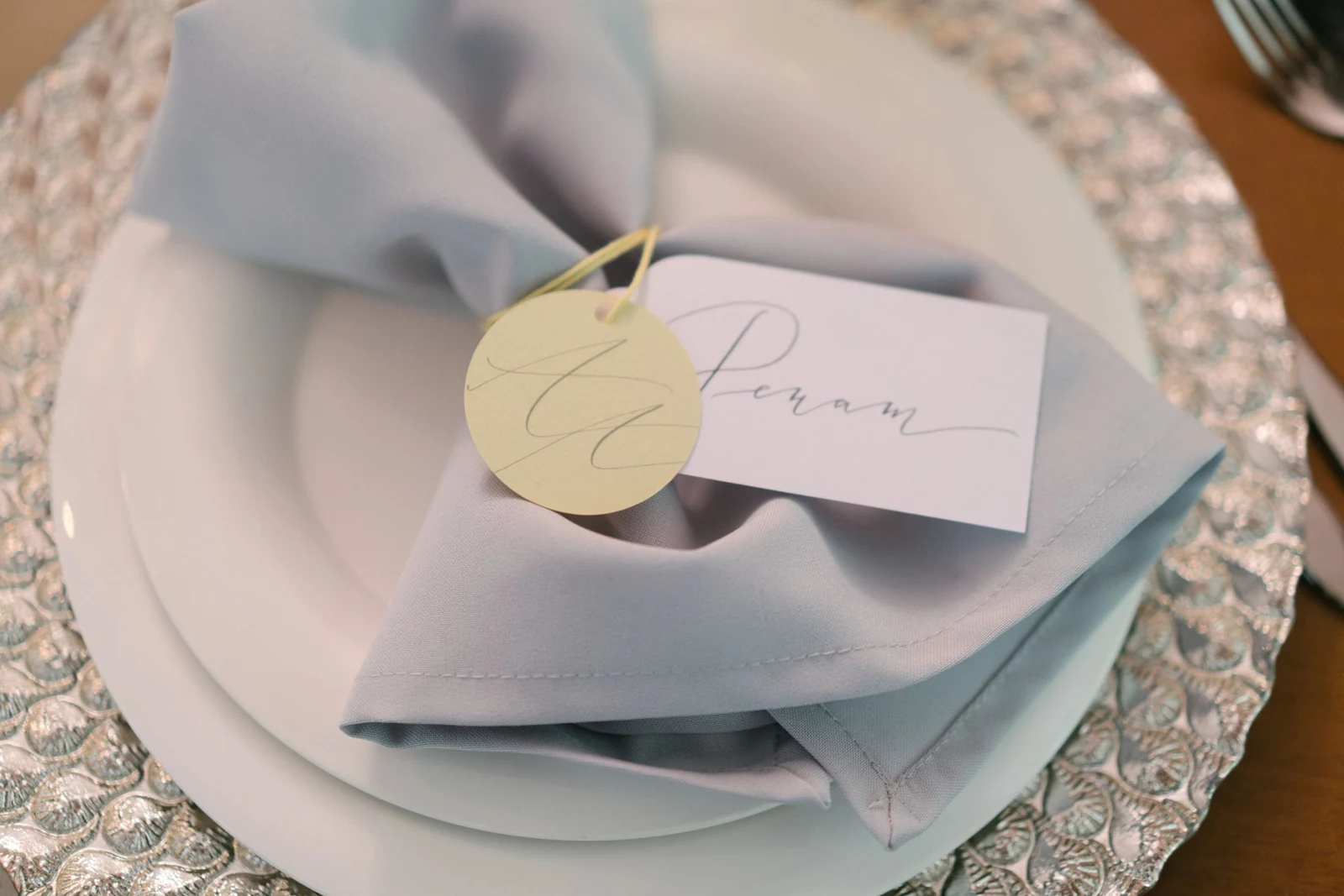
The palette could combine ivory, ink blue and a lemon accent. Use the venue’s available ivory tablecloth, blue napkins and a single yellow element among seasonal flowers rather than ordering every accessory in all three colours. This is a design suggestion. It does not need to be an official colour of 2027 to work. Request a sample table before multiplying the arrangement by ten. Pay particular attention to menu legibility and whether the centrepiece allows people opposite each other to make eye contact.
Protect the budget with one reusable design
Ask your designer for an illustration that can be used across the invitation, menu, table numbers and thank-you card, with formats and print files agreed. One image can serve four purposes without becoming four separate commissions if that is arranged from the start. Choose one principal material and a straightforward print finish. If you want something handmade, concentrate the work at one visible point such as the welcome table. A hundred intricate objects can require more testing, transport and preparation than you first imagined.
Welcome guests who do not know every chapter
An invitee does not need to remember the name of your first hotel. Keep practical information clear beside sentimental details: table number, useful directions, time and full address. A short phrase can open a story without excluding anyone. “Where we decided to return together” is more welcoming than a private abbreviation. Avoid compulsory quizzes or games that make shy guests perform. People who want to participate can do so, while those who simply wish to talk should feel equally comfortable.
Give words and music a definite moment

Choose one moment to tell part of your story aloud. A toast with an episode and a thank-you may be enough. Rehearse it aloud and agree its duration with the dinner team. If friends and family want to speak, give the order to a coordinator and leave breathing room between speeches. For a meaningful song, send the DJ the exact version and the intended cue. A memory loses impact when it arrives as waiters pour soup or a microphone announcement covers the opening bars.
In church, personal history meets the rite
A Catholic celebration has its own readings, formulas and moments, to be selected with the priest within the rite’s provisions. Do not replace the liturgical consent with freely written vows or assume a reading is permitted simply because you find it moving. Share your story during preparation: it can help you engage with the sacrament’s meaning. Personal letters, songs and anecdotes can have an appropriate place at the reception, separate from the ceremony. Church decoration should be agreed with the parish and respect its spaces and local requirements.
Four seasons, four practical interpretations
In spring, a love of walking can become a botanical illustration and a table with low vases of flowers available at that time. In summer, a seaside memory can live through a fish or plant-based menu and striped fabrics without bringing sand into the dining room. In autumn, a trip through vineyards can suggest a guided tasting and cream-coloured stationery. In winter, an important breakfast can return in the next-day brunch, with hot drinks and an intimate table. Adapt these concepts to the actual location rather than forcing scenery onto the season.
Photographs, heirlooms and absent loved ones
A small table with a few photographs can be more powerful than a corridor filled with images. Choose photographs you want to show and check that the people pictured are comfortable with this use. Decide separately about online publication. When remembering somebody who has died, agree the tone and moment together rather than surprising a relative emotionally. A family object can sit beside you or remain safely stored. It does not have to be displayed simply because a design needs a vintage detail.
Before the day, remove what feels heavy
Read the programme and identify which features actually need a dedicated helper. If a storytelling corner requires explanation, supervision and assembly while everyone is getting ready, simplify it. Keep the drawing that connects your table, the dish that tastes like home and the song that brings back your first trip. Let the rest happen in conversations, hugs and unplanned moments. The wedding tells your story most convincingly when you have enough room to experience it.

Give your keepsake box a named keeper
If you invite guests to leave a message, provide simple cards, tested pens and a closable box on an accessible table. Use one short prompt, such as a wish to reread on your first anniversary. Do not collect addresses or unnecessary personal information. Agree who takes the box home after the celebration: that handover belongs in the plan as much as the display itself. For a digital version, test the link on different phones and provide paper for guests who prefer not to use a mobile. Decide together whether the messages will remain private rather than assuming friends expect publication. Read them quietly the following day if you like. The time you spend opening them can become another part of the story.
Return to the 2027 wedding guide to connect outfits, styling and planning. The Wedding Special also includes the four seasonal guides.
SOURCES AND FURTHER READING
Did this story touch your heart?

Psst… you’ll like this too!
Wedding favours 2027: thoughtful choices with clear prices
Read the story ↗Share this story