JUDI DENCH STILL HAS A THOUSAND STORIES TO TELL!
Her new memoir, her humour, trees and the people who made a difference. At 91, Judi Dench shares her life while facing sight loss: meet the woman behind the performances we love.
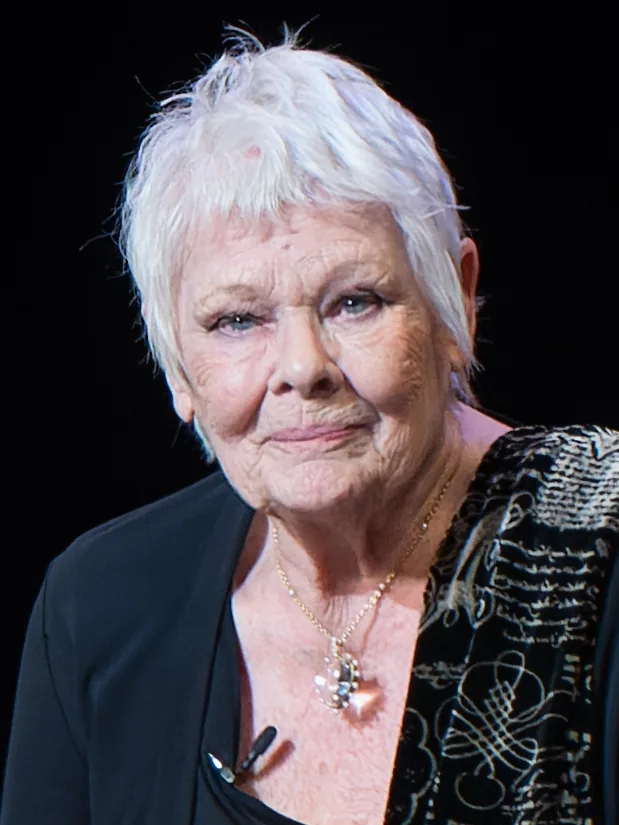
A sovereign who could command a scene with just a few lines. The woman even James Bond had to stop and listen to. Then there is Judi: family memories, a friend to talk to, a love of trees. Judi Dench’s new book, published on 22 October 2026, invites us to meet her beyond the characters we have loved.
The title has a mischievous spark: Is It Too Late to Make a Run for It? It seems to wink at anyone who thinks they already know everything about such a long and public life. There is still plenty to discover.
Judi Dench’s new book begins with people
Published by Michael Joseph, a Penguin imprint, the memoir was created with her friend and collaborator Brendan O’Hea. The publisher describes a journey through her childhood in York, her parents, the brother who encouraged her to act and the teachers who inspired her. There are stories of her career, practical jokes, her marriage to actor Michael Williams and her love of nature and animals.
The verified edition is in English, in print, ebook and audiobook formats. These are the themes outlined by the publisher; the individual stories await readers inside the book. Even her choice of people to remember raises a lovely question for us: who gave us that first encouragement to try?
The honesty of saying: this is difficult now
The release coincides with her interview with Emma Barnett, in a radio conversation, broadcast on 22 October. Dench, 91, discusses age-related macular degeneration, diagnosed in 2012. She explains that her sight now prevents her from reading and working on stage or screen. Recognising faces has also become difficult.
Her words deserve a thoughtful hearing, without turning them into a promise of a return to acting. For someone whose life has been so closely bound to the pages of a script, that change carries real weight. We can acknowledge it while remaining open to everything she still wants to share. The book and this public conversation give us that opportunity.
Lunch at MI6, and a smile to take home
The conversation also includes a story for anyone who remembers her as M: an invitation to lunch from the then head of MI6, Sir David Spedding. She recalls that the driver sent to collect her struggled to find her house, leaving her about twenty minutes late. Even the secret service sometimes needs help with an address.
The detail makes us smile because it brings an icon into a familiar situation: waiting for someone, arriving late, having a story to tell afterwards. She also speaks of her enthusiasm for Shakespeare, sparked in childhood by watching her brother in Macbeth. A family memory became a passion that would last decades. Some sparks travel a very long way.
Three films to find her on screen
If you would like to watch her again, try three very different films, all documented in BAFTA’s official archive. Mrs Brown brought her the leading actress award in 1998; Shakespeare in Love the supporting actress award in 1999; Iris another leading actress award in 2002. Three performances, three different shades of the same artist.
In Mrs Brown she plays Queen Victoria; in Shakespeare in Love, Elizabeth I; in Iris, the writer Iris Murdoch. Here is a small viewing challenge: notice what happens when Dench falls silent. How does she listen to the person opposite her? How much does a pause change the meaning of a line? Revisiting a film can reveal details we missed the first time.
In 2001 BAFTA also awarded her its Fellowship, celebrating her contribution to the profession. Today that archive offers a useful map of her work, taking us beyond the role we know best. Before planning your film night, check where your chosen title is legally available.
And then there are the trees. Real ones
The love of nature featured in the memoir has a concrete public history. The Woodland Trust, the British woodland conservation charity, lists Dench among its ambassadors. In July 2025 she helped announce the Tree of the Year finalists, in an edition devoted to trees connected with culture: landscapes that find their way into books, films and our imagination.
The shortlist included a cedar climbed by the Beatles, an oak connected to a Virginia Woolf text and a beech seen in the final scenes of 1917. It is a curious meeting of two worlds we often keep apart: the stories we watch and the places where they take root. Dench also lends her name to the protection of trees.
There is something here to try in everyday life: take another look at a tree you pass regularly, try to identify it, ask someone what memory they associate with it. A walk can become a conversation. Often a place leads us to talk about a person, and a story emerges that nobody had thought to ask for.
Stories need someone to listen, too
The memoir, the films and the conversation offer different starting points. Film lovers may seek out a performance; those close to an older person may pause over the value of sitting down and listening. A friendship, a teacher, a well-remembered laugh: details give a life its shape, even when we know it mainly through screen credits.
The official interview below is in English and lasts about 29 minutes. It deserves some time. Afterwards, perhaps make that call you have been putting off: “Will you tell me what it was like?” Judi Dench still has stories to share. Around us, there may be just as many waiting for a question.
Source: BBC News ↗
SOURCES AND FURTHER READING
- Penguin / Michael Joseph — Is It Too Late to Make a Run for It?, pubblicato il 22 october 2026
- BBC News — Intervista ufficiale a Judi Dench, october 2026
- BAFTA — Archivio premi di Judi Dench
- BAFTA — Elenco dei Fellows: Judi Dench, 2001
- Woodland Trust — Ambasciatori dell’organizzazione
- Woodland Trust — Tree of the Year: gli alberi della cultura, 11 july 2025