A MOTHER WILDCAT AND TWO YOUNGSTERS: A LITTLE WONDER IN SARDINIA’S WOODS!
A pool of water, three cats and a discreet camera. A video from Monte Arcosu is both touching and revealing: wildlife needs space, research and protection.
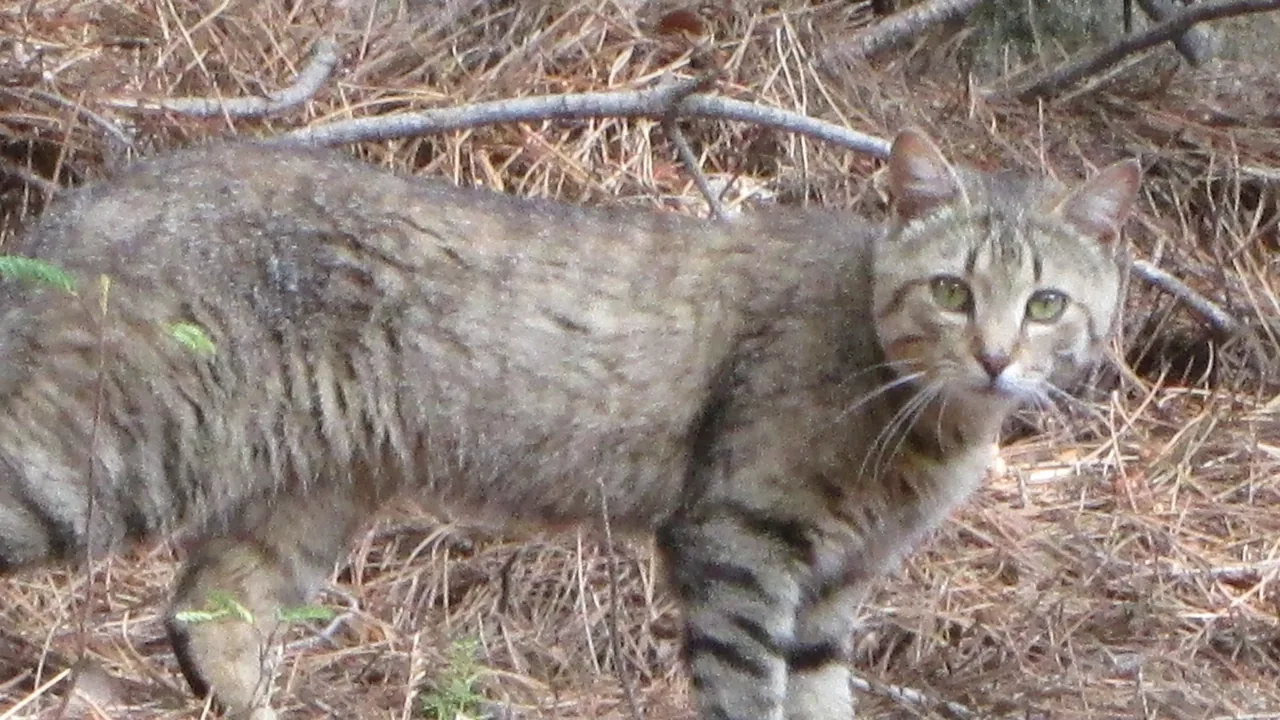
First you want to watch them. Then you want to watch again, perhaps calling someone over: ‘Come and look, there are little ones too.’ That is the appeal of this footage of a mother Sardinian wildcat and two young cats drinking in WWF’s Monte Arcosu reserve. A simple scene that makes us forget the rest of our screens for a moment.
WWF released the recording on 26 October 2026. A camera trap captured it as part of field monitoring involving Fondazione WWF and the University of Sassari, supported by the ‘L’Oasi è dei Bambini’ project. Behind this little encounter are research, equipment and people observing animals without asking them to pose.
A drink of water worth observing
The pool is among those that remained available after a long dry spell. To us it may be a landscape detail; to animals it is a resource. WWF describes the Sardinian cat as elusive, hard to observe and mainly active around twilight. Recording it with its young is therefore particularly interesting for researchers.
That is the context in which to watch: this was not a scene arranged to move us, but a fragment of life captured by a research tool. We can certainly find it touching, while recognising that its value goes beyond its resemblance to the cats we live with.
Source: WWF Italy ↗
Watching with a child, we can try a small game: separate what we see from what we imagine. We see three animals by water; we do not know what they are thinking. Why might a camera left in the woods be useful? Who checks the recordings? Curiosity begins with simple questions. Teaching careful observation also values animals without turning them into fairy-tale characters.
A forest beyond Cagliari
Monte Arcosu lies in southern Sardinia, within the municipalities of Uta, Assemini and Siliqua. The reserve is part of Gutturu Mannu Regional Park and covers about 3,700 hectares. Around it stretches the Monte Arcosu-Piscinamanna forest complex: Mediterranean scrub, slopes and valleys, with watercourses that change considerably with the seasons.
There are holm and cork oaks, strawberry trees, myrtle and rock roses. Sardinian deer, martens and foxes live here; birds include golden eagles and peregrine falcons. The cat’s story belongs to this wider community. Protecting it means maintaining an environment where it can find shelter and food alongside many other species.
This Sardinia deserves attention beyond the familiar beach photographs. A forest can hold equally surprising stories, simply harder to see at first glance. That discreet quality is precisely what makes the work of its observers interesting.
It resembles our pet. Its life is different
Living with cats can make us feel we already know this animal. Resemblance alone is not enough. Wild cats obtain what they need from their environment and play a role in food webs. WWF’s species profile explains that they eat small animals, particularly rodents, with diets varying by location.
Describing them also requires care. Wildcat populations and forms are not identical: coat colour, markings and tail shape can differ. A fleeting recording does not make its viewers experts able to identify every individual. This is why monitoring and the knowledge of field researchers matter.
Tenderness becomes a practical question
What threatens these cats? Habitat loss and fragmentation, poaching and crossbreeding with domestic cats. Researcher Antonio Canu draws attention to these challenges: behind an adorable video lies conservation work that needs to continue.
A mother with young is a lovely observation. On its own it does not show that every threat has been overcome or that a population is increasing. Research helps us move from the emotion of one sighting to understanding what happens over time.
For viewers at home, the first step can be small and practical: share the footage with its context, recognise researchers’ work and follow a reserve’s guidance when visiting. Admiring wildlife also means accepting that we cannot always approach it.
A mother, two youngsters, the water they need. And a forest that remains their home. The video ends, but their lives carry on there, far from our screens: a wonder worth protecting.