DIO RIDE: WHAT IF FAITH HELPED US SMILE AGAIN?
Favino wears a friar’s habit; Silvio Orlando, a cardinal’s robes. In Giovanni Veronesi’s new film, a friar speaks of God to ordinary people and ends up before the Inquisition. A story of freedom and conscience that invites us to rediscover the room for joy in a life of faith.
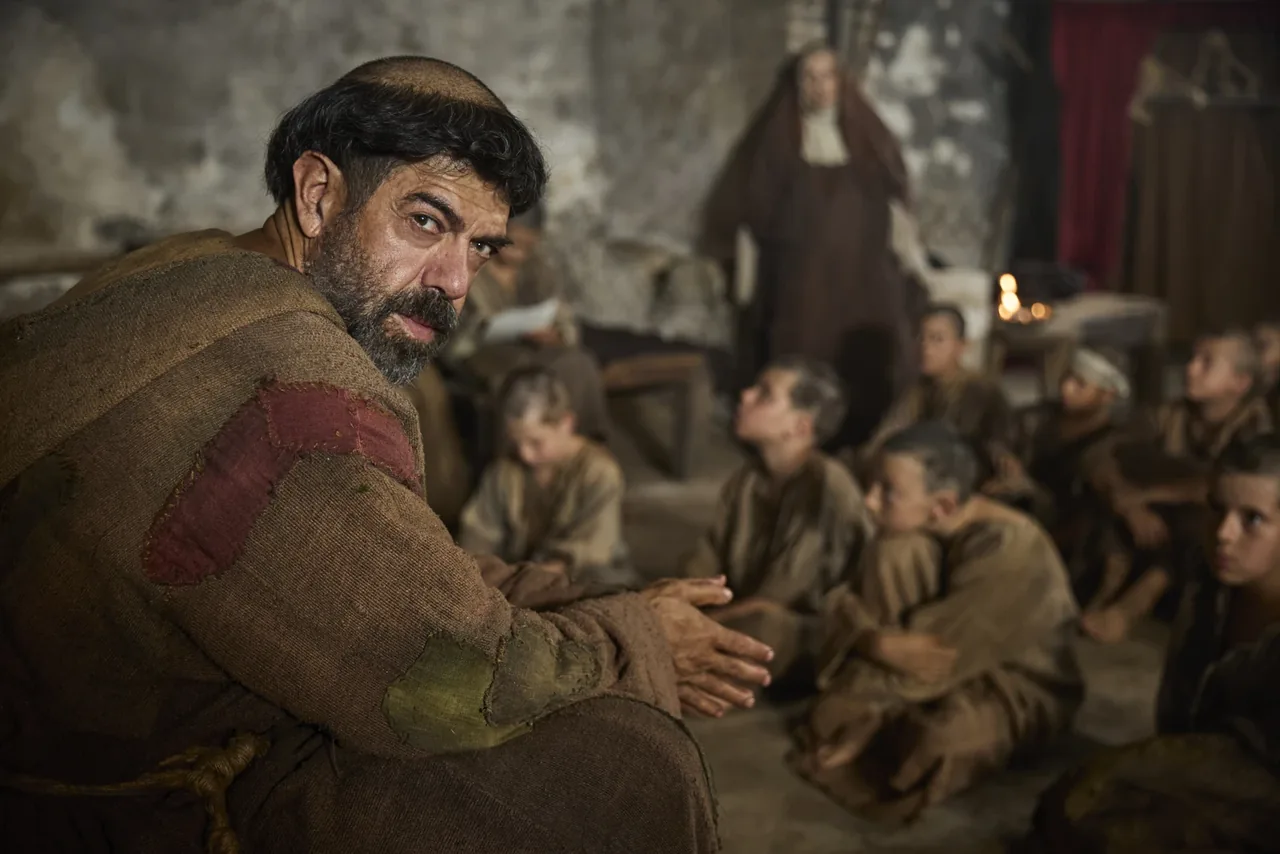
A friar tells stories from the Gospel. People listen and, at some point, laugh. That ought to be good news: someone has found words that reach even those who feel far away. In Dio ride, however, that success becomes a problem.
Giovanni Veronesi’s film, in Italian cinemas from 29 October 2026, brings Pierfrancesco Favino face to face with Silvio Orlando. Between them are a friar’s habit, a cardinal’s robes and a question worth taking home: what image of God do we convey when we speak about Him?
A friar, ordinary people and a laugh that causes fear
PiperFilm’s official synopsis takes us to seventeenth-century Italy: Friar Leopoldo da Casamacchia, played by Favino, tells people stories from the Gospel in familiar, joyful language.
His following grows, churches empty and news reaches Rome. Cardinal Maculani, played by Orlando, is sent to investigate. His task is to examine the case, but his encounter with Leopoldo raises questions that go beyond an interrogation.
The premise already holds a powerful conflict. For the friar, speaking of God means offering hope. For those afraid of losing control, that same voice can become dangerous. The film begins here, where meeting people comes into conflict with the exercise of power.
Did Friar Leopoldo really exist?
One point deserves to be clear from the start: Friar Leopoldo da Casamacchia is a fictional character. The film combines invention with historical references, but presenting his story as the biography of a real religious figure would be inaccurate.
That distinction gives viewers a valuable freedom. We can question the characters’ choices without treating every line as archival evidence. We can see the cardinal, the friar and those around them as figures in a story, without automatically making them a portrait of the entire Church, past or present.
Favino and Orlando: two ways of facing a question
Leopoldo’s habit and Maculani’s cardinal robes make their positions immediately visible. More interesting is what happens when these two people begin to listen to one another. The possibility of being moved by a different voice is central to the encounter promised by the story.
Discussing the film with Movieplayer, Favino linked art’s work to its ability to challenge dominant ways of thinking. Orlando stressed cinema’s usefulness in clarifying our relationship with power. These offer two practical ways into the story: who is allowed to speak? Who decides which words are acceptable? And who has the courage to reconsider a judgment?
Alongside the leads are Alma Noce, Francesco Gheghi, Maurizio Lombardi, Paolo Rossi and Carlo Cecchi. An ensemble cast for a story in which the consequences of decisions also fall on people outside the centre of attention.
Source: PiperFilm ↗
Veronesi, real dawns and time to look at one another
Dio ride screened out of competition at the 83rd Venice International Film Festival. In notes published by the Biennale, Veronesi describes a change in his approach: waiting for the light, filming at real dawns and allowing looks to carry part of the story. For a director accustomed to comedy’s timing, that means seeking another rhythm too.
It is an intriguing detail because it concerns how the film is made as well as its subject. How much can a face tell us before an answer comes? What changes when a conversation allows room for hesitation? These are things to watch for in the cinema, giving the characters time to surprise us.
Can faith laugh? Pope Francis had this answer
On 14 June 2024, Pope Francis welcomed artists from the world of humour to the Vatican. He spoke about comedy’s ability to bring different people together and awaken critical thinking. He also told the artists that, by inspiring intelligent smiles, ‘you also make God smile’.
At that same gathering he offered a very practical principle: humour should neither humiliate people nor wound religious feelings. A laugh can create a bond, but it can also leave someone isolated in a crowd. The difference is visible in its effect on people.
Francis also said that for more than forty years he had prayed the words ‘Grant me, O Lord, a sense of good humour’, from a prayer attributed to Saint Thomas More. Good humour, then, can enter prayer too, alongside worries, gratitude and requests for help.
Joy does not ask us to pretend
There is a sensitive point here. Someone experiencing bereavement, illness or depression does not need to be told to smile more to prove their faith. They need listening, companionship and help. Nobody has to earn a place before God by showing that they are happy.
Yet we can recognise those moments when an affectionate joke gives us room to breathe. It happens between friends after a hard day, when someone knows us well enough to understand how far they can go. The problem is still there, but for a moment we can look at it together.
That everyday experience can be the beginning of an interesting conversation after the film. Which words have helped us believe? Which have made us feel excluded? When we speak about our faith, can we also listen to the questions of the person in front of us?
A cinema date, then a conversation
Dio ride runs for 114 minutes and is distributed by PiperFilm. To find screenings, check the programme on the distributor’s website, selecting an Italian province.
Perhaps we could go with that friend with whom we always end up discussing the important things, even when we had promised ourselves a light evening. Let the film do its work: tell a story, raise questions and open a conversation.
Then, over a coffee, we could begin with something simple: when was the last time someone spoke to us about God and made us feel welcome?
SOURCES AND FURTHER READING
- PiperFilm — synopsis, cast, photograph and screenings
- Venice Biennale — film details and director’s statement
- Rivista del Cinematografo — fictional character and historical references, 27 October 2026
- Movieplayer — interview with Favino, Orlando and Veronesi, 29 October 2026
- Holy See — Francis addresses humour artists, 14 June 2024
- PiperFilm — official trailer