How to get your cat used to the carrier before a vet visit
Your cat sees the little door. You can already picture the chase under the bed. Start well before the appointment, with small steps that keep things calm.
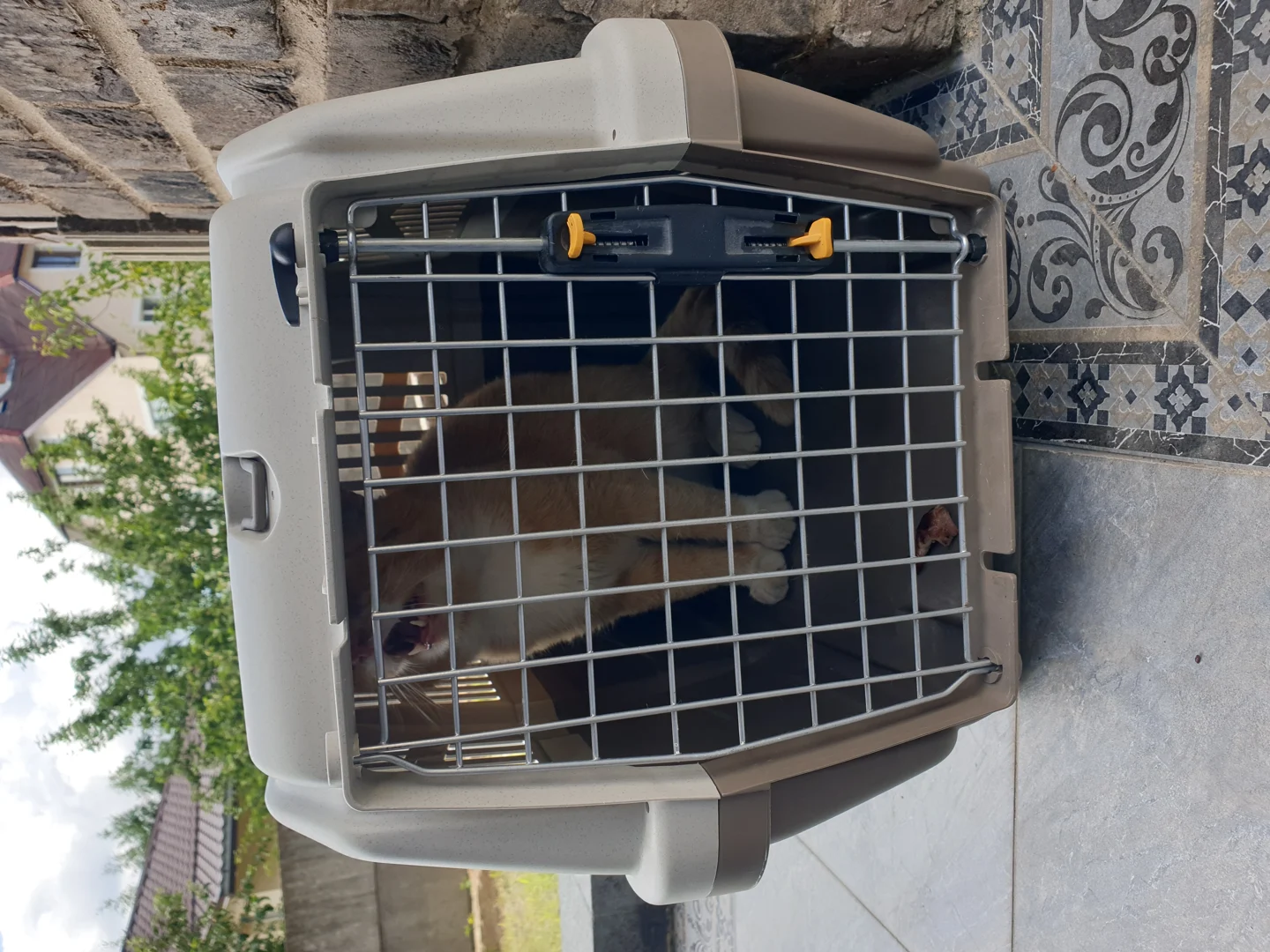
The carrier comes out of the cupboard and the cat disappears. A minute ago they were on the sofa. Now they seem to have a very important meeting behind the wardrobe. Help your cat get used to the carrier by making it a normal part of the house. Then work up to travel with short, calm experiences and rewards. Ideally, the first time they meet the carrier won’t be on the day of the appointment.
If the appointment is tomorrow, call the practice and explain what’s difficult. Necessary care shouldn’t wait until training is finished. For the future, you can build a different routine. Adult cats can learn, too. A complete turnaround in an afternoon is a lot to ask. Start with what your cat can comfortably manage today.
First, check their little travel cabin
A good carrier gives your cat enough room to stand, turn around and lie down comfortably. It needs a secure closure, a stable base and plenty of ventilation. Hard-sided carriers with removable tops can also be useful during the visit. Sometimes the vet can examine your cat while they stay in the base, without having to get them out through the door.
Check the latches, hinges and base before adding blankets and treats. The carrier you bought when your cat was a kitten may be too small now. If a latch only holds because of a makeshift repair, sort out the safety issue first. A favourite blanket makes a suitable space feel welcoming, but it won’t fix a damaged carrier.
Give the cupboard a break
Pick a quiet corner in a room your cat likes to visit. Leave the carrier open and secure the door so it can’t swing shut unexpectedly. Put a piece of soft bedding that smells familiar inside. If the top comes off easily, you can start with just the base and reassemble it later. The first goal is simple: let your cat look and come closer without anything unpleasant happening.
You don’t have to celebrate every sniff with a fanfare. Stay nearby, speak softly and let your cat decide how close to get. If they stop at a distance, start there. A treat where they already feel comfortable is more useful than one they won’t reach at the back of the carrier. Their caution is no slight on your lovely setup.
A treat nearby, then a little further in
Use small rewards your cat enjoys that fit their diet. Start beside the opening. Once they approach willingly, put the treats just inside. Give them room to explore. If you lure them in and shut the door behind them, the next attempt may be harder.
If your cat loves play, let them investigate by following a toy, keeping your movements calm. Don’t pull on their paws or push them inside during practice. Putting their front paws in, having a sniff and backing out can be progress. If they choose to do it again today, you’ve learnt something useful: this step is manageable.
The little door comes later
When your cat goes in and settles comfortably, start getting them used to the door. First it stays open, then you move it slightly, then you can close it for just a few seconds. Open it again and reward them. Take it a little further only if your cat stays at ease. There’s no schedule that works for every cat, or a day by which they have to be ready.
Watch the whole picture. Are they frantically looking for a way out? Do they stiffen or try to leave the moment you touch the door? Stop and go back to an easier step. Turning down a favourite treat can be a sign of discomfort, alongside what you see in their behaviour. A reward won’t make growing fear something your cat should have to endure.
Picking it up doesn’t mean setting off
A cat who naps in a carrier on the floor still has to get used to travelling in it. Next, try a very brief, steady lift, then put it down again. After that, try a few steps around the room. Support the base and hold it close to your body. Swinging it like a shopping bag makes it unstable just when you’re trying to make it feel secure.
Note the step you tried, how your cat reacted and what to try next. Three lines on your phone are enough. For example: goes in without hesitation, stays with the door open, gets restless when lifted. That tells you where to pick up next time. It’s more useful than one marathon session trying to catch up on Sunday.
What about the car?
Getting ready to travel also means getting used to the car, the sounds and the motion. Once your cat is comfortable with the steps at home, ask your vet how to introduce brief experiences that suit them. During a journey, keep your cat in the closed carrier and secure it properly according to the manufacturer’s directions. A loose cat in the car puts you both at risk and does nothing to ease the anxiety.
A light cover can screen out some of the sights around them as long as the vents stay clear. Avoid loud music, strong fragrances and direct blasts of hot or cold air. If there are two of you, the driver can focus on the road while the other checks on the cat without opening the door. Never leave your cat alone in the car, even for an errand that should take a minute.
Your vet can help before the visit
If your cat was very frightened at earlier appointments, mention it when you book. Explain whether the distress starts at the carrier, in the car or as soon as you enter the waiting room. Each may call for a different approach. If other support or medication would help, your vet will decide how to use it. Don’t borrow sedatives prescribed for another animal.
Bring spare absorbent bedding, check that every latch is fastened and get everything ready before you approach your cat. Ask the practice about meals, fasting and medication, since the instructions depend on the visit. Even if your cat is meowing, keep the carrier closed in the car park or an unsecured waiting area.
Afterwards, keep the carrier in sight
When you get home, clean the carrier if needed with suitable products, rinse it well and avoid strong smells. Once it’s dry, put it back in its usual corner. If the carrier only comes out for something stressful, it’s harder to keep it familiar. Keep practising gently even after those first signs of progress.
The next step can be tiny. Today you leave the carrier open, tomorrow your cat has a sniff. There’s no need to prove you can get them inside at any cost. You’re helping them learn that the space is predictable and safe. And one day you might find they’ve picked their little travel cabin for a nap.
Source: PDSA ↗
SOURCES AND FURTHER READING
Did this story touch your heart?
Share this story