How to protect your sofa from cat scratches
A well-chosen scratcher in the right place and a temporary cover can save your sofa while giving your cat what they need.
You’ve just straightened the cushions. Your cat stretches out on the armrest, and there’s that little sound you know all too well. Try three things together: cover the spot your cat keeps going for, put a sturdy scratcher that suits them right beside it, and reward them for using it. It takes some observation and a little patience. No fabric or product makes a sofa invincible, but you can make the other option much more appealing.
Why that armrest, of all places?
Scratching lets cats stretch, maintain their claws and leave marks and scents. The living room matters because you spend time there together. A prominent object near a route through the room or a favourite bed can be especially tempting. Treat it as a clue to what your cat needs and you can make a practical change without turning every scratch into a battle.
Watch for a few days before you buy anything. Do they rise up on their back legs? Scratch the upright side of the sofa or the rug in front of it? Go for a rough surface or soft upholstery? Does it happen after a nap, when you come home or when another cat walks past the window? Those clues tell you what shape, texture and position to try. They’re worth more than a promise on the packaging.
The scratcher needs to stand up to a proper stretch
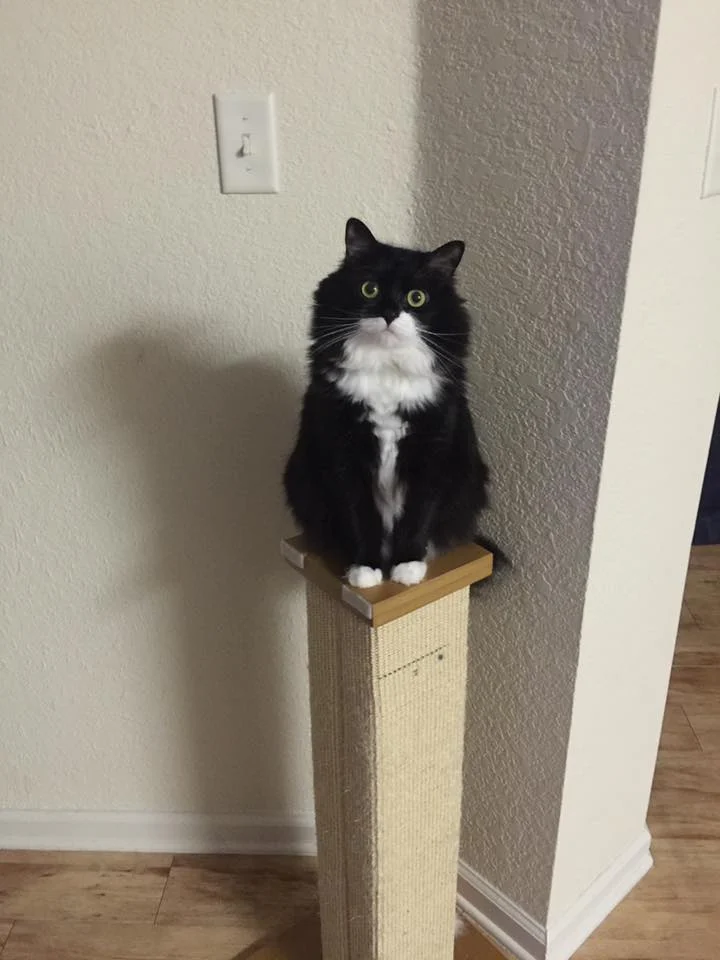
If your cat likes to scratch upright, choose a post tall enough for a full stretch with a base that won’t wobble. A post that slides or falls can scare them off straight away. Follow the assembly instructions, test the stability by hand and check the ropes, screws and covering for loose parts your cat could swallow. That cute little post might be too small for a fully grown cat.
If your cat prefers to scratch horizontally, try a sturdy cardboard pad or another suitable surface secured in place. Some cats like an angled scratcher. Material matters too. Sisal, cardboard and other purpose-made surfaces feel different under the claws. Start with what you’ve already seen your cat choose before buying a whole collection. If they ignore one scratcher, try a different angle or orientation before giving up.
Put it close to the trouble spot
Start with the scratcher right beside the armrest, leaving enough room to pass. If the scratching happens after a nap, a second spot near the bed can help. Scratchers tucked away in another room are less convenient when your cat wants to use one. Once they reliably choose the new surface, you can move it a little at a time to a spot that works for your living room.
If you have several cats, give them options in different places. A single scratcher can be hard to reach if the boldest cat guards it. Think about the routes through the house, too. No cat should have to cross a corner where they get chased just to reach a scratcher. Sharing can work, but extra options ease competition and let each cat choose a spot where they feel comfortable.
Make it appealing without handling their paws
Let your cat sniff and investigate at their own pace. Play nearby with a suitable toy, keeping any string clear of the covering, and offer a small reward as soon as they use the scratcher on their own. Reward them right away so they can make the connection. If they prefer a stroke, make sure they’re in the mood for it. Cats have their own ideas about what counts as a reward.
Avoid taking your cat’s paws and dragging them down the post. They may feel trapped. If you see them getting ready to scratch the sofa, calmly draw them towards something else without pulling them away. If you find the damage when you get home, go straight to checking the setup. A telling-off after the event won’t tell your cat where to scratch. Spraying water, shouting or startling them can also increase stress and make it harder for them to trust you.
A gentle barrier for the sofa
While your cat learns, protect the area with a tough, snug cover with no threads hanging down. A smooth weave may be less tempting, but see how your cat responds. Some find the new cover just as fascinating. Pick something washable and easy to secure, with no accessible elastics or ties. Before using guards or sticky strips, check that they suit the upholstery and follow the manufacturer’s instructions.
Test a hidden spot first. Some adhesives can mark leather, faux leather or delicate fabrics. Keep loose plastic film and bags out of reach. If the scratching is severe while you’re out, it may help to keep the living room off limits for a while. Make sure your cat has a comfortable place elsewhere with water, a litter tray, somewhere to rest and something to do. The cover works best when a good alternative is already in place.
Skip the strong-smelling remedies
Leave homemade blends of essential oils, harsh cleaners and irritants alone. Some oils can be toxic to cats, including when they get onto fur or paws and are licked off. A natural ingredient can still be unsafe for a cat. Even a smell that puts them off the upholstery can make the room unpleasant to rest in. Start with position, texture and a physical cover.
Claw care can limit some damage, though your cat still needs to scratch. If you can’t tell which part to trim, ask your vet to show you and see how your cat tolerates having their paws handled. Never cut blindly or force your cat through a struggle. Surgical declawing won’t teach a cat where to scratch. Damaging their body to save a piece of furniture does nothing to meet their needs.
When a change is worth a vet visit
If scratching suddenly increases and your cat starts hiding, becomes irritable, or changes how they eat or behave, talk to your vet. They may be uncomfortable or stressed. A new pet, building work, moved furniture and conflicts can all change behaviour. If the problem persists, seek help from a qualified feline behaviour professional. Bring photos of the scratched spots and some notes on when it happens.
If the scratcher gets a lot of use, look it over regularly. Your cat may still like a worn surface as long as it’s steady and has no dangerous loose bits. Place the replacement alongside the old one and let your cat get to know it before you take the old one away. Removing their only favourite spot overnight might draw them straight back to the armrest just when things were settling down.
To start today, cover the favourite spot, put a sturdy scratching surface beside it and see what your cat chooses. After a few days, look at what’s improved and what’s still tricky. Does the post wobble? Is it too short? Is the cardboard in the wrong room? Changing one thing at a time makes it easier to see what works. The living room can feel peaceful for both of you again, with room for that magnificent cat stretch.
SOURCES AND FURTHER READING
Did this story touch your heart?

Share this story