How to get your puppy used to being home alone
You’ve picked up the keys and your puppy’s already at the door. Confidence comes with brief absences, a safe home and someone who lets them learn at their own pace.
Jump to what you need
- Before you leave, see the house from their level
- Start while you’re still in the same room
- A few seconds first, then a small step further
- A toy can help your puppy settle
- There’s more to watch for than chewed furniture
- How long can they stay alone? Age matters
- Keys don’t have to mean you’re about to disappear
- When to ask for a hand
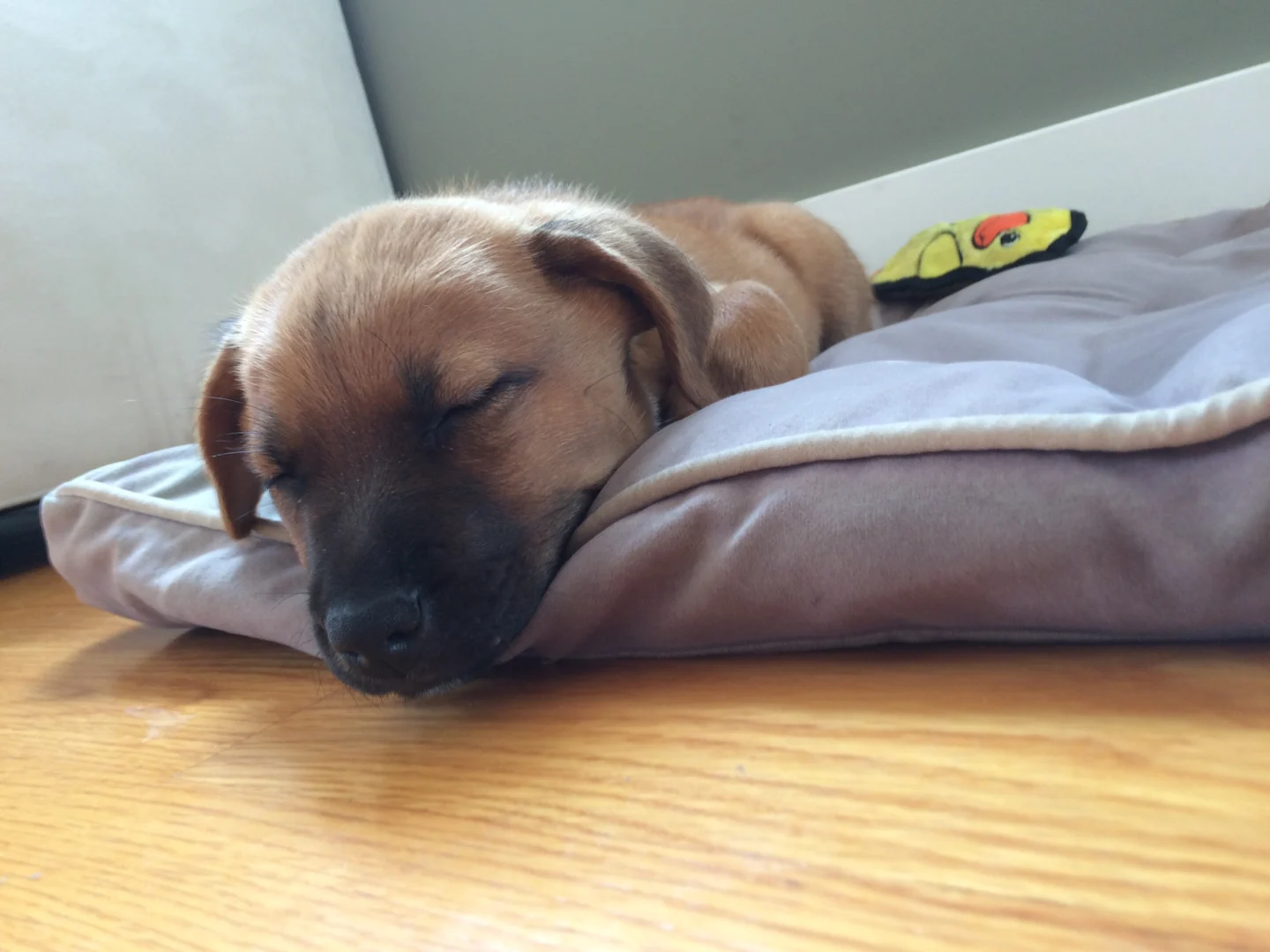
You go to the bathroom and hear four little paws behind you. You open a drawer and there they are. You pick up your keys and your puppy seems to ask where the two of you are going. Start teaching them to be alone with very brief separations while you’re still at home. Reward calm moments and increase the distance only when they can handle it without distress. Going straight from constant company to an entire morning alone is a big leap.
The aim is for your puppy to feel safe when you step away. Letting them cry until they’re exhausted won’t make the fear go away. A puppy who’s just arrived doesn’t know the house, the people or the routine yet. Before they can learn to be on their own, they need to find that this new world is predictable. Patience and a realistic plan will help.
Before you leave, see the house from their level
Choose a quiet, comfortable place to rest. Put away cables, medicines, cleaning products, small objects and anything your puppy could chew or swallow. Check access to windows, balconies and stairs, too. A soft bed only goes so far if there’s an electrical cable a few inches away that looks exactly like a new toy. Make the space safe before thinking about how long to practise.
Give your puppy water and a place to settle at a comfortable temperature. If you use a baby gate or playpen, let them get used to that space before the first time you need to leave. The same goes for a crate. It can’t make an absence that’s too long manageable, and it should never become a punishment.
Start while you’re still in the same room
Pick a moment when your puppy’s needs have been met and they’re winding down. Reward a brief, quiet pause on their bed while you’re nearby. Then move a tiny distance away and come back. The first go needn’t feel like an event. No suitcases, dramatic goodbyes or tests of who can hold out longest. You’re making this feel ordinary.
Gradually increase the distance, then try stepping out of the room briefly. Watch your puppy’s response as well as the clock. If they stay relaxed, you can repeat it. If they get upset when you stand up, make the current step easier before trying to disappear behind a door.
A few seconds first, then a small step further
Once moving around the room feels easy, try leaving for a few seconds and return before your puppy gets distressed. Mix easy practice with proper breaks. Every puppy progresses differently, and a hard day doesn’t undo what they’ve learnt. If a stretch is too long, go back to a shorter one. The schedule can wait.
A useful practice diary has three columns: what I did, how my puppy reacted and where to pick up. ‘I went through the door and they followed straight away. Tomorrow I’ll go back to moving where they can see me’ gives you something to work with. ‘They’re too attached to me’ doesn’t tell you how to help. Writing down what happened also makes it easier to talk to a professional if you need to.
A toy can help your puppy settle
A suitable activity can make time in their space more enjoyable. Introduce food-dispensing toys while you’re there, and pick one for your puppy’s age, size and chewing habits. Anything they break or try to swallow needs supervision. Follow the manufacturer’s instructions and ask your vet if you’re unsure.
If your puppy drops a favourite toy as soon as you move away, hold off on adding more food or buying something more complicated. The separation itself may already be hard. A toy makes a manageable situation more enjoyable. It won’t make a separation your puppy can’t yet cope with manageable.
There’s more to watch for than chewed furniture
Barking, howling, scratching at the door and trying to get out can all signal distress. So can pacing, trembling or being unable to settle. Try recording a short stretch while you’re out every so often. It can show you what’s happening even if the neighbours never complain and nothing gets broken.
Watch the whole sequence. Does your puppy settle after a little while or stay on alert? Do they rest or keep reacting to every sound? Use the recording to understand what happened and skip the scolding when you return. If you find a puddle or something damaged, think about your puppy’s age, needs, how safe the room is and whether being apart was difficult for them.
How long can they stay alone? Age matters
Puppies need frequent toilet breaks, meals on their usual schedule, rest and social contact. Timings that suit an adult dog are a poor target for a very young puppy. To plan your day, ask your vet what intervals suit your dog’s age and health rather than waiting for accidents at home.
If you work away from home, arrange support before the first long absence. Ask someone you trust, book a pet sitter or find another suitable option. Let your puppy meet the person with you there and go over timings, access, food and walks. Group care doesn’t suit every puppy. Check vaccination status, how they’ll be introduced and whether the setting is a good fit. Training needs a daily routine that makes it possible.
Keys don’t have to mean you’re about to disappear
Some puppies start to worry as soon as you put on your coat. Noticing these early reactions helps you see when the worry begins. Make time for play and attention at other points in the day. If every fun activity leads straight to you leaving, the activity itself can become something that puts your puppy on alert.
Keep departures and returns low-key. You can still respond warmly to a frightened puppy. A quiet goodbye and return keep excitement down while this starts to feel ordinary. If your puppy is struggling, make the step easier and get help. Don’t wait outside for the crying to stop just to prove a point.
When to ask for a hand
If the distress is intense, begins after the briefest separation or puts your puppy at risk of injury as they try to reach you, speak to your vet. They can rule out health problems and recommend a veterinary behaviourist or another qualified professional. A plan tailored to your puppy is more useful than conflicting tips from videos promising instant results.
Everyone at home needs to know the same steps. If you’re practising brief absences and someone else suddenly leaves the puppy for hours, the routine stops being predictable. Agree on a few clear rules: a safe space, small steps, close observation and no punishment. With one small experience at a time, your puppy learns that they can rest easily and that you come back.
SOURCES AND FURTHER READING
Did this story touch your heart?
Psst… you’ll like this too!
How to get your cat used to the carrier before a vet visit
Read the story ↗Share this story