Christmas nostalgia is back. Make it your own
Tartan, retro ornaments and handmade paper: what returns in 2026 ranges and how to recover customs that belong in your life today.
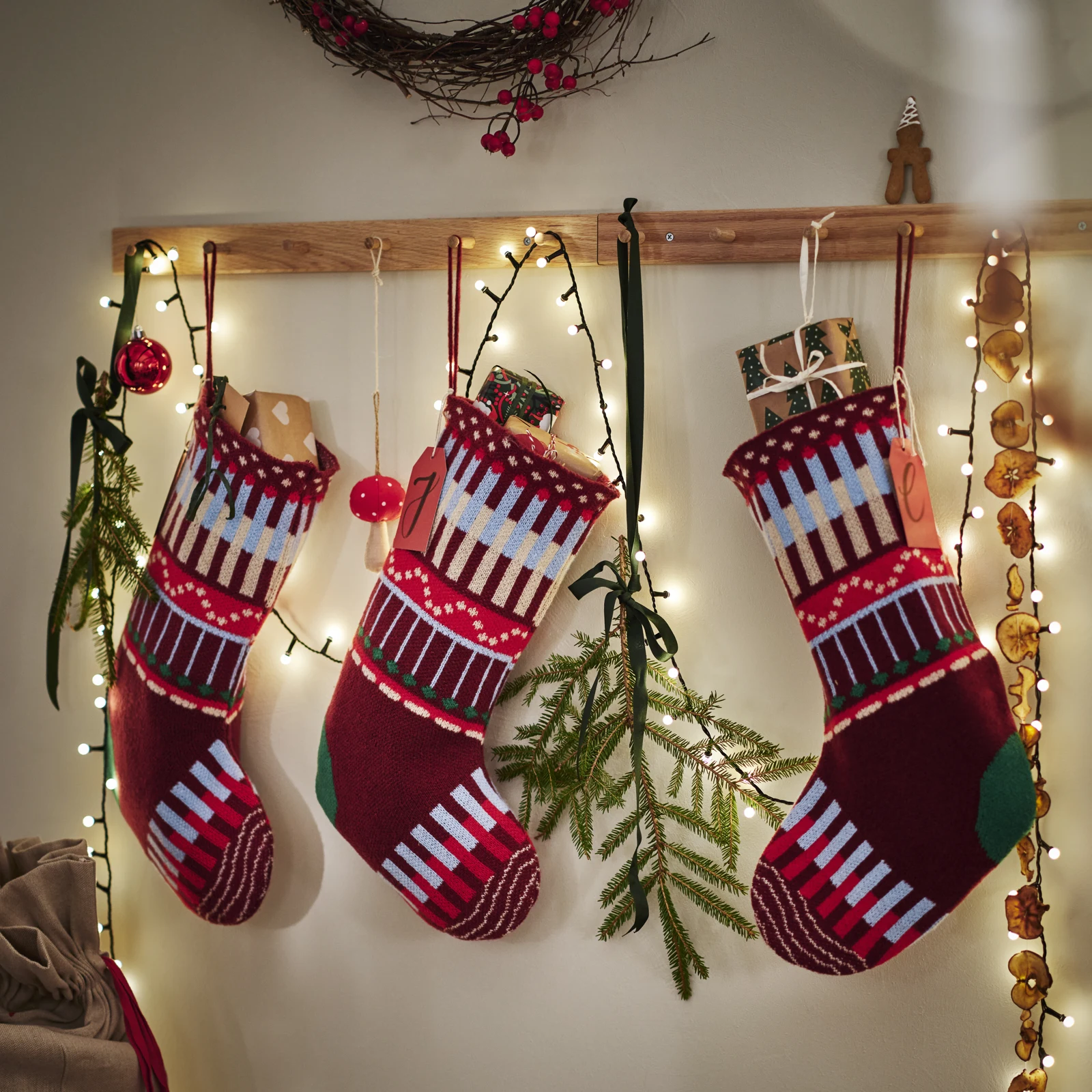
At Christmas 2026, the family decoration box has something to say again. Tartan, retro shapes, small characters and ornaments suggesting a collection built over time appear in this year's ranges. Familiar details give the room its character: checks on the sofa, an ornament received in childhood and a garland made together. To bring the atmosphere home, start with an object you know well and choose a colour that connects it with the others. The first detail of your celebration already has a story.
Tartan and retro ornaments in the 2026 collections
B&Q offers Timeless Traditions; John Lewis includes cassette and retro-game ornaments in its 2026 Christmas selection; Leroy Merlin presents Christmas Tale with checked textiles. These references take different forms, from a traditional sitting room to an ornament that makes people smile beside the tree. Choose the connection closest to your life: a familiar family throw, music remembered from early presents or the colours of Christmas at grandparents' house. That connection gives you a starting point for arranging what you already own and selecting another detail if needed.
An authentic 1970s ornament and a new retro-shaped decoration bring different histories to a display. When looking for an older piece, ask the seller for detail photographs, dimensions, condition and information about its origin. Examine its hook, surface and stability before deciding where it will go. For a newly made product, choose the detail you enjoy: a colour, a character or the memory of a game. Give each object enough space to be seen and a suitable support so that its shape remains clear within the group.
Let the tree become a personal collection
The first approach worth reconsidering is a tree built through additions: a gift, a travel memory, something children once made. To keep the result readable, choose five or six meaningful pieces and place them where they can be seen clearly. Fill around them with the plain ornaments you already own. Repeating one colour in hanging threads can establish order without making every branch identical. The arrangement grows from possessions and memories rather than a requirement to match every surface.
Check hooks, attachments and the stability of the tree, then place fragile mementoes on solid branches in positions suitable for children and animals at home. A delicate ornament can also sit in a display case or stable bowl on an inaccessible surface. Look at the arrangement from the doorway: the important piece should remain visible from a distance. Repeat one of its colours in nearby ornaments and leave a small gap between fragile surfaces. This gives the memory its own space within the overall decoration.
Let tartan connect different objects
Checks can link a cushion, the edge of a tablecloth and a wreath ribbon. They do not need to cover every surface. For a small sitting room, choose one checked textile, repeat one of its colours in the decorations and keep surrounding pieces simple. Begin with a throw you already own if possible. An object does not have to carry a Christmas label to belong in a Christmas room, especially when its colour and texture already fit the setting.
For a six-person table, combine a light cloth, white plates and napkins in two colours found in your checked textile. Place an existing tartan accent on a sideboard where it will not interfere with hot dishes and drinks. If buying a textile, consider dimensions and washing requirements as well as pattern. Something useful throughout winter is more likely to remain in service than a purchase designed to appear for one lunch on 25 December and then disappear for another year.
Paper makes the act of making visible
Chains, stars and small garlands belong to the familiar paper crafts returning to contemporary displays. Their appeal lies in a visible fold, a chosen colour and a link contributed by somebody at home. For an orderly effect, use three colours and strips of equal width. For a family project, let each participant make a section of the chain. Measure the space before starting and test the garland in its intended position. Knowing the required length makes the whole project easier to complete and gives everyone a clear finishing point.
Choose a shelf, a clear wall or the side of a bookcase. Use a fixing suited to the surface, keep switches and openings accessible and place paper away from heat, flames and lighting equipment. Our children's activity guide includes chain measurements and instructions, while the Nordic decorations guide explores paper hearts, straw and himmeli. Begin with one garland, try it in its chosen space and look at the result before adding another. A small arrangement is easy to position, enjoy and store for the following season.
Retro can be playful too
A cassette-shaped ornament can recall music, adolescence and afternoons with friends; a small retro game can bring back celebrations with cousins. Start with a shared interest and choose an object the people living with you will recognise. Hang it at eye level in a secure position and surround it with plain ornaments repeating one of its colours. It becomes the detail that invites a pause to remember a song, a present or the first game you played together, with space for somebody else to add their version of the memory.
Combine a family photograph, an ornament connected with an interest and a simple base. Keep delicate originals protected and use a copy of a photograph if displaying it near a window. Write a song title or the name of a game on a small card beside the object. Visitors find a clue, and anyone recognising it has a story to tell. On a narrow shelf, put the frame towards the back and support the ornament securely in front, leaving its interesting details visible from the room.
Three cards for three people you want to reach
Bring back the pleasure of writing a card by choosing three or four recipients, a pen and suitably sized card. Select a specific memory for each person: a Sunday in the kitchen, a trip or a call that arrived at the right moment. Write the name first and keep the address beside you if posting it. Giving each person a separate moment makes the task manageable and helps you find words that belong to them. A short message also leaves room for a child's illustrated signature.
Use a straightforward structure: a specific memory, something you appreciate about the person and a wish connected with their life. Avoid filling the space with solemn phrases if that is not how you speak. For recipients living far away, consider postal service timings before promising an arrival date. For a hand-delivered card, add an envelope with the person's name. A small box can keep the replies you want to preserve without requiring a whole new system for storing seasonal keepsakes.
A recipe at four, a song after dinner
Give a memory an appointment. Make the family dessert together at four, let everyone choose a song after dinner or take a photograph in last year's spot before going out. Choose one activity and prepare what it needs before guests arrive: ingredients on the worktop, music ready or space cleared for a game. Anyone joining in finds an obvious beginning and a manageable part to play. Traditions take shape through these moments that people want to repeat, with time to enjoy the company as well as complete the activity.
Make room for different memories and for anyone who would rather not share. The past was not happy for everybody, and a celebration can include new customs. If a loved person is missing, you may choose to use their favourite plate or simply mention them. Do not impose a ceremony on everybody else. A home becomes more personal when its habits reflect those living there now as well as the people who once shared it, allowing affection and present needs to coexist.
A nativity scene keeps its own meaning
A nativity scene tells the story of Jesus's birth and brings that centre into the home. Choose a visible position and arrange Mary and Joseph beside the manger, leaving room for shepherds and other figures you want to add. Tell children who is arriving and what they find: a few clearly placed characters make the scene easy to follow. A drawn sky and a star complete the setting. Protect fragile figurines in a stable location suited to the people and animals sharing your home.
Nordic traditions offer objects with their own names and stories: Danish woven hearts, the Swedish straw goat and Finnish himmeli. Choose one and spend a few minutes explaining its origin while finding its place. A heart can be seen beside a window, a straw figure on a shelf and a lightweight structure in a sheltered corner. Our Nordic decorations guide accompanies that discovery. Keeping the name with the object also makes the moment more interesting when a visitor asks what it is and why you chose it.
Choose three things you want to meet again
Finish the arrangement by choosing a family possession, a detail that brings it into focus and an activity to repeat. Your grandmother's ornament might share its colour with a ribbon and accompany an afternoon writing cards. An old tray might hold the materials for a paper chain made with younger relatives. Prepare the three elements together and decide when to use them. You now have a complete small project, with something to look at and something to do, ready to become recognisable when you meet it again next year.
When packing away, give a piece you hope to pass on a small label: who gave it, the occasion you remember and why you want to keep it. Write where it belongs at home: the red ornament we put beside the star helps children find it again too. Wrap it carefully and keep the label alongside it. Next year the box will return an object and a story, ready for another place in your celebration and another chance to be shared with the people gathering around it.
Keep exploring Christmas: A Christmas worth keeping, year after year. Christmas with children: let’s make something of our own. Christmas trends 2026.
SOURCES AND FURTHER READING
Did this story touch your heart?
Share this story