DO I HAVE TO BE PERFECT TO BECOME A SAINT?
The abrupt response, the program skipped, that feeling of never doing enough. St Francis de Sales accompanies us out of the race to be impeccable.
You had decided: today patience. Then a message comes in at the wrong time, someone interrupts you for the fifth time and responds in a tone you know all too well. A moment later the process begins: can I always be like this? I even prayed. Beautiful believer I am.
The delicate point is precisely that passage. You did something to correct, of course. But in a matter of seconds, you turned behavior into a sentence about your entire person. And maybe you added God to the jury without wondering if that's really his place.
When we imagine holiness as a day without smudges, it takes a crooked morning to feel out. St Francis de Sales offers a more habitable perspective: taking God's love seriously within the life we have, with responsibility and sweetness.
A saint who also spoke to those who had a home and a job
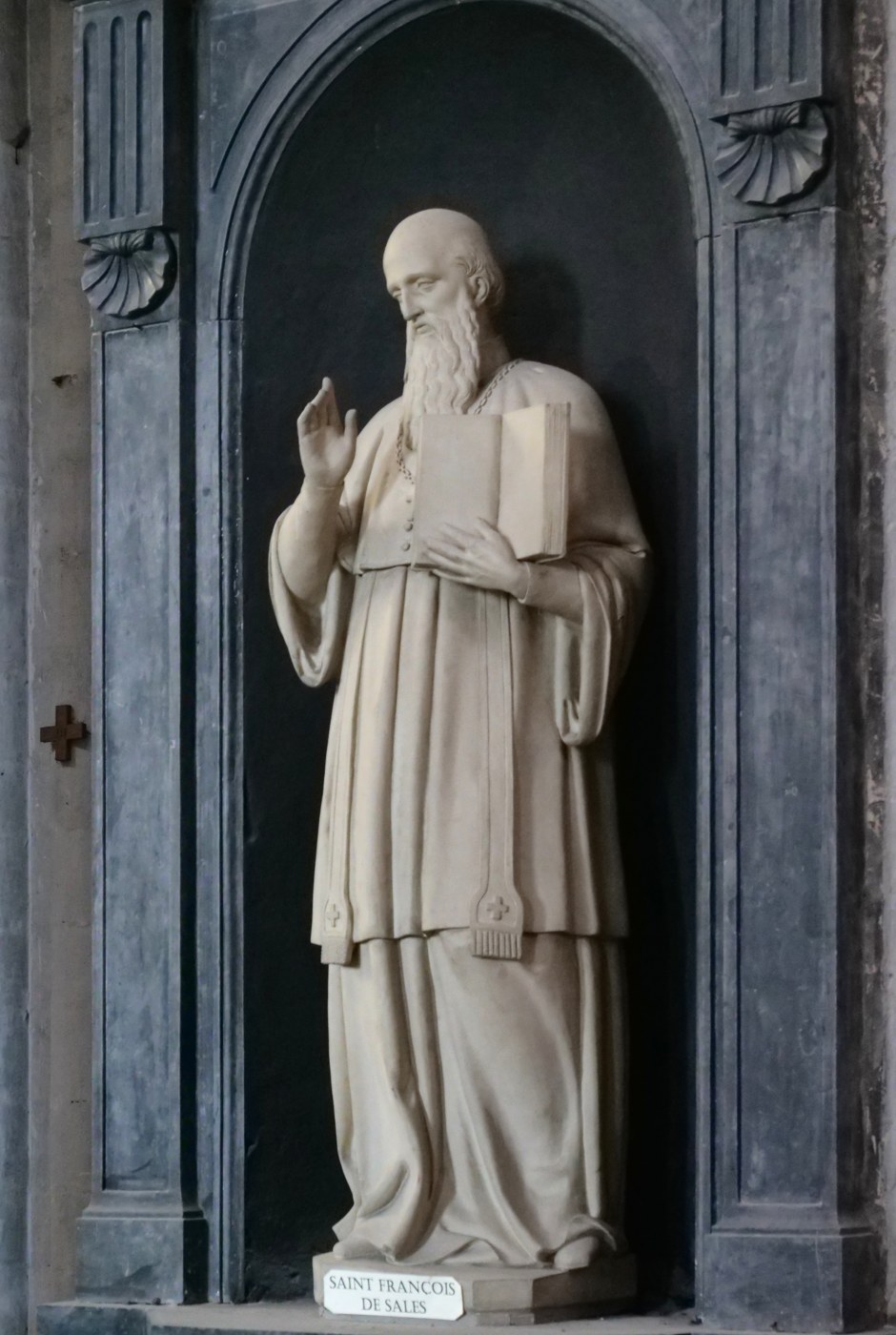
Francis de Sales, bishop and doctor of the Church, did not think of spiritual life as a privilege of the monastery. Benedict XVI, in the audience of 2 March 2011, recalls his invitation to the laity to live fully for God in their own occupations. His Introduction to devoted life, also known as Philothea, addresses this very horizon.
In the Apostolic Letter Totum amoris est, Francis returns to a Salesian intuition: devotion must be lived taking into account the condition, forces and commitments of each. Not everyone can organize the day in the same way.
Let's take her to our kitchen: the time of a woman who accompanies a family member to the visits does not resemble the time of those who go through a more free period. One person working shifts does not have the same hours as another. Measuring faith by counting activities, without looking at life, risks making us lose people.
Improve without treating you as a problem
Sweetness toward oneself is not a pass to hurt others. If you've spoken wrong, you can recognize him. If you promised something and didn't keep it, you can fix it. But humiliating you doesn't make an apology any more sincere.
Try to distinguish two sentences: I answered badly; I am an impossible person. The first allows for a concrete step. The second seems definitive and often leaves you firm to dwell. You can go back to that person and say the tone was unfair, without adding a long defense of your reasons. You can also recognize that you were tired and that tiredness must be dealt with before the next shot.
The correction takes a real form: an excuse, a more sustainable commitment, a conversation postponed by ten minutes. Nothing spectacular. Something that changes the way you're with others.
God is not the religious version of your inner judge
There are days when even prayer becomes a test: have I concentrated enough? Have I felt the right emotion? Why does that person seem more collected than I do? Without realizing it, we bring before God the same need to succeed that accompanies us everywhere.
In the Catholic perspective, holiness comes from the encounter with grace and the free response of the person. It is not a prize reserved for those who have never needed mercy. The call concerns ordinary life, as Gaudete et exultate recalls in numbers 14–18.
The reflection of CHIARA! starts from here: if every evening you tell God only your list of shortcomings, try to add also the good received. Who helped you? When did you hear that? What did you learn? Not to inflate the report card, but to recognize a relationship in which you can also thank.
The little gesture that won't end up in a biography
Daily holiness can go through a choice you will not photograph: avoid a bad joke when it would be very easy to make the group laugh; tell the truth about the work; listen to a person without constantly looking at the screen. They are possibilities to discern in your day, not a new mandatory list.
And when you are wrong, Christian life includes repentance, reconciliation and, when necessary, the sacrament of confession. Asking for help is not a relegation. Not even admitting that a habit is harder to change than expected.
If the need to be perfect takes up a lot of space, talking about it with a competent person or with a balanced spiritual guide can help distinguish responsibilities and endless accusations. Faith does not require to be alone with this burden.
Tonight you can start from a simple sentence
Before you sleep, choose a concrete fact. Thank you for good. Recognize a mistake without broadening it to your entire identity. Ask God for grace for a possible step tomorrow.
Maybe the day won't end with the feeling of having solved everything. But you may have stopped speaking to yourself like an enemy. Francis de Sales, with his attention to the human heart, invites us to seek God there too: in the patience with which we return to learn to love.