JUMPER, LET ME READ YOUR LABEL! WHAT GOES INTO PRADA RE-CASHMERE AND RE-WOOL
Recycled cashmere, wool and percentages worth understanding: the house's project offers a reason to ask better questions about any jumper, including the one already in your wardrobe.
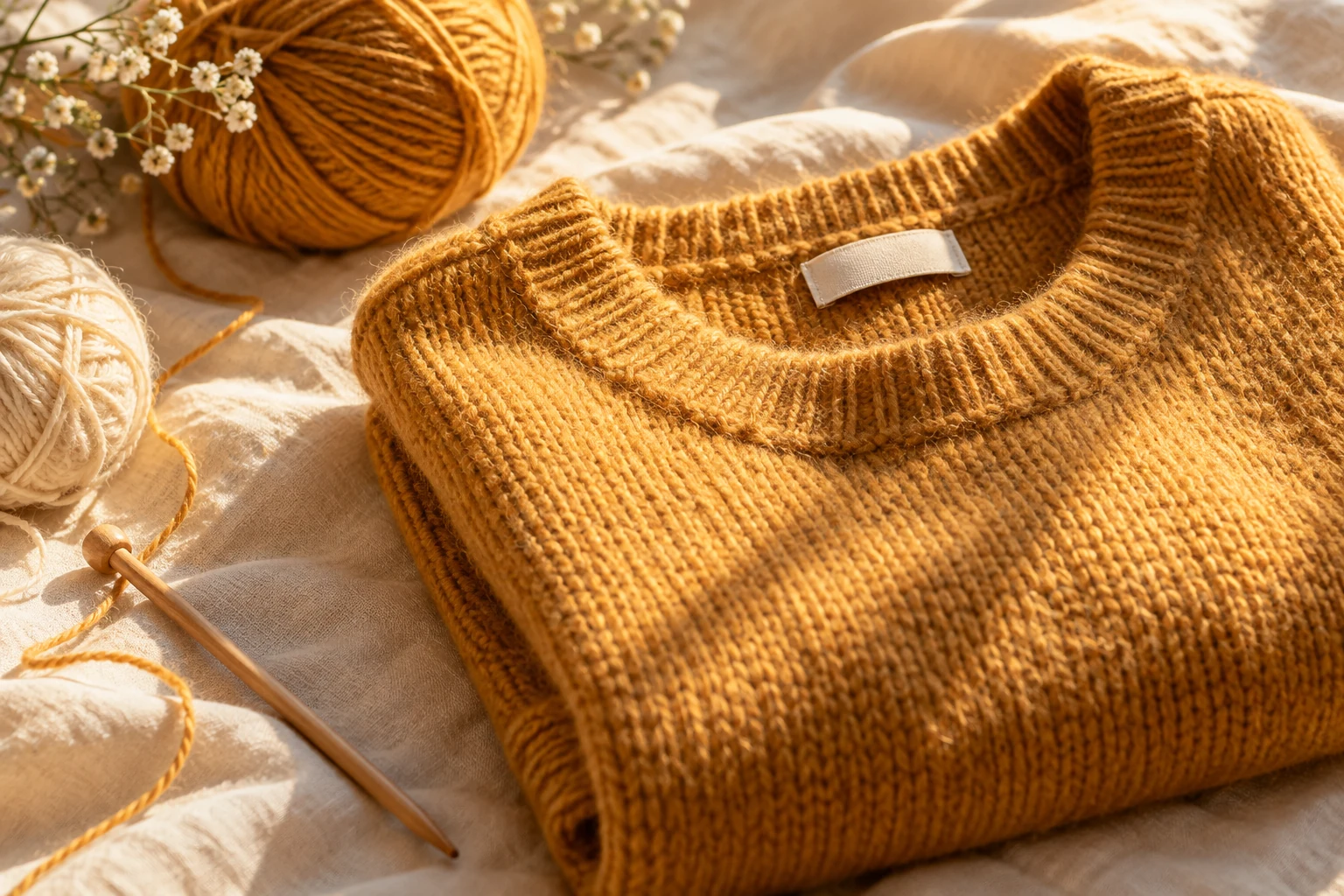
You touch it, hold it near your face and check the colour. Then you look for your size. Some gestures around a jumper happen almost automatically; carefully reading the fibre composition can come last. This time, let us begin there. A word such as “recycled” can tell us something precise when we keep the numbers beside it.
Prada Re-Cashmere and Re-Wool take us straight to the label inside a jumper. The project concerns familiar autumn wardrobe materials. Let’s look more closely at what is in them before falling for the colour.
Two names, two compositions
According to Prada, Re-Cashmere pieces use 100% recycled cashmere. The stated Re-Wool blend is different: 50% virgin wool, 40% recycled wool and 10% recycled cashmere. The house associates its virgin wool with RWS and the recycled components with GRS. These are the company's statements, to be considered alongside information for the individual item.
The first useful distinction is straightforward: Re-Wool does not mean 100% recycled wool. Half the described composition is virgin wool, while the other half comprises the two recycled fibres. A line's name introduces a project; percentages help us understand what we are looking at.
This small step matters outside luxury too. Before giving an adjective a broader meaning, find the complete explanation. Which fibre? How much? In which part of the product? Those are questions we can ask in a shop, online or when a description feels too vague to be useful.
Where does the recovered material come from?
Prada describes the use of spinning residues and production offcuts, with recycling taking place in Italy. In the house's account, material is recovered before becoming a garment worn by a customer: these are pre-consumer remnants. That should be distinguished from recovering a jumper that someone has already worn and then handed in.
The official project film included in this article shows the brand's manufacturing work. Watching it can give a shape to words that remain abstract on a product page. It is a film made by the house: it tells the project from the brand's perspective, and its origin matters when we watch it.
It also encourages another useful question. If a description mentions recycled material, ask where it comes from and what information accompanies it. Complicated vocabulary is unnecessary. “What was this recovered from?” is already a good beginning for a conversation at the counter.
The tag on the garment: try using it
Prada states that an NFC tag connects to the Aura Consortium platform to provide information about materials and processing. If you are considering a garment, ask to see what information is actually available for that item and how to access it.
The recycled percentage tells us where part of the material comes from. Making, care and how long we can use the piece are part of the story too. An interesting label can open another question.
The price is still a luxury price
For a sense of the price range, a Re-Cashmere crew-neck is €1,400 and some cardigans €1,800. This is luxury fashion. Learning about the project can be interesting without a purchase and may make us look at our own jumper’s label.
This is not a shopping guide that insists on a purchase. You can examine a luxury project and learn something useful for considering another brand's jumper, without feeling that buying is the required next step. The most useful information comes home with us even after we close the shopping page.
Three questions before taking it home
First: can I imagine wearing it with at least three things I own? Picture it with trousers, a skirt or the jeans you actually reach for. If wearing it requires buying an entire supporting wardrobe, pause for a moment before deciding.
Second: do I know how to care for it? Read the care label for this particular item before choosing. Do not automatically transfer instructions from another jumper, however similar it looks. Third: do I like it even without its story? Colour, fit and how it feels to wear still matter. An interesting project deserves attention; your wardrobe deserves something you will want to use.
You can do the same exercise tonight with what you already own. Take the jumper you always look for when the weather turns cold, read its composition and check its care instructions. Put it back somewhere easy to find. The next time a word on a label catches your attention, you will know where to begin: with the details, giving yourself time to understand them.
Source: Prada ↗