MARS, HERE WE COME… ALMOST! MMX HEADS FOR PHOBOS, THE MOON HIDING A MYSTERY
MMX went to Phobos! The launch confirmed by JAXA opens a journey with a tiny and ambitious goal: to bring back to Earth at least ten grams of a Mars moon.
MMX took off on October 19 2026 at the 21:41:03 Italians, when in Japan there were 04:41:03 20. JAXA confirms the launch of the H3 number 10 from Tanegashima and the separation of the probe about 71 minutes later. It is the first step: collecting samples and returning to Earth remain future goals.
Phobos, a small moon with a huge question
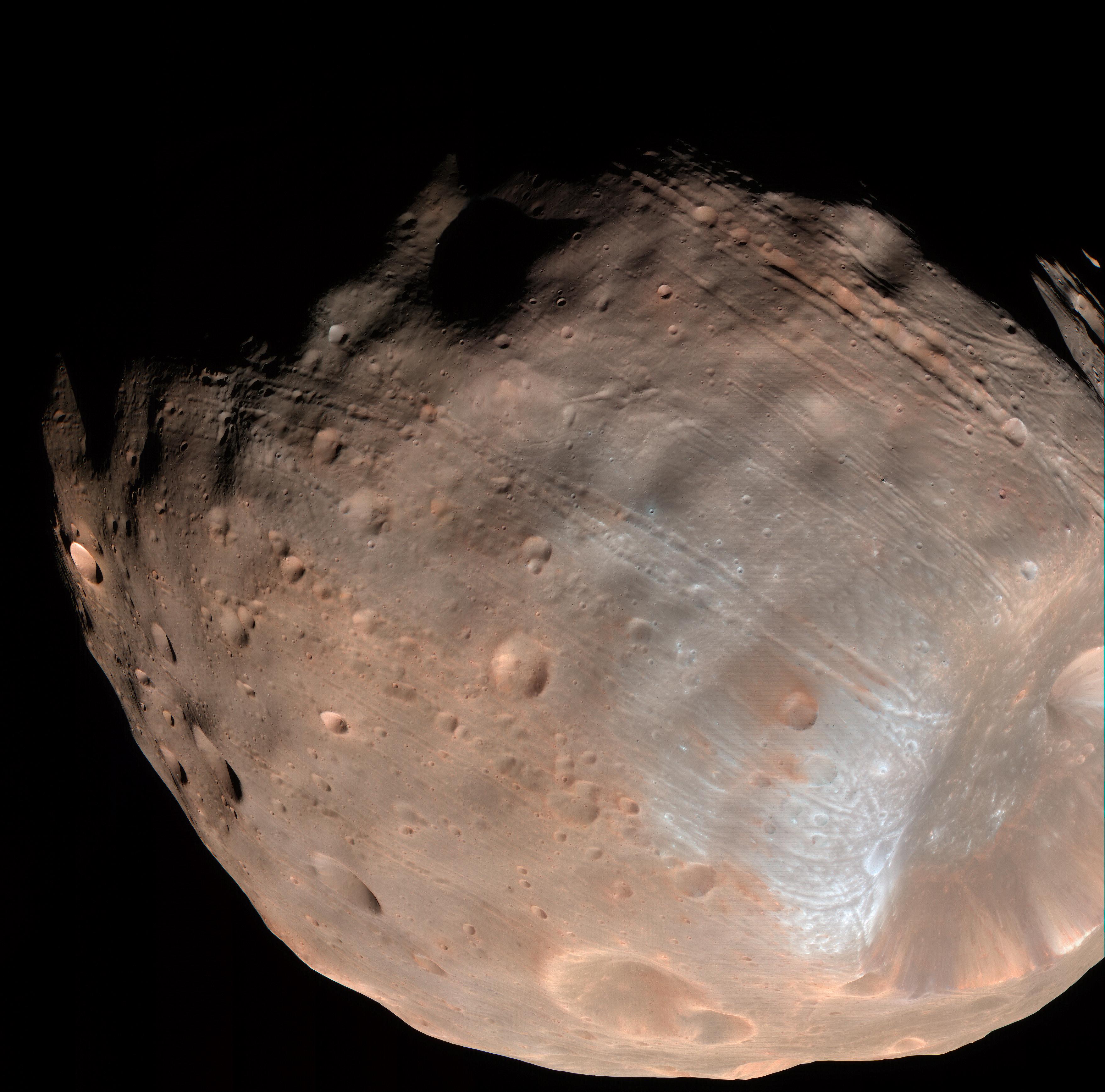
If you imagine a smooth and perfectly round moon, change photography. Phobos has an irregular shape, craters and an appearance that resembles a cosmic potato. It is the largest of the two moons of Mars, but it reaches about 27 kilometers in its maximum size. The other is called Deimos. Both were discovered in 1877 by the astronomer Asaph Hall.
The question that makes this small world special is its origin. The hypotheses discussed by the researchers include the capture of bodies born elsewhere and the formation from the debris of a great impact on Mars. Composition and history of samples may help to distinguish them. A champion thus becomes a physical testimony to be questioned, instead of an answer to be taken for granted.
Ten grams, a trip of about five years
MMX means Martian Moons eXploration. The project led by JAXA includes close observations, material collection and return to Earth, with arrival of the samples scheduled in 2031. The scientific goal is at least ten grams of material of Phobos: a tiny amount in everyday life, the result of an interplanetary journey in the life of a mission.
The calendar describes separate stages: the approach to the Martian system, planned in 2027, observations and operations near the moon, then the departure of the return journey in 2030. The capsule with the material should be recovered in Australia. They are programme objectives: their achievement will depend on the performance of the mission.
It's worth stopping on this difference between leaving and arriving. The flare of the rocket lasts the time of a great television moment; the work that follows takes years. Learning to follow a mission also means becoming attached to its less spectacular phases, when the news is measured, corrected and small steps verified.
On board is Idefix, the small European explorer
In the journey there is also a very concrete European contribution: the Rover Idefix, developed by the French agency CNES and the German aerospace center DLR. It has a mass of about 25 kilograms and the task of exploring the ground before the main probe operations. Its work should provide information on surface properties and contribute to the preparation of collection.
For DLR, the arrival of the rover to the ground is expected in 2029, with an activity designed for about 100 days. The plan provides that it is released from the probe, reaches the surface and straightens itself. Moving into a very weak gravity is an engineering challenge: the vehicle must be designed for that very environment, very different from an earthly road.
Looking closely and taking home are two different things
A return mission of the samples, also called sample return, adds a possibility to remote observation: to preserve real material to be analyzed on Earth. JAXA presents MMX as a passage that develops the experience of the Hayabusa and Hayabusa missions2 towards the small celestial bodies. Before the collection, the observations will also serve to study the possible locations of the operations.
This is a story to follow with curiosity and precision. The questions about water, materials and planet evolution are part of the research; a future measurement will need analysis and interpretation. The beauty of exploration is also here: let yourself be surprised without filling the still empty spaces in advance.
The countdown is over. The journey continues
The JAXA press release of October 20 confirms the outcome of the launch. For the next steps, the reference remains the space agency and the official website MMX: leaving does not equal to having already reached Phobos or collected the samples.
Between messages and commitments, we can make room for something that broadens our eyes. A small distant moon becomes a close question: how much more do we have to discover? The journey of MMX tries to respond with tools, patience and a surprisingly small goal to take home.
Source: DLR ↗