THE DRIVER IS UNWELL. THE BUS KEEPS MOVING. EBRO DOESN’T LOOK AWAY.
In Saint Paul, Minnesota, a 27-year-old sees a school bus moving with its door open. He realises something is wrong, runs towards it and climbs aboard. His story reminds us how much it can matter to notice someone who needs help.
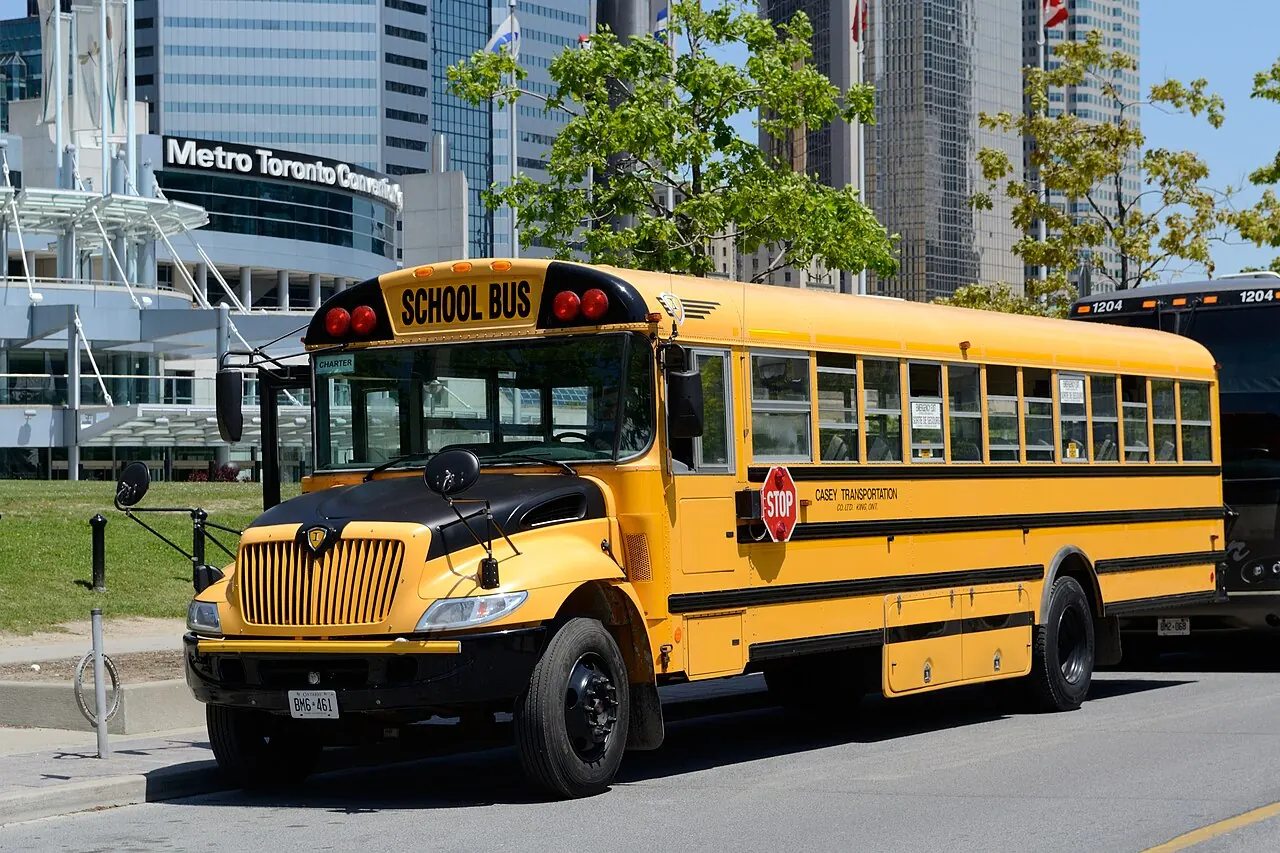
An open door on a moving school bus. That is what catches Ebro Ahmed’s attention outside a shop in Saint Paul, in the United States. He looks inside and realises the driver is having a medical emergency. There are students aboard.
It happens on Monday 19 October 2026. The shop’s security cameras record Ebro running towards the bus and climbing aboard. His intervention brings it to a stop. Ebro describes what happened in interviews on 21 October.
The detail that changes everything
In his account, Ebro notices the open door and sees the driver in distress. He runs towards the bus and applies the brake.
There is no need to imagine a crash to understand how serious the situation is: a vehicle is moving, its driver needs help and students are aboard. That is enough. The power of this story lies in what actually happened.
Courage doesn’t mean getting everything right
Ebro recalls about a moment that is far from a perfect movie scene: while trying to stop the bus, he accidentally puts it into reverse. Then he manages to select neutral and apply the parking brake. He says he had never driven a bus before.
That detail deserves to stay in the story. Celebrating kindness does not mean turning someone into an infallible character. We can recognise the value of an action without erasing its difficulty or inventing a perfection that real life does not offer.
Behind him, the students. And hands ready to help
Ahmed recalls that some students were screaming while others were calmer. He particularly remembers two girls sitting at the front: one holds his phone and glasses while he intervenes.
The school district confirms the emergency and the arrival of paramedics: no injuries are reported. The students continue their journey on another bus; the following day, school support staff also check in with them.
There is something moving in this quieter part of the story, too. Care continues beyond the moment that appears in a video: it means helping people get home, and also paying attention to the fear an experience can leave behind.
Grey’s Anatomy plays a part. But not how you might think
Ebro credits his favourite series, Grey’s Anatomy, with helping him stay calm. He explains that watching the fictional doctors keep a clear head during emergencies had stayed with him.
This is not a medical lesson learned from television: it is his account of how he tried to find calm. A personal, almost surprising detail within a very serious situation.
“I felt it was my duty”
That is the sense of the words Ebro shares: faced with those students, he felt he had to act.
We can start there, too, without believing that courage always has to be extraordinary. In everyday life, noticing others may mean stopping, listening to a request, calling for help or being present. Different actions, chosen according to the situation and our abilities.
Ebro’s story does not ask us to put ourselves in danger to prove our worth. It offers a question closer to home: when someone needs help, can we still see them?
Goodness can begin there, too. With attention that does not drift away. With someone who sees another person’s difficulty and decides that their life matters to them.
Source: ABC News ↗