Five hours of planking at 61. Yes, you read that right
DonnaJean Wilde, a former Canadian teacher and grandmother of twelve, held a plank for five hours on 6 October. Her new attempt is awaiting Guinness verification.
How long can you hold a plank? Thirty seconds? A minute on a good day? DonnaJean Wilde, 61, from Alberta, Canada, passed five hours. At the Huntsman World Senior Games in Utah on 6 October 2026, organisers recorded five hours and seven seconds. Their account describes the attempt as pending Guinness review and approval. Her recognised record from March 2024 was 4 hours, 30 minutes and 11 seconds.
It all began with a broken wrist
DonnaJean worked as a teacher and vice principal in her hometown, Magrath. She has five children and twelve grandchildren. She used to run and lift weights. Then came a fall, a fractured wrist and recovery. Unable to do her usual training, she discovered planking. An injury led to a passion, and that passion to a series of records: in September 2024, she also set the record for the most push-ups in an hour, 1,575.
A message for us
You do not need to plank for five hours, and nobody is asking you to. There is something else to take from her story: age alone does not decide what we can do. Sometimes a setback, like a broken wrist, opens a path we would otherwise never have taken.
Getting started with the plank
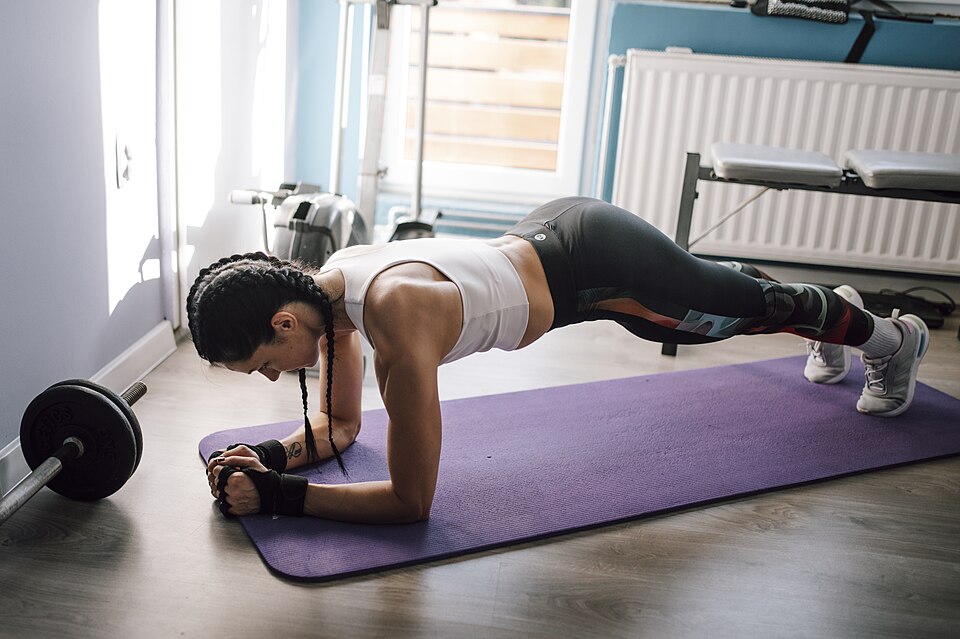
• Position: forearms on the floor, elbows beneath your shoulders, body in a straight line from head to heels. Engage your abdomen and glutes, and look towards the floor.
• Breathing: do not hold your breath. Breathe calmly throughout.
• Starting out: try a short hold, stopping before pain, and rest between sets. Adapt the duration to your fitness level: there is no compulsory weekly increase.
• An easier version: keep your knees on the floor, or place your hands against a wall or on the edge of a table.
• When to stop: if your back arches or you feel lower-back pain, end the set. Twenty seconds with good form are better than a minute with poor form.
• Before you begin: if you have back or shoulder problems, osteoporosis, are pregnant or have recently given birth, ask a doctor or physiotherapist first.
Source: NHS ↗