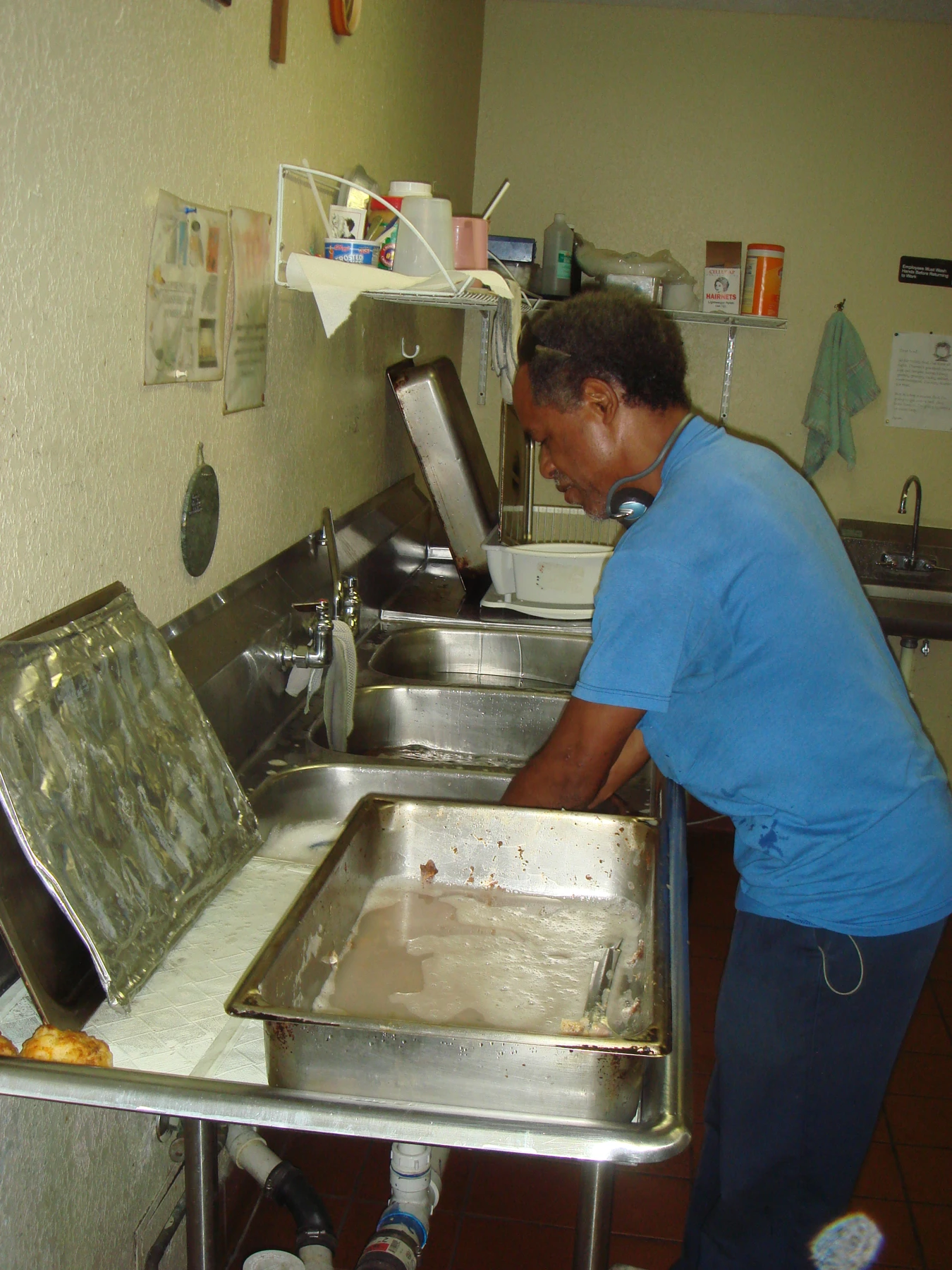
THEIR WORK HELPS YOU. DO YOU KNOW THEIR NAME?
You meet her almost every morning. You know what time he arrives and what he does. Maybe you never asked her her name. From here a question about respect can begin.
Get in the office and the floor is already clean. A delivery comes home. In one department someone changes the underwear, accompanies one person, sets up a room before another day begins.
These are gestures that make our time possible. We often only notice when something is missing. The work can be seen; the person who does it can remain in the background, reduced to a function or to the next request.
Asking for the name does not solve the injustices alone. But it can be the first sign of a different attention: in front of us there is a person, with a competence, a time and a life that do not coincide with the service we receive.
Dignity precedes the prestige of a trade
In Laborem exercens, at number 6, John Paul II puts the person who works at the centre: the value of work must be understood from his human subject. It is a point of the Church's social doctrine that questions the way we attribute to the professions.
The tone in which we speak to an executive and what we reserve for those who clean tell something. Even the time we give for an explanation, the ease with which we interrupt, the way we make a request.
You can start looking at yourself on a normal day. Greetings? Do you listen when that person explains a problem? Do you ask her something as if she was always available or do you recognize that she has an organization and other tasks?
A thank you can be precise
Thanks for waiting. Thank you for explaining how to do this. I saw the cure you prepared this thing with. A concrete recognition shows that you have paid attention to the work done.
Familiarity, however, is not to be claimed. Someone will be happy to converse; someone else will prefer to remain confidential or have little time. You don't need to ask for family details, background or personal stories to show interest.
You can show up and leave room for the answer. Respect also includes accepting a friendly and professional relationship, without expecting confidence or gratitude for being kind.
Good manners do not replace the right conditions
A person can receive smiles and still be paid late, loaded with requests after hours or treated as if he does not need rest. Here the question becomes more challenging and concerns behavior, as well as tone.
If you are responsible for an employment relationship, ask yourself if the agreements are clear, the compensation is paid on time and the requests comply with the established requirements. If you do not know how to handle a situation correctly, look for qualified information and assistance for the concrete relationship.
The number 19 of Laborem exercens treats, among other things, the right remuneration and the protection of the person working. It is not an operating manual for each contract, but it offers a criterion: the well-being of the service provider cannot disappear behind our comfort.
A favor cannot become a silent obligation
While you're at it, it's a small phrase, capable of spreading a lot of assignments. An additional commission, half an hour more, a different task. When it is repeated, what we call favor can become an expectation that is difficult to refuse.
Before you ask, stop: is this activity part of the agreement? Does it take more time, other skills, a reward to discuss again? Can a person say no without fear of consequences?
Being kind makes it easier to compare, but it does not eliminate differences in power. If you decide times, payments or renewals, a condescending answer does not guarantee that the request has been lived as free.
Even when you're just a customer you can choose a tone
Late delivery or a cashier problem can exaggerate you. You can ask for an explanation, challenge a service, and try to find a solution without insulting those in front of you.
If you want to make a report, describe what happened precisely. Avoid turning a person into the target of a problem he may not be responsible for. And before assigning a negative assessment, try to distinguish what you've observed from what you're assuming.
This does not require you to give up your rights. It means exercising them with attention to reality and consequences. A clear request can be firm without becoming humiliating.
Charity can also be seen in the details that depend on us
Perhaps today's gesture will be to greet someone you've always been in a hurry. Or correct your habit: leave a usable space, warn in time, don't call out of time for a matter that can wait.
If you have a greater responsibility, the step will have to be adapted to that responsibility. A sincere thanks can accompany a punctual payment; it cannot replace it. A prayer for workers can accompany more just choices on the work we organize.
Tomorrow, on your way in, you might notice a presence you barely saw before. You can start with a good morning saying looking at the person. And then ask what part of the respect, besides the greeting, is still waiting for your decision.