Flowers, photos and a place at the table: the heart of Día de Muertos
Before the colored skulls, there is a name. Before the photo to share, a person to remember. We enter the Mexican tradition of Día de Muertos to discover what the ofrendas tell, between family memory, indigenous cultures and encounter with Catholicism.
A photograph sits on a cabinet. Then someone asks who the woman in it is, and the room fills with stories: her laugh, her cooking, the way she called her grandchildren. That need to keep a place for someone we love brings us a little closer to Día de Muertos. There is so much more here than the colours we see on a screen.
Día de Muertos: what it means and when it happens
Día de Muertos is a Mexican tradition honouring the dead, shaped by the meeting of Indigenous cultures and Catholicism. Celebrations take place from late October into early November, especially on 1 and 2 November. Customs vary between communities and families. UNESCO recognises it as living heritage passed between generations.
In 2026, 1 November falls on Sunday and 2 November on Monday. If you would like to attend a celebration, check the local community’s programme: every place has its own voices, gatherings and ways of remembering.
The ofrenda: a place that tells someone’s story
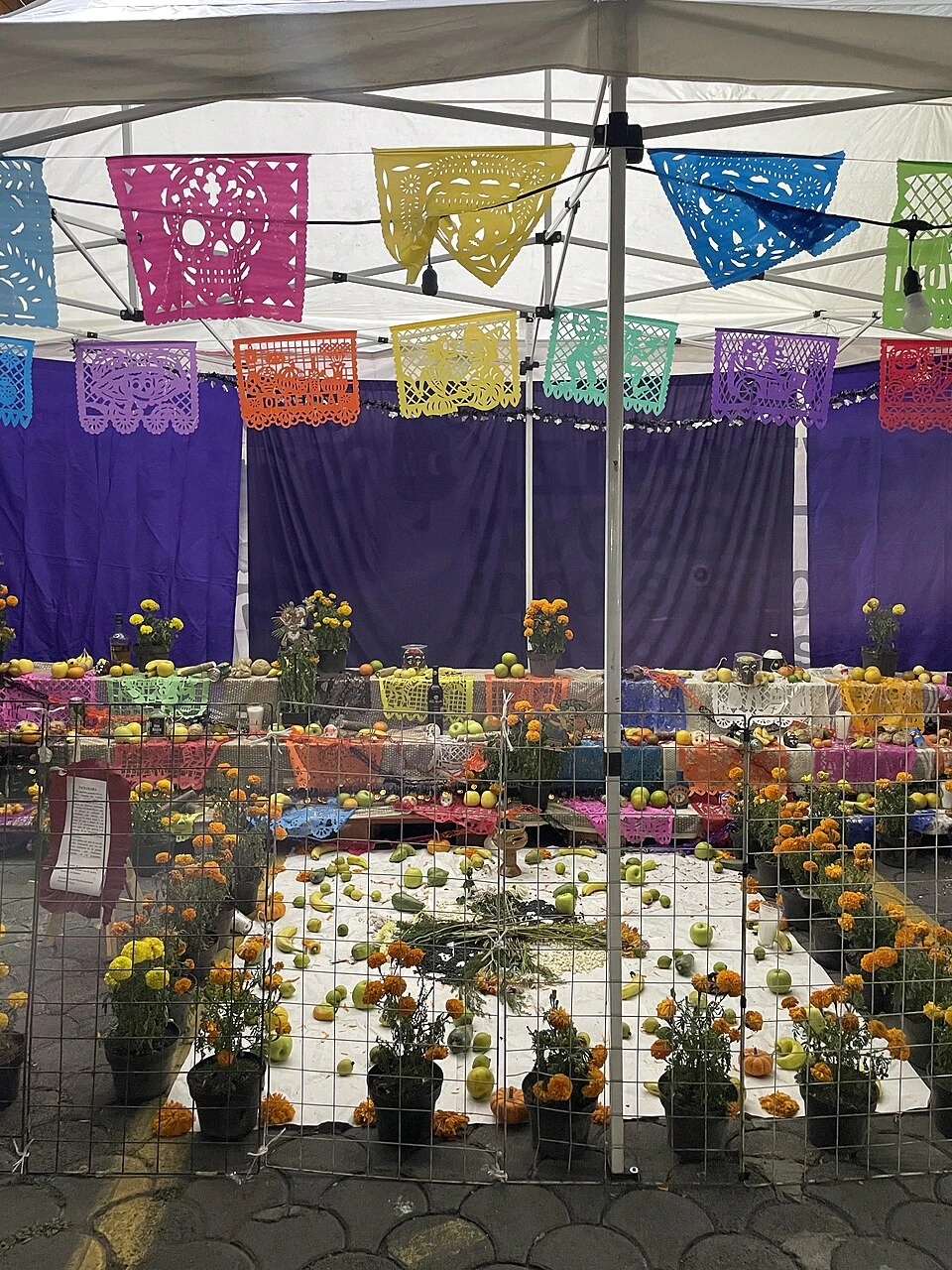
An ofrenda is an offering arranged to remember loved ones. It may include photographs, water, cempasúchil flowers, candles, papel picado, bread and the person’s favourite foods. Mexican institutions describe customs that vary from region to region.
The loveliest question is: who does it remember? A dish might hold a recipe, a Sunday lunch, a gesture repeated for years. Before looking for the perfect photograph, we can listen to the story of the person whose place is being kept.
Flowers, light and food
In the traditional beliefs described by UNESCO, cempasúchil petals, candles and favourite foods welcome the temporary return of departed souls. Flowers and light mark the path between home and cemetery. These beliefs belong to particular traditions and vary between communities.
Light can invite reflection; food can recall a relationship; a photograph can bring a face back into the room. The meaning also belongs to the family or community that prepared the ofrenda. If we have the chance, we can ask them about it.
Why ‘Mexican Halloween’ tells us too little
Skulls, bright colours, late October: the comparison is easy to make. But it misses the remembrance, family bonds and community traditions at the heart of the celebration.
A painted face alone cannot tell us who organised a gathering or what it means to those taking part. We can enjoy the image and stay curious about the story behind it.
Indigenous traditions and Catholic faith
Popular customs and Catholic teaching have their own meanings. The Catechism speaks of communion with the dead in paragraphs 955 and 958, and prayer for them in paragraph 1032. It does not make their wellbeing depend on an elaborate display at home.
As a Catholic reader, you can admire a family’s care, learn its story and pray for someone you love. You can approach the tradition with curiosity while remaining clear about your own faith.
Remembrance can also speak of peace
In 2019, UN agencies in Mexico brought this tradition to the Palacio de Bellas Artes in Mexico City. Artist Jimena Granados worked with artisans from Xochimilco on an ofrenda dedicated to peace, bringing remembrance together with reconciliation and solidarity.
Remembering someone can change how we treat the people beside us today. Perhaps the person who once kept the family together comes to mind—and we finally make that phone call we have been putting off. Something they gave us finds a place in our lives again.
Visiting an ofrenda with care
Find out who prepared it and whom it remembers. Ask before photographing people or private moments. Leave the objects where they are. If you share a photograph, include the place, date and the meaning its creators have explained.
With children, a simple question can open a conversation: ‘What makes you think of that person?’ Some will want to talk; others may prefer to be quiet. Both deserve room.
The person behind the photograph
You might ask a parent for a story you have never heard, write a name on the back of an old photograph or keep a recipe with the name of the person who taught you. If you believe, you may want to add a simple, personal prayer.
Día de Muertos introduces us to a rich tradition of remembrance. Behind its flowers, candles and photographs are people who were loved. We can begin by listening to their names.
SOURCES AND FURTHER READING
- UNESCO, El retorno de lo querido: significato e diversità della tradizione
- Governo del Messico, Secretaría de Gobernación: elementi e varietà delle ofrendas
- Catechismo della Chiesa Cattolica, nn. 955 e 958: comunione e preghiera per i defunti
- Catechismo della Chiesa Cattolica, n. 1032
- UNESCO, l’ofrenda ONU per una cultura di pace, 5 november 2019