A THOUSAND BISON, A PRAIRIE COMING BACK TO LIFE!
American Prairie’s Montana herd passes 1,000 bison: a report published on 16 October marks a step forward in prairie restoration.
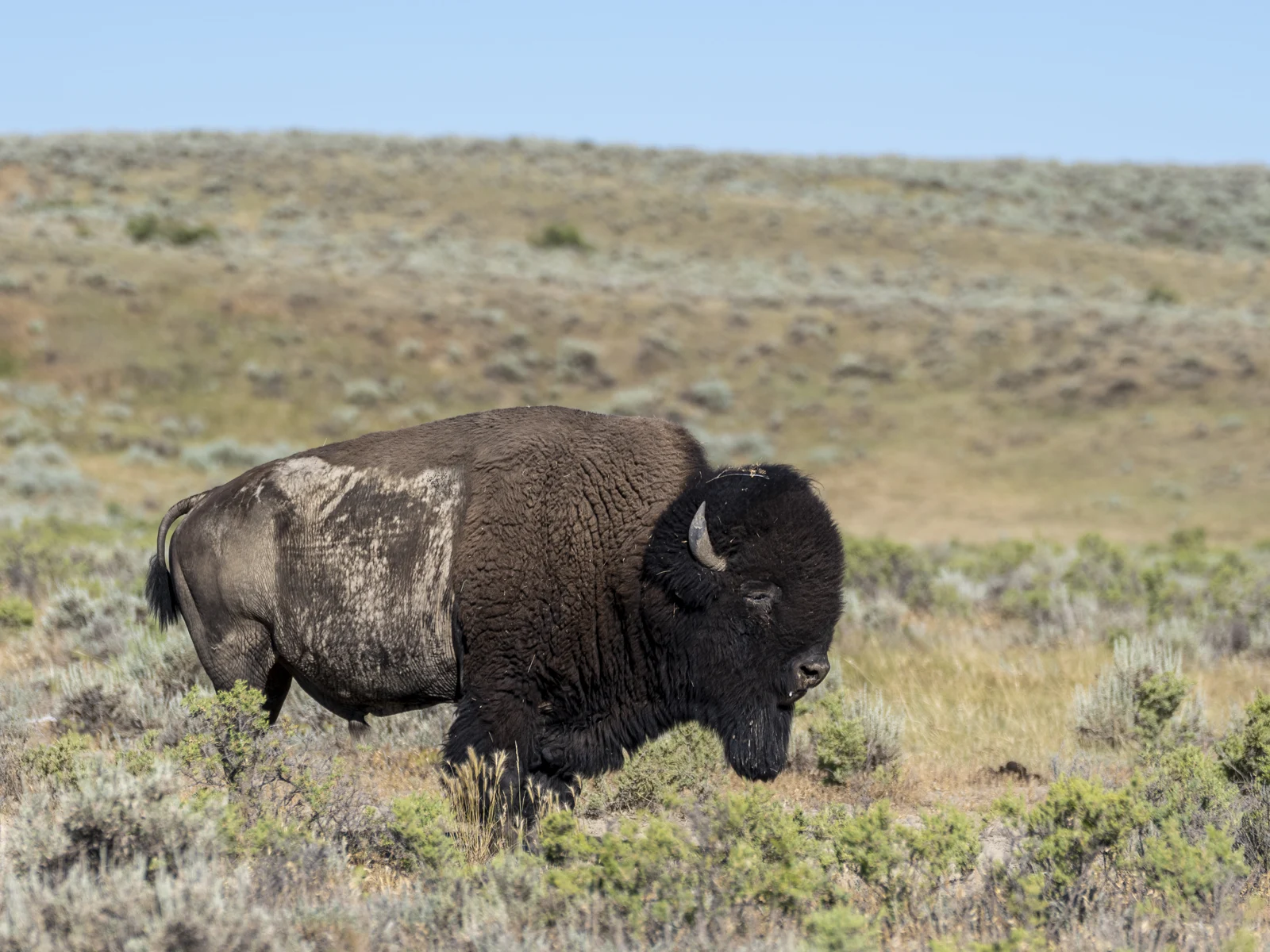
The prairie looks still, then something moves through the grass. A bison: huge, dark and instantly recognisable by its hump. In Montana, American Prairie’s herd has passed one thousand for the first time.
The milestone: 1,016 animals
After the annual calf count, the herd stands at 1,016 animals. A thousand bison: picture them against the Montana landscape! The figure belongs to American Prairie’s herd, one part of the long effort to give these animals room again.
Why bison matter to grasslands
American Prairie explains that grazing, trampling and dust baths help create varied habitats. Depressions in the ground can collect seeds and water, adding diversity to the landscape and opportunities for other species.
The aim goes beyond growing a herd: it is to restore the bison’s ecological role across large, connected areas.
Open spaces, managed boundaries
These animals do not live without boundaries. American Prairie describes extensive areas enclosed by wildlife-friendly fences, with grazing and management requirements. Montana classifies these bison as livestock. Calling them a thousand completely free animals would therefore be misleading.
The organisation identifies a herd of at least 5,000 as an important conservation and ecological recovery goal. The work is still under way.
Watch without approaching
Their return invites us to pay closer attention to nature. Visitors must follow American Prairie’s guidance: keep their distance, never feed bison and do not approach on foot for a close-up photograph.
In Genesis, animals are part of the goodness of creation. Protecting them means making room for their lives, relationships and habitats.
Source: American Prairie ↗