BOTTICELLI: STOP SCROLLING AND LOOK AT THOSE HANDS!
An Annunciation, two gestures and a room holding its breath. Enter a painting without knowing everything first.
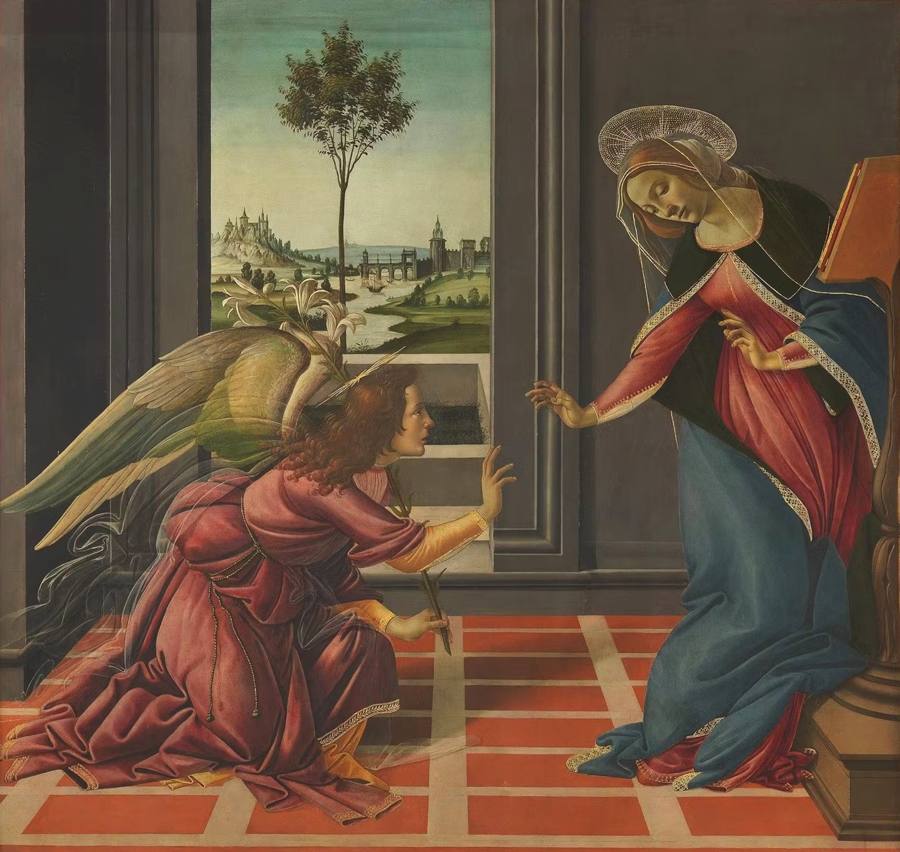
One hand approaches; another responds. The space between them catches your eye. In Sandro Botticelli’s Cestello Annunciation, follow the hands towards faces, then notice movement crossing the room.
A Florentine story
Botticelli paints the work in 1489–1490 for Florentine money changer Benedetto di ser Francesco Guardi’s family chapel in Santa Maria Maddalena in borgo Pinti. Today it is in the Uffizi.
It looks small on a phone. Imagine it in person, about a metre and a half high: figures and setting feel different.
Three things to seek
Follow gestures. Do heads and bodies echo the hands or hold them back? Describe what you see before deciding which emotion it conveys.
Look at the sparse room. Floor and rear opening guide your gaze. Cover part of the image and notice the change.
Now look beyond the room. The Uffizi explains that the opening evokes Mary as the ‘gate of heaven’, while the enclosed garden symbolises her virginity. Once you notice those details, the painting opens up a little more.
The same scene, another space
Botticelli painted an Annunciation in 1481, too: a fresco over five metres wide, also now in the Uffizi, with a much richer setting. Compare the images and Gabriel’s distance from Mary. Knowing the story does not exhaust an artist’s ways of telling it.
Write one sentence about what you see, one about what you feel and one about the museum’s interpretation. They need not coincide. Learning to look is already a lovely beginning!