Christmas tree 2026: three looks to bring home the magic!
Three complete schemes, from warm classics to graphic colour, with practical ways to arrange materials, lights and decorations you already own.
For your 2026 Christmas tree, start with the look that makes you smile: burgundy and gold for a warm classic, red and silver for a graphic celebration, or cream paper and wood for something lighter. Then open your decorations box and pick out the pieces that will bring it together. Velvet softens glossy baubles, paper adds shape between the branches and one bow gives the top a flourish. Here are three complete schemes, with quantities, hanging order and colour combinations. Even the slightly wonky personalised bauble has a place: give it a little room to shine.
Three ways to light up Christmas
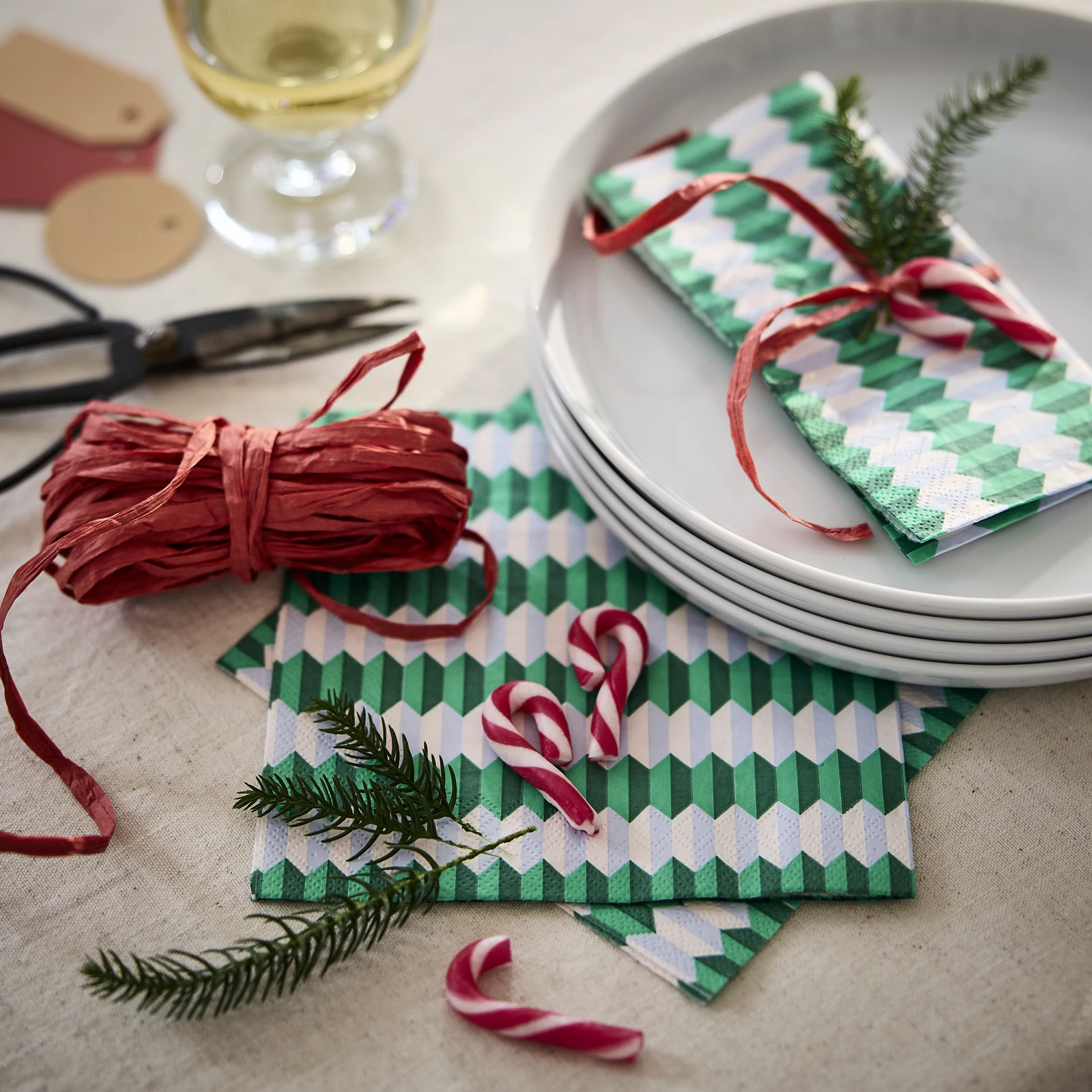
Christmas 2026 brings playful colour, warm glamour and handmade textures together. Colourful VINTERFINT paper decorations add a cheerful twist; Golden Glam bows and reflections create a richer finish; Homespun brings tactile details and familiar-looking little treasures. Choose the mood you love, then spread your decorations on a table before hanging them. You will see which colours repeat and which shapes need more space. Adjust the quantities in the three schemes to the fullness of your tree, leaving green branches visible between groups. A clear outline gives every favourite ornament its own moment.
The warm classic: green, wine and small golden reflections
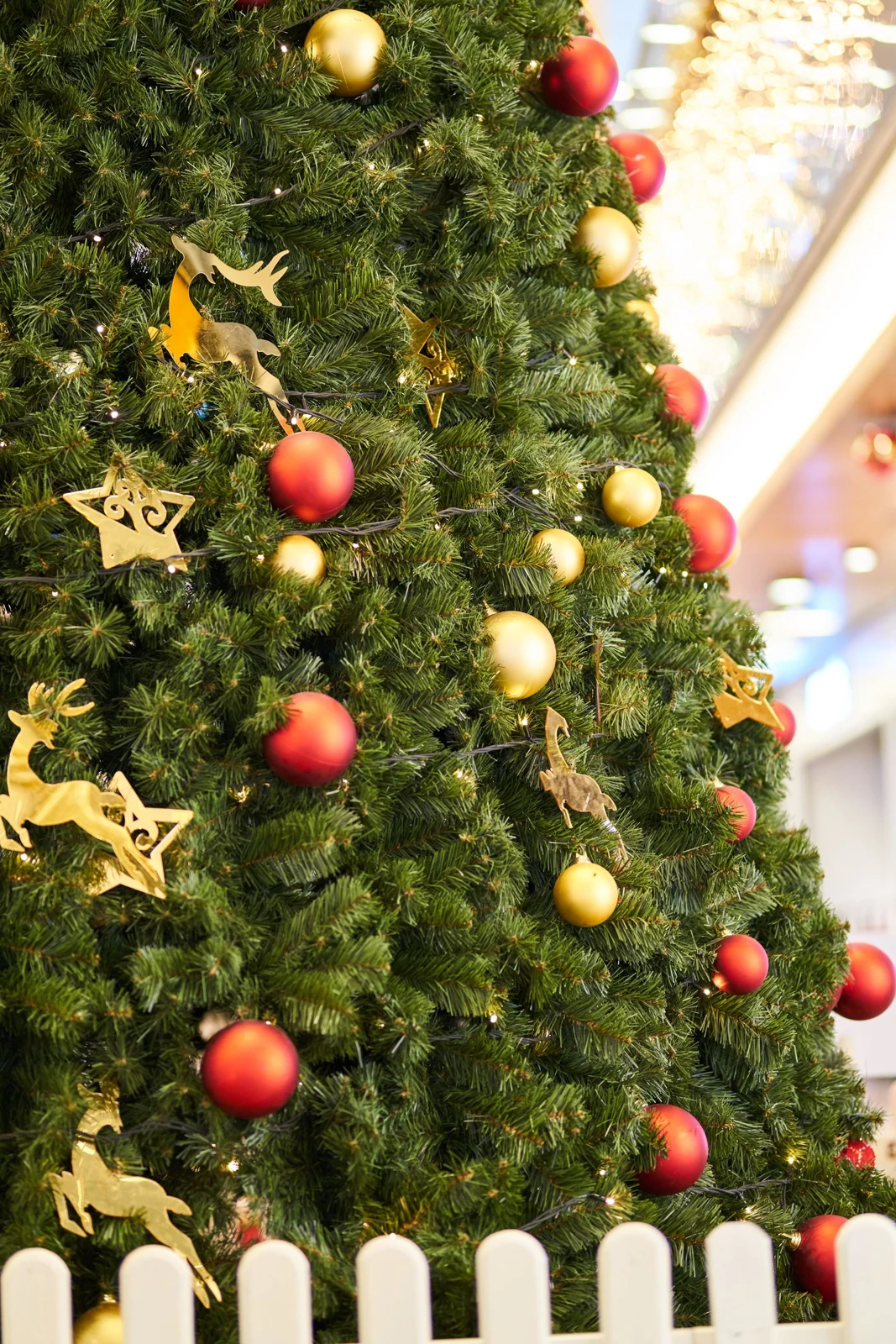
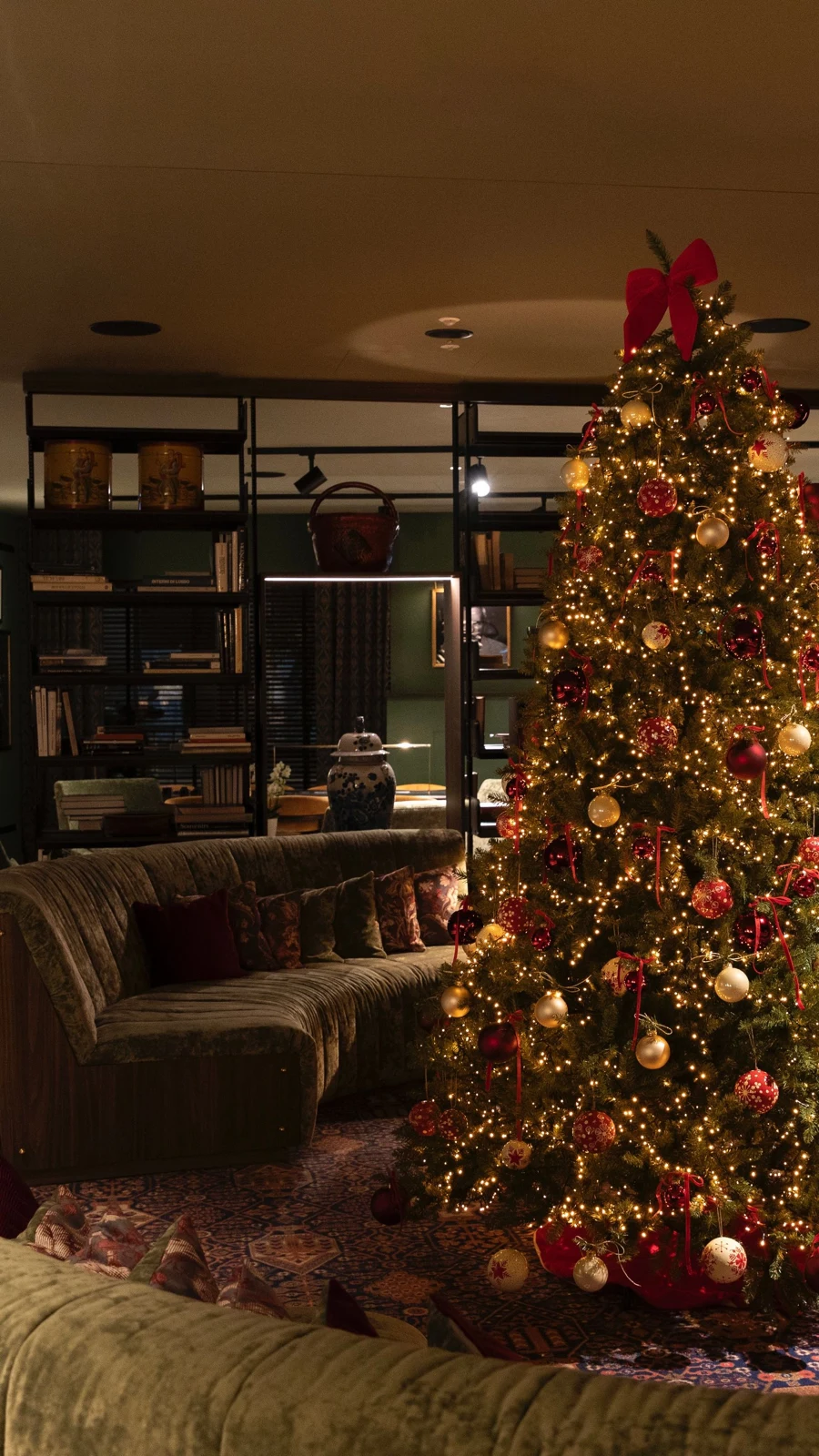
On a green tree around 180 centimetres tall, try 18 matt burgundy baubles, 12 small gold decorations and eight bows in one fabric. If you already own bright red ornaments, keep them: space them apart and let the darker wine shade connect them. Velvet creates depth; glass catches reflections. A checked detail can appear in the ribbon or around the base, without taking over every branch. Keeping the colour story consistent matters more than making every piece match perfectly. Older decorations can bring useful variation within the same family.
Fit the lights first, then place the darker baubles slightly inside the foliage. Bring bows towards the outside, where their shape remains legible. Distribute gold accents at different depths rather than hanging everything around the outer edge. For the top, one larger bow in the same fabric is enough. If you prefer a star you already own, repeat its colour in two or three places below, creating a connection with the rest of the tree. Step back before adding more: sometimes the missing ingredient is simply a little space around a beautiful piece.
A graphic celebration: red, white and silver, with a smile
The playful direction in 2026 makes room for unusual forms and confident contrasts. Give them a simple starting point: 16 red baubles and 12 white ones, followed by six silver ornaments and four amusing shapes. An ice cream, an animal or a holiday souvenir becomes a discovery rather than a compulsory purchase. Add a striped paper garland only if the branches have enough space. On a dense tree, repeat stripes in a few bows instead, keeping the rest uncluttered. Your collection can look cheerful without requiring every ornament to compete for attention.
Choose one broad silver finish: glossy for sharper reflections, brushed for a softer effect. You do not need both. White creates breathing space between more exuberant pieces. With multicoloured lights, simplify the ornaments; with white lights, allow the shapes a little more colour. Look at the arrangement with the lights switched off too. If the structure still makes sense, your tree will work in daylight, when the room feels quite different. A decoration that depends entirely on darkness can disappear during the afternoon, precisely when family and guests may be using the space.
Paper, cream and wood: light does not mean empty
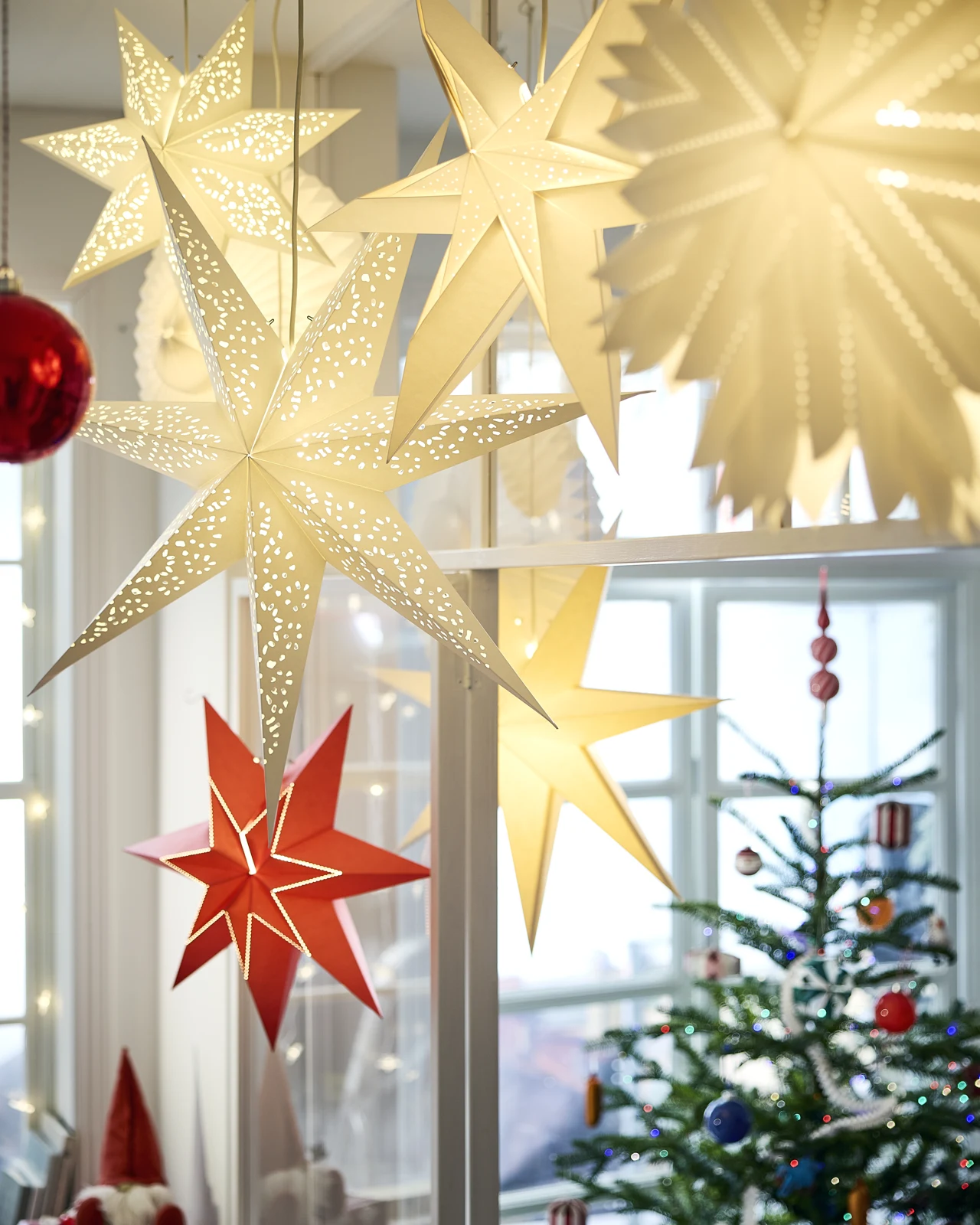
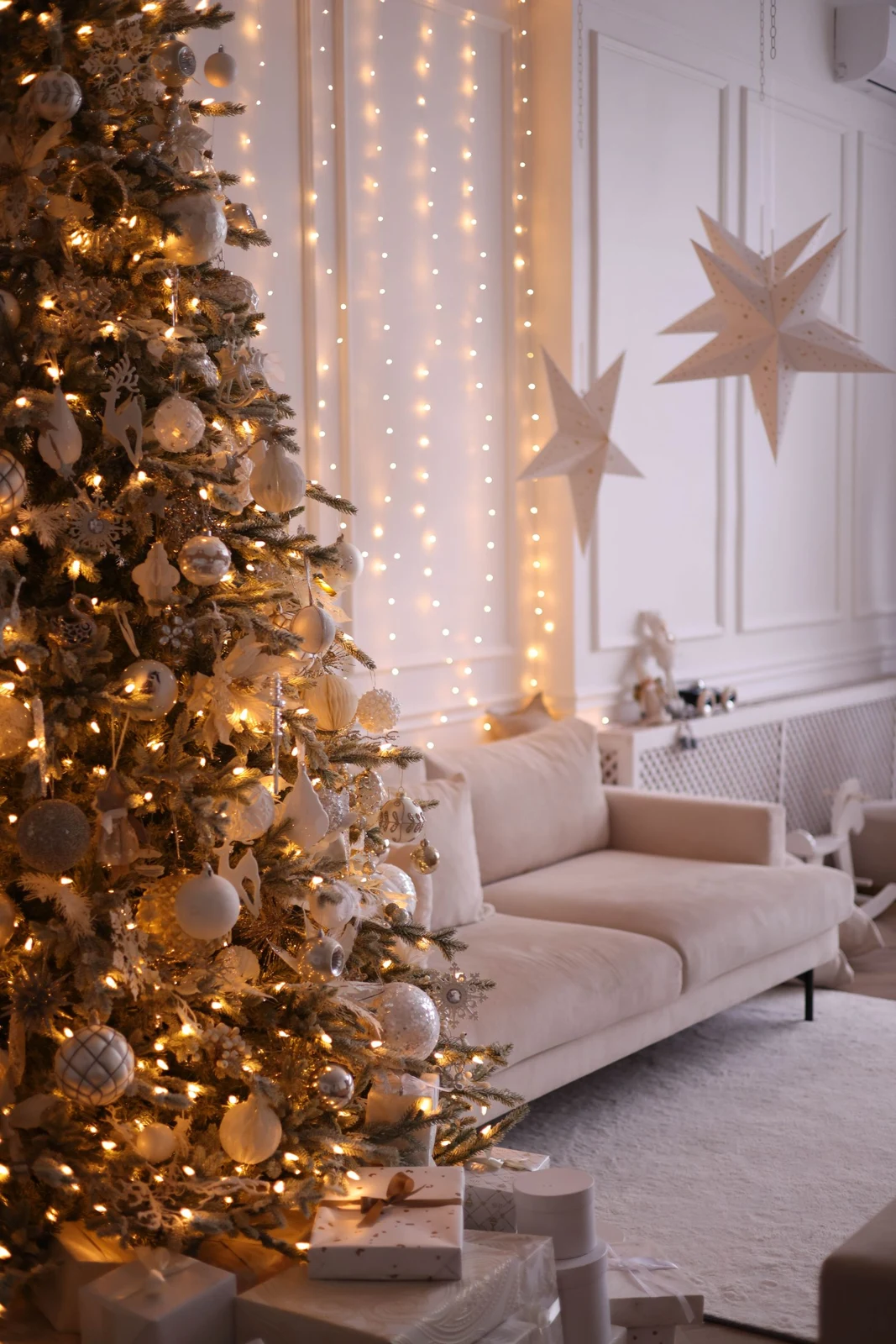
Foldaway paper decorations add shape now and pack flat in January. Give their volume room to show: eight medium cream pendants, 12 small wooden ornaments and a few pale baubles already in your box. There is no need to imitate snow with sprays or loose material. The green branches are already part of the palette. Keep paper away from damp and heat sources, and follow its maker’s instructions for assembly and storage. A clean outline and a little repetition can make a modest collection feel deliberate, without making the room look like a shop display.
Leave room around larger shapes. If a pendant rests on the branch underneath, shorten its thread or find another position. A flattened ornament loses its outline, however lovely it looked in the shop. Replace some wooden pieces with family decorations if you wish; look for a recurring colour rather than identical materials. Around the base, neatly fold a clean cloth over the visible stand without covering cables or power supplies with fabric, and without weakening stability. A photograph may hide practical details, but a real room needs accessible connections and a tree that stays firmly upright.
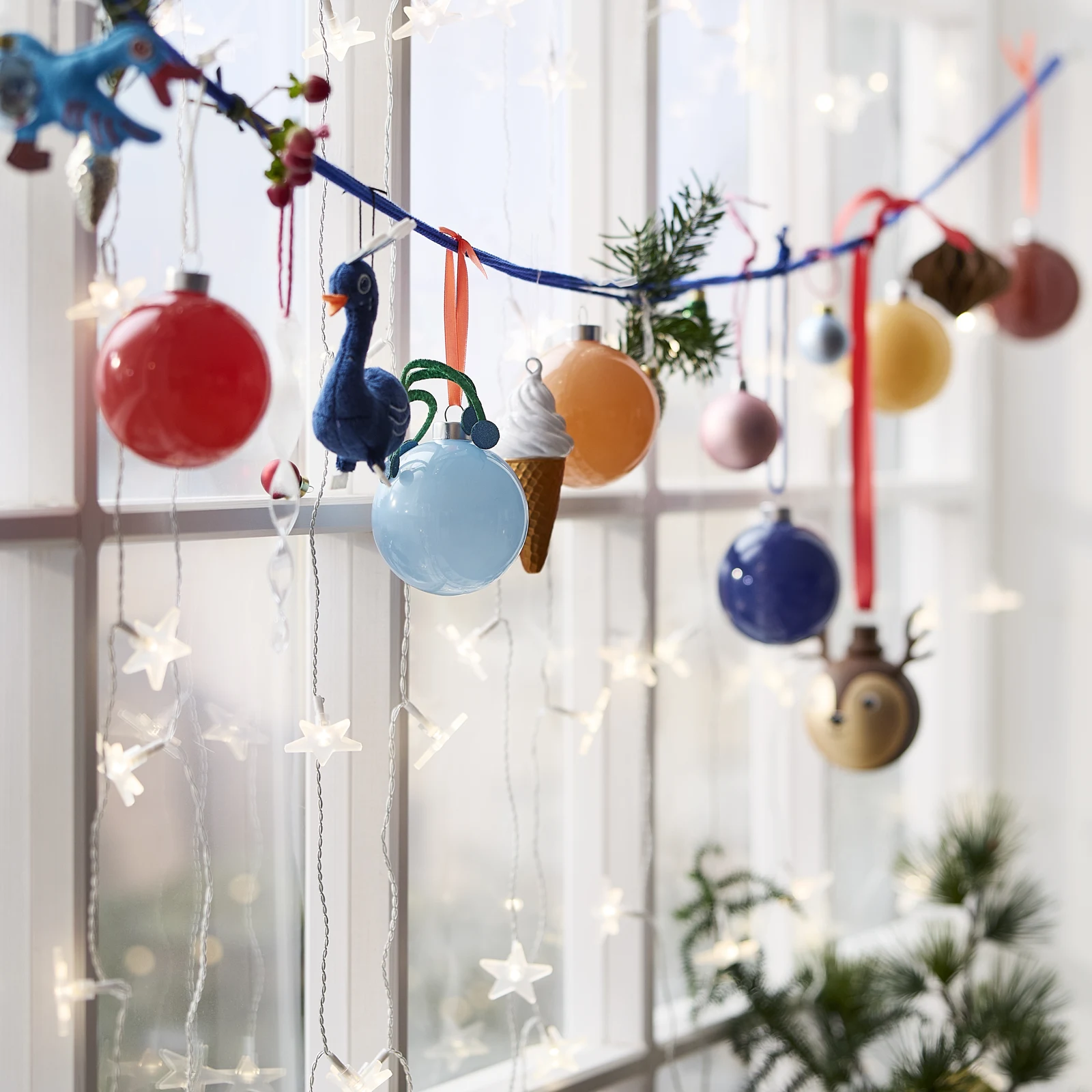
Proportion achieves more than another shopping bag
Open an artificial tree’s branches properly, following the instructions for the model. A folded branch leaves a dark patch that extra ornaments will struggle to disguise. Inspect the outline from three places, including your usual seat on the sofa. The side facing a wall may need fewer decorations, but avoid concentrating all the weight on one side. Always respect the structure’s stability and load limits. Check the diameter of the stand before arranging furniture around it; an attractive narrow tree can still have a substantial footprint when it is safely assembled.
Sort decorations into large, medium and small. Put heavier pieces on branches able to support them, closer to the trunk where appropriate, and reserve slender tips for light ornaments. Try small groups combining different sizes, separated by visible gaps, instead of identical objects lined up at the same height. Visible gaps keep the foliage in the picture and give even the smaller ornaments room to stand out. After each group, step back and notice whether the next piece is filling a real gap or merely continuing the habit of hanging everything.
Choose the lights with the room switched on
Warm white works comfortably with deep colours, cream and golden surfaces. Multicoloured lights support a cheerful family collection containing many different pieces. Choose with your wall colours and your usual view of the tree in mind. Try the string beside the lamps you normally use in the evening: two clashing whites may be more distracting than mixed ornaments. Use only lighting suitable for its position and follow the product instructions. Consider where the plug and controls will sit before hanging the first bauble, so switching the tree on does not require moving furniture every evening.
The length needed depends on the route around the branches. Measure a representative circuit, multiply by the number of passes you want and allow for the cable’s journey to the socket without stretching it. LED count alone cannot tell you how full the effect will look. Lay out and test the string before decorating, inspect cable and connections, then disconnect it during installation. Never place real candles on a tree, including for a quick photograph. If your existing lights work safely and suit the arrangement, changing them is not a requirement for bringing a 2026 idea home.
A small room can keep the idea and change the scale
For a tabletop tree, retain the colour story but remove one category of decoration: wine red, warm light and one bow; or cream paper and wood without a garland. Small trees work when individual pieces remain visible. Choose a stable surface away from edges and busy routes. A slim floor tree may be easier to accommodate than a large tree standing on furniture. Compare the actual base footprint, not simply the height on the box. Leave enough room to open drawers and doors without knocking branches, especially in a shared living room.
Finish by using the room
Sit down, open the door and walk past carrying a bag. The arrangement needs to work in everyday life. Keep fragile ornaments beyond the reach of children and animals, and explore our separate guide if a cat shares your home. Photograph the result to remember what worked, then note only the things you truly lacked. Bring the scheme together with one favourite finishing touch: ribbon repeated through the branches, a familiar colour or the family star ready for its place at the top. Take a final look in daylight as well as after dark, then enjoy the room you have made for Christmas.
Keep exploring Christmas: Christmas palettes 2026: change the colours, keep your home. An elegant Christmas tree on a small budget: start with what you own. Christmas trends 2026.
SOURCES AND FURTHER READING
Did this story touch your heart?
Psst… you’ll like this too!
Christmas palettes 2026: change the colours, keep your home
Read the story ↗Share this story