How to make an egg-free cake with cupboard ingredients
An easy Italian water cake with flour, sugar, oil and baking powder, plus lemon zest if you have it.
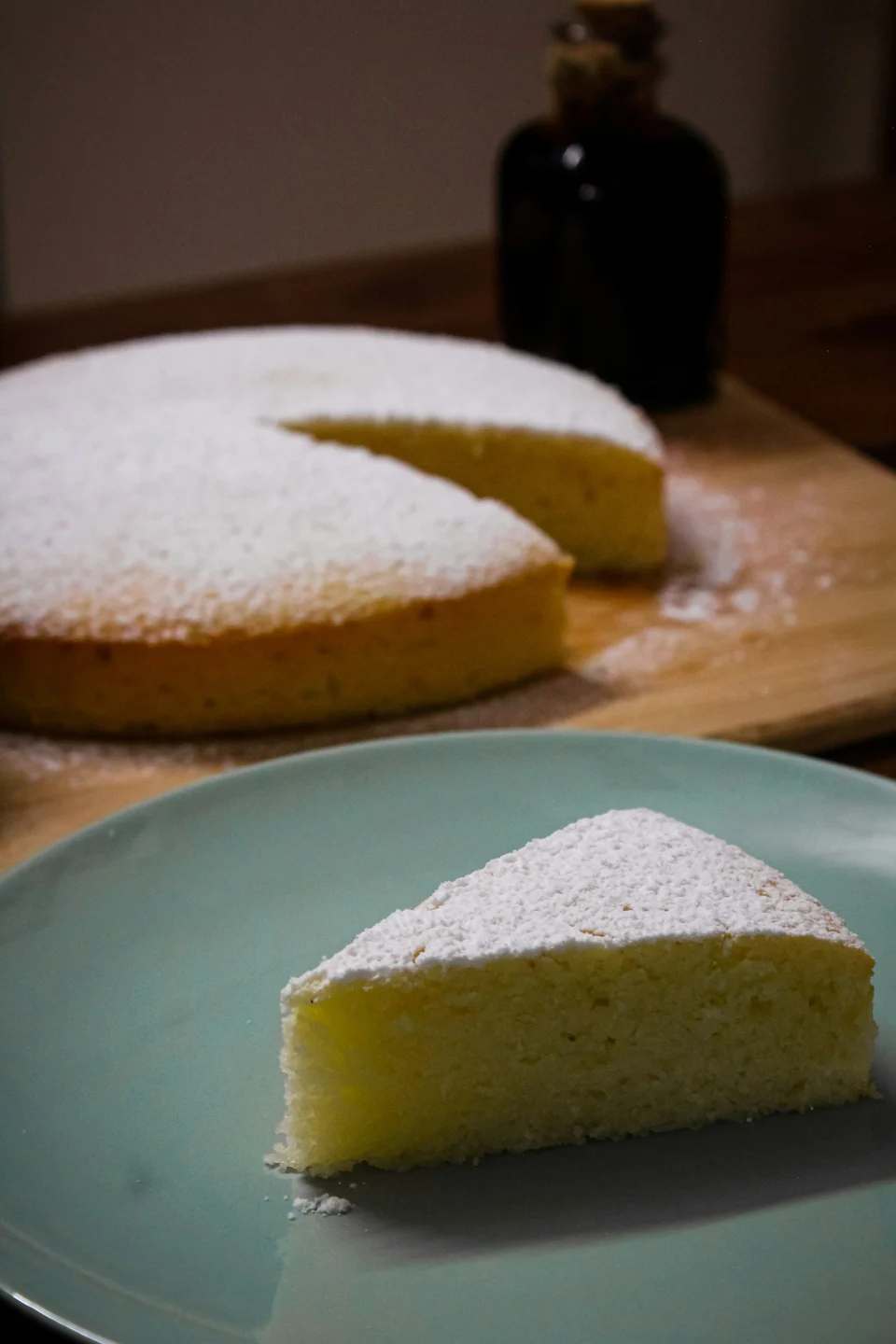
You feel like baking a cake, open the fridge and find you’re out of eggs. Try an Italian water cake, made from the start with flour, sugar, water, oil and baking powder. Lemon adds fragrance if you have one. You can skip the trip to the shop and the search for an egg substitute. A scale, a suitable tin and a little care in the oven are all you need.
The basic recipe: what to set out
For about eight slices, weigh out 300 g Italian 00 flour, 220 g granulated sugar, 330 g water, 90 g neutral vegetable oil and 16 g baking powder. If you have a lemon with a peel suitable for eating, grate the zest. Use a round tin about 24 cm across. A different diameter changes the height of the cake and how long it takes to bake.
You’ll also need a large bowl, a whisk, a sieve and a spatula. Line the tin with baking paper or grease it with a little oil and dust it with flour to keep it butter-free. Weigh the water and oil in grams. Set everything out first, including the baking powder, so you don’t discover an empty cupboard once the batter is mixed.
Get the oven and tin ready first
Preheat a conventional oven to 180 °C and prepare the tin while it heats. If you’re greasing the tin, do the sides as well as the base. If you’re using paper, press it in so there are no large folds sticking into the batter. Put the rack in the middle and leave room for the cake to rise. Too close to the top element, the surface can brown before the centre is cooked.
Check that you have baking powder. Baker’s yeast works differently and can’t be swapped in gram for gram. Bicarbonate of soda on its own also needs the right amount of acid to work. If you’re out of baking powder, pick a recipe designed without it. This cake is easier to get right when you keep the ingredients that give it its structure.
Mix without making it a workout
Pour the water into the bowl and stir in the sugar. Add the oil and lemon zest. Sift the flour and baking powder and whisk them gradually into the liquid until there are no obvious lumps. Use the spatula to scrape any flour from the base and sides. Stop once the batter is even. Pour it straight into the tin and smooth the surface gently.
With an electric whisk, use a moderate speed and stop as soon as everything is combined. The batter contains plenty of water and should pour easily. It may be thinner than the batter for an egg-based sponge. Check your measurements before adding any extra flour. A handful added by eye can throw off the balance.
How long to bake it and how to tell it’s ready
Bake at 180 °C for about 50 minutes, adjusting for how your oven behaves. Keep the door closed during the first part of baking. Towards the end, insert a skewer in the centre. It should come out without raw batter on it, and the middle should be set. If the top is already dark and the centre needs longer, cover it gently with foil and check again in a few minutes.
Let the cake rest in the tin for 10–15 minutes, then carefully transfer it to a wire rack. The crumb can seem wetter and more fragile if you cut it while it’s hot. Let it cool before covering it, so trapped steam doesn’t dampen the top. If you’re adding icing sugar, dust it on once the cake is cold so it stays visible.
Three flavours you may already have in the cupboard
Out of lemon? Try orange zest from an orange with edible peel, a little vanilla or a pinch of cinnamon. Choose one main flavour. Grate the coloured part of the citrus peel and leave the bitter white pith. Swapping all the water for juice changes the acidity and sugar in the batter. For a stronger citrus flavour, follow a recipe developed for it.
You can serve a slice with jam or freshly cut fruit and keep the cake itself simple. For a chocolate cake, start with a recipe that accounts for how much liquid cocoa absorbs. Chopped apples, yoghurt, bananas and spreads also change the moisture and texture. Make the plain version first so you have something to compare your experiments with.
Why this cake works without eggs
A cake made to be egg-free works differently from a sponge with the eggs taken out. Eggs can give a cake structure, help trap air or bind ingredients. A mashed banana or a pot of yoghurt can’t always do the same job. They also change the flavour. Start with the cake you want to bake and choose a recipe that gets you there.
The basic ingredients contain neither milk nor butter. If you’re baking for someone with an allergy or specific dietary needs, check the labels on the baking powder, flavourings and extras. For an egg allergy, avoid cross-contact from utensils and surfaces used for other batters.
Keep it fresh for breakfast
Once completely cool, store the cake in a clean airtight container in a cool, dry place and eat it within a few days. Fresh cream or another perishable filling can change how it needs to be stored and may require refrigeration. Freeze individual slices well wrapped and dated so you can thaw only what you need. A plain slice can go with a little jam, fruit or just the scent of lemon.
SOURCES AND FURTHER READING
Did this story touch your heart?
Share this story