French Open 2027, the first date to remember is in December
The free French Open ticket draw opens from 3 to 17 December 2026. The tournament runs from 17 May to 6 June 2027 in Paris.
The first date to put in your diary
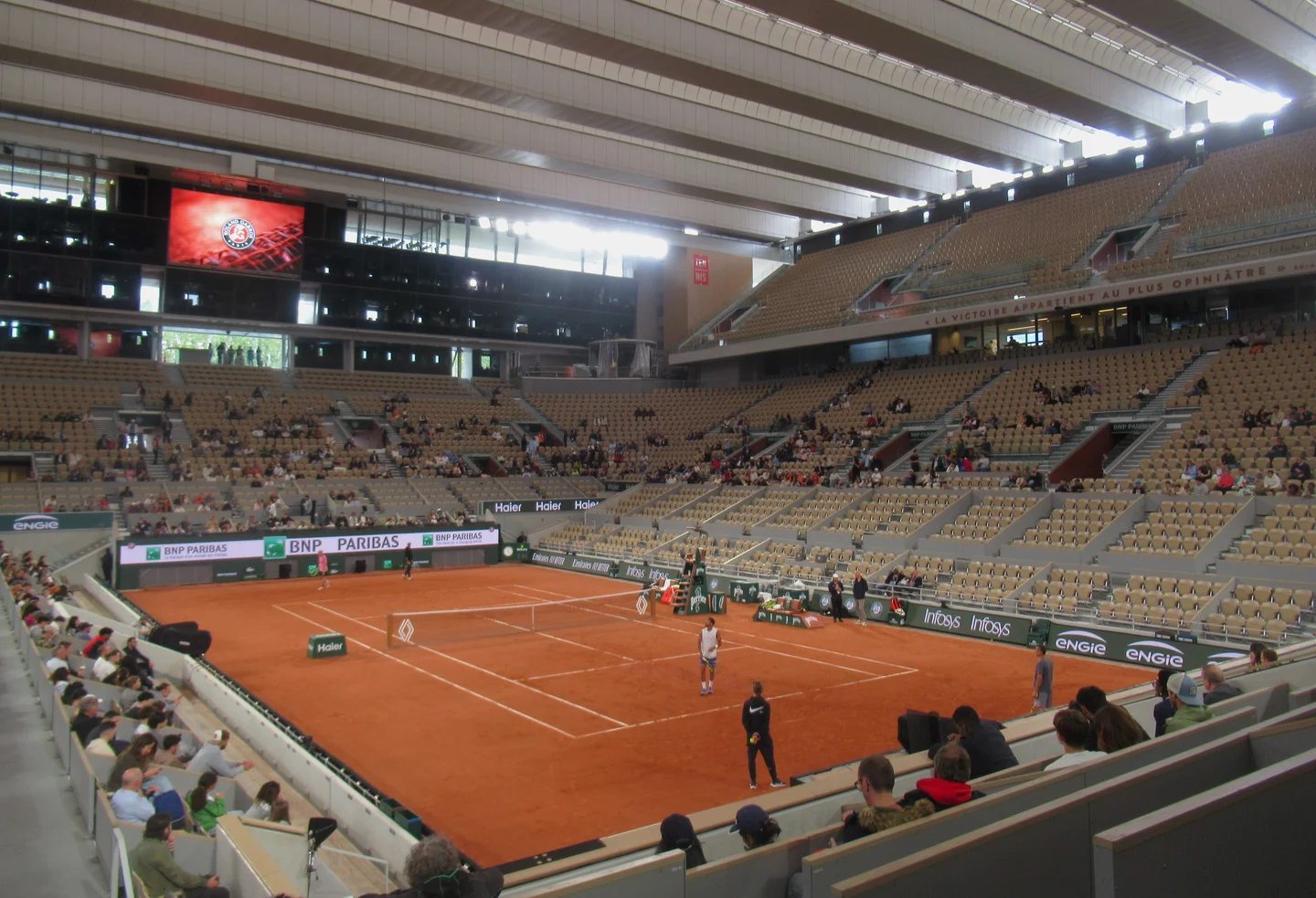
The French Open takes place in Paris from 17 May to 6 June 2027. If you want to be there, the first date to put in your diary falls in 2026. Registration for the public ticket draw runs from 3 to 17 December on the official ticketing site. Entry is free, and registering on the first day gives you the same chance as registering on the last. That leaves you time to decide whether you want to roam the outside courts, book a session on the main show court or get to know the tournament during qualifying.
You’ll be asked for a temporary bank authorisation to validate your entry. Depending on your bank, a €1 authorisation may show up for a few days. No payment is taken. Use an email address you’ll still be checking in March. If you’re selected, the organisers will email you a purchase slot before the end of that month, so keep an eye on your junk folder too. Being picked gets you into the sale. Your choice of dates, sessions and seats will depend on availability when you log in.
Choosing between Opening Week and the main draw
Opening Week runs from Monday 17 to Saturday 22 May. It covers qualifying, practice and Yannick Noah Day. If this is your first Grand Slam, qualifying gives you a glimpse of how much work it takes just to reach the main draw. Look at how players manage a tight service game, or how much ground they can recover when an opponent drives them wide. From a smaller court, you can see the adjustments more readily and follow a player you might recognise again later in the season.
The main draw begins on Sunday 23 May. There is a four-ticket limit for outside courts from 23 to 30 May and a four-ticket limit for the main courts. Both Opening Week, including Yannick Noah Day, and outside courts from 31 May to 6 June have limits of 15 tickets. These are purchase limits. When comparing prices, open the session details and check which courts it covers. A day on the outside courts gives you scope to pick and choose, while a night session on Court Philippe-Chatrier gives you a seat for the session specified on your ticket.
For five friends looking to spend the day together, Opening Week or the outside courts in week two are sensible places to start. If two of you are visiting for the first time, decide whether you’d rather have an allocated seat on the main court or the freedom to move between matches. Look at the schedule for your chosen date and the access times listed for your session before you book. If you are travelling from overseas, leave enough time for the journey across Paris as well as the trip there.
Other official routes into the tournament
From 30 March, first-come, first-served sales open for Opening Week and for outside courts in the second week. The organisers highlight wheelchair tennis, junior events and the legends tournament among the reasons to consider these tickets. Dedicated sales for wheelchair users and people with disabilities are due to open on 31 March. French Tennis Federation licence holders have a separate window from 23 February to 1 March. Hospitality and official travel packages have their own purchase channels and conditions.
Bookmark the official ticket site and return directly to it when it’s time to buy. Individual 2027 tickets have yet to go on sale as of November 2026. The organisers say that sites already offering them are fraudulent. If you want to make travel plans before securing a seat, look for accommodation you can cancel. For coverage at home, check your country’s broadcast listings once they are out. Paris match times and a UK, US or other local broadcaster’s schedule are different things to check.
Two names worth knowing before you arrive
The stadium in the 16th arrondissement opened in 1928 and takes its name from a French aviator. Court Suzanne-Lenglen honours a player who won six French championship singles titles between 1920 and 1926. If you see her name while browsing the stadium map, think of the spectators who came to see her play. The story of tennis in Paris has always depended on women who brought their own audiences to the sport.
Yannick Noah lends his name to a special day during Opening Week. On 5 June 1983 he played Mats Wilander, the defending champion, in the Paris final after beating Ivan Lendl and Christophe Roger-Vasselin in the previous two rounds. Noah won in straight sets, taking the third on a tiebreak. When the tournament named its family day after him in 2023, forty years after that victory, he performed onstage. Wilander joined him, this time on guitar. Watch the 1983 final.
Getting to the grounds and getting into the game
The venue is by Porte d’Auteuil in western Paris. Métro line 10 serves Porte d’Auteuil and Michel-Ange–Molitor. Line 9 serves Michel-Ange–Auteuil and Michel-Ange–Molitor. Match your station to the checkpoint on your ticket before setting off. For a step-free route, use the tournament’s accessible travel and entry guidance and plan for your assigned gate. The shortest route on a map can still involve stairs.
Once you get to a court, give one rally your full attention. On clay, players can slide into a shot and use the high bounce to drive an opponent back. Watch where the receiver stands at the start of the point and how quickly they find their way back into court after being pulled wide. A seat near an outside court is a fine place to see just how hard that is. You may go to Paris hoping to sit on the centre court and come home with a new favourite you first saw in qualifying.
Source: Fédération Française de Tennis ↗
How to plan a day around the tennis
If your ticket lets you move between courts, start with two matches you would like to see. One could feature a player you know. For the other, pick doubles or a qualifying match and give yourself a generous gap. A long match earlier in the day can push the next one back, and it takes time to get around the grounds. If you have a seat for a specific session, use its access time as the fixed point for the rest of your plans.
With children, a shorter visit and time to take a break may be a better fit. At a wheelchair tennis match, watch how the players turn the chair as soon as they strike the ball. By the time the opponent is ready to reply, they are already working to recover their position. Leave room to stay with a match that catches your eye, even if it was never part of the original plan.
For another side of Italian tennis, read about Jannik Sinner’s education project with UNICEF and the children it helps get back to school.
SOURCES AND FURTHER READING
Did this story touch your heart?
Share this story