MASSIMO ROBBERTO: LOOKING AT GALAXIES, STILL ASKING QUESTIONS
A galaxy photograph appears between a message and an advertisement. You enlarge it: lights, shapes and colours seemingly far removed from your day. For a few seconds you keep looking. Then a notification arrives and the sky slips beneath your thumb.
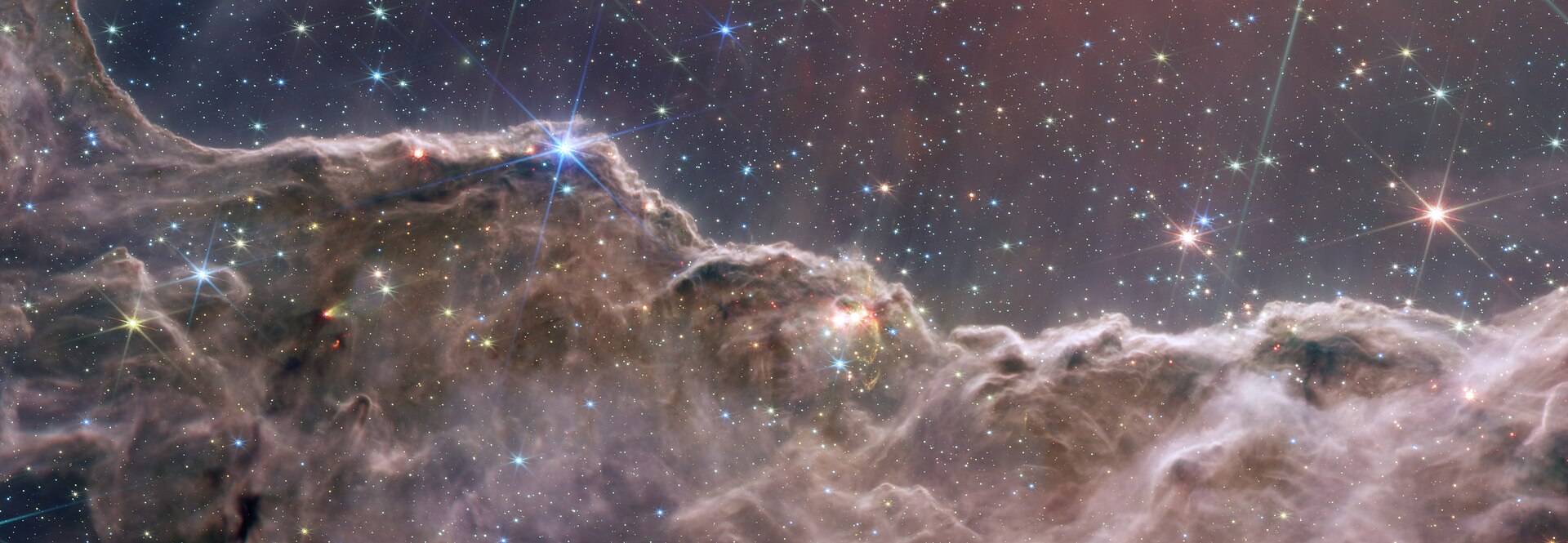
Perhaps this feels familiar. We have access to extraordinary images and little time to linger. The public story of Massimo Robberto, an astrophysicist working with the James Webb Space Telescope, offers a reason to stay a few minutes longer. And ask what happens to big questions when we look more closely at the universe.
Who Massimo Robberto is and his work with James Webb
The Space Telescope Science Institute’s official profile identifies Robberto as NIRCam Branch Lead, responsible for the near-infrared camera aboard James Webb. He coordinates about fifteen scientists working on scientific operations and instrument performance. He studied in Turin and has also worked on instrumentation for the Hubble Space Telescope.
This distinction matters: astronomical images reach us through instruments, skills and shared work. People design, check and interpret data behind what we see. Wonder has this practical substance too, made of attention to details and questions answered methodically.
Soul: science, faith and wonder
Robberto joined Monica Mondo on TV2000’s Soul in the episode announced for 11 October 2026 and published on the programme page on 12 October. Its official introduction lists science and faith, wonder at the universe and working with colleagues of different faiths or none among its themes.
The conversation is Monica Mondo’s for TV2000: you can hear it through the original Soul video linked below. The programme’s account brings Robberto’s professional experience alongside questions that can reach people whose daily work is entirely different.
Our reflection begins here: how much space do we leave for what surprises us? We can want to understand something better while noticing the questions it opens inside us. It happens before the sky and within an apparently ordinary day.
Understanding something can make it more astonishing
NASA explains that NIRCam observes, among other things, early galaxies, young stars and Solar System objects. It works mainly with infrared light, alongside part of visible red. It helps gather information our eyes alone could not obtain.
Knowing this changes how you look. You may want to understand what an image represents, read its explanation, distinguish scientific data from imagination. Beauty need not lose its strength when we stop merely calling it beautiful.
This happens closer to home too. A piece of music may move us, then prompt curiosity about how it was written. A landscape may invite us to learn about its trees. Curiosity is a way of giving time to what we encounter.
Faith before the sky, without shortcuts
For a believer, creation’s beauty can become gratitude and prayer. That does not make a space photograph experimental proof of God, or a scientist’s personal faith a solution to a scientific question. Claims require criteria and arguments suited to their subject.
Psalm 8 connects contemplating the heavens with a question about human beings and God’s care. We can approach that question without expecting it to replace studying the universe. It concerns us differently: what value has our life within such immense space?
Perhaps your first personal response will be prayer. Perhaps a wish to listen to someone with a different outlook. Conversation becomes more interesting when agreement with our conclusion is not demanded before the other person has spoken.
As you listen, keep three questions nearby: what makes me curious? When did learning something change my mind? Can I listen to someone who sees life differently? An answer may come after the video ends.
Room for a question in an ordinary day
You need not wait for travel or a sky free of city lights. Begin with a photograph observed calmly, a reliable page, a conversation in which you admit not knowing. It is a small change of pace: choosing one thing and giving it attention.
The Robberto episode can be an opportunity. Listen to someone working with instruments that widen our vision, then return to your questions without rushing to turn them into a conclusion to share.
You can reopen that galaxy photograph. Read where it is and what you are looking at. Stay another moment with the curiosity of someone who has learned something and discovered a wish to ask more.