The new Hogwarts: uniforms, rooms and details to look at closely
An H on the uniforms, redesigned emblems and a castle revealed through everyday spaces. Explore the HBO series’ visual world through what has already been shown.
Jump to what you need
- The castle begins with details
- Where this Hogwarts is being created
- An entrance for the first day
- The Great Hall: a public space
- The H on the uniforms and the house emblems
- A school to live in between adventures
- Costumes also tell the time
- Objects need to work in the hands
- A making-of for people who love the crafts
- Keep exploring Hogwarts!
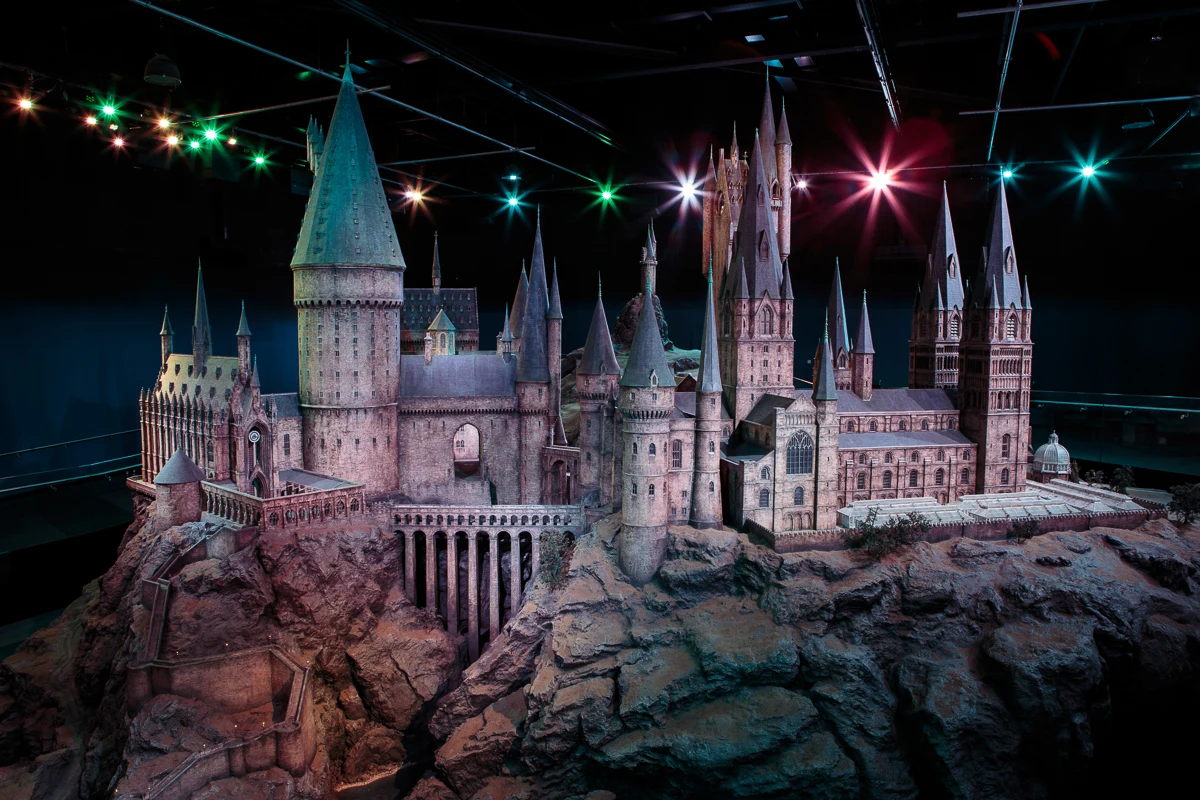
The castle begins with details
Before the grand adventure comes a feeling: would we want to step inside? The new Hogwarts in HBO's Harry Potter and the Philosopher's Stone appears in the teasers and the making-of Finding Harry: The Craft Behind the Magic. We can already look at its spaces and costumes ahead of the 25 December 2026 premiere on HBO Max, including in Italy. The pleasure lies in seeing how an imaginary school tries to become a place we can recognise.
Three perspectives help us read its visual identity: the scale of the rooms, what the characters wear and the objects they handle. A huge door communicates something different from a well-used armchair. One can make us feel small; the other can make us feel welcome. Film and television can create those sensations before a character tells us where we are.
Where this Hogwarts is being created
The series is filmed at Warner Bros. Studios Leavesden. Mara LePere-Schloop is the production designer, Naomi Moore is the set decorator and Holly Waddington designs the costumes. These are different responsibilities that meet in one image: imagining an environment, giving it the signs of occupation and dressing the people who move through it.
That distinction is useful when looking at the result. Architecture suggests how people move; furnishings indicate what happens in a room; clothing tells us something about its wearer. When these elements work together, we do not need a complete floor plan to imagine the castle's life. The set begins to exist beyond the edges of the frame, making us curious about the doorway the camera has not followed yet.
An entrance for the first day
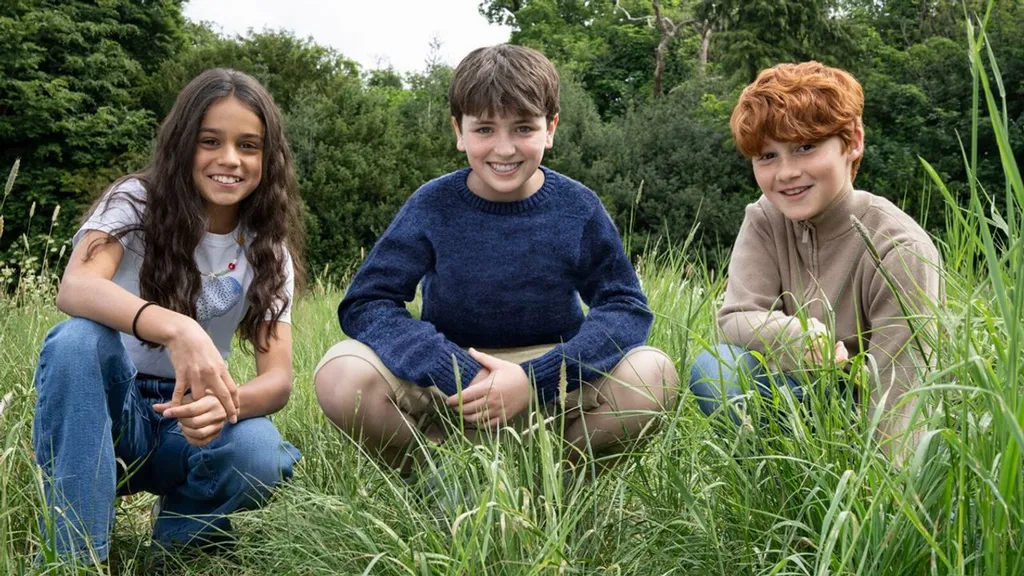
The official material shows an entrance with elaborate doors and a broad staircase. Try observing those elements from the new pupils' height: to an eleven-year-old, an unfamiliar school may seem far larger than it does to an adult. The direction of our gaze matters as much as the building's actual dimensions.
Notice the transition from outside to inside, who leads the group and how much room surrounds the children. It is a small compass for understanding their first encounter with Hogwarts. Wonder and apprehension can belong to the same moment. We do not need a single image to explain the whole building or reveal the route of every corridor before we can share the sense of arriving somewhere important.
The Great Hall: a public space
The Great Hall has been shown with the Sorting Ceremony and the pupils' tables. To read the room, look at relationships. How close are the children? How does their posture change in front of the teachers? A room shared by the whole school needs to hold belonging, intimidation and noise, sometimes in the same scene.
It differs from a dormitory because this is also somewhere people are watched. An individual decision can take place before hundreds of others. That helps explain the emotional force of the Sorting: it concerns more than finding a seat at dinner. It is also about how a newcomer is welcomed by a group. Architecture can play a part in creating that feeling, drawing attention to a child within a much larger room.
The H on the uniforms and the house emblems
The new uniforms retain black robes, while the school's symbol is an H. The house emblems have been redesigned while keeping the colours and animals. This is a concrete change to look for on clothing and around the rooms: Hogwarts is introducing itself through a new system of visual signs.
A symbol works when we can recognise it quickly. Try following a scene without pausing: can you distinguish the school and the house identity? Then pause and examine the smaller details. Visibility at a distance and detail at close range answer different needs. A good costume has to live within a scene, beyond looking attractive in a promotional photograph where every fold can be studied at leisure.
A school to live in between adventures
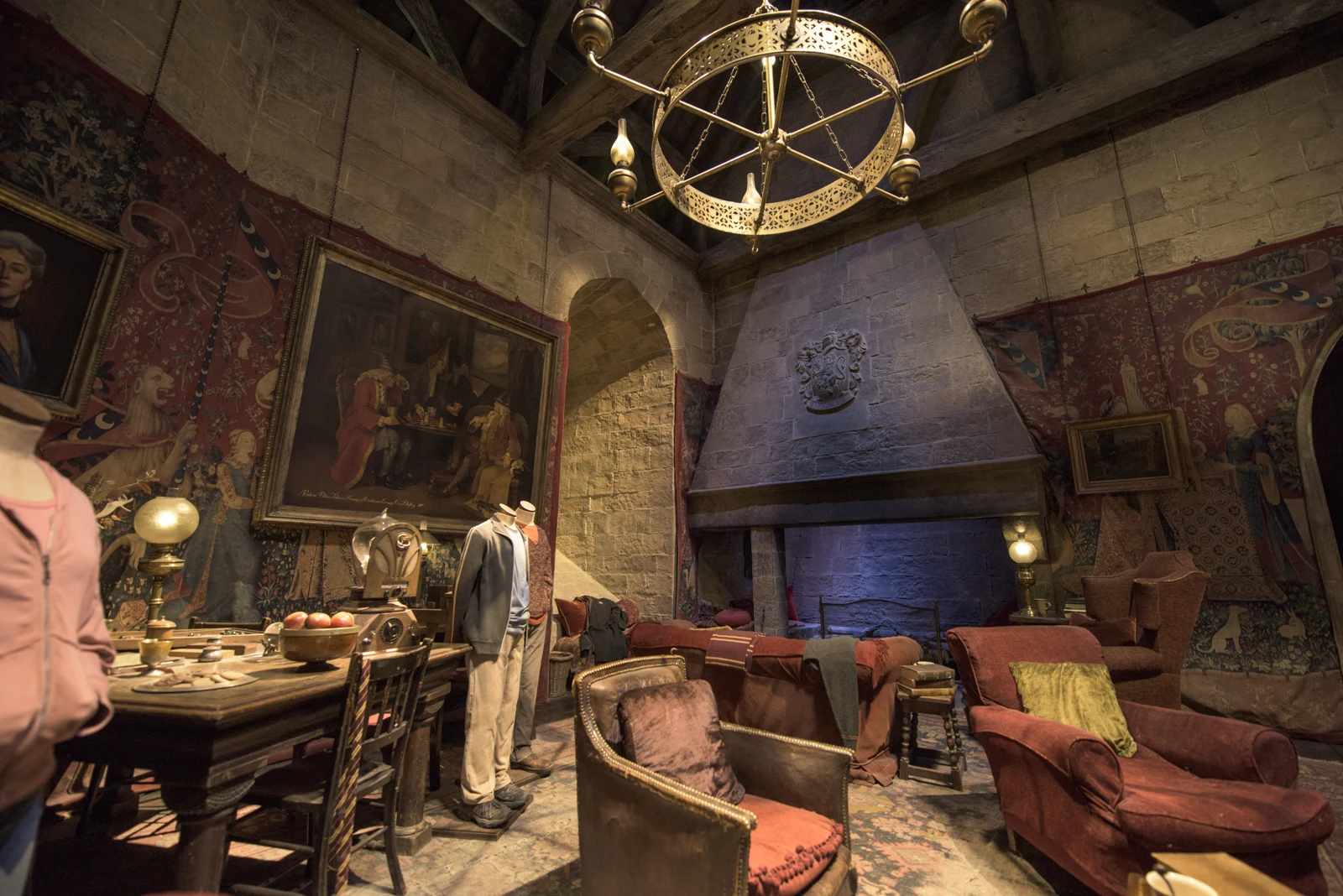
The first teaser shows the Gryffindor common room with armchairs and Professor Sprout's greenhouse. These spaces suggest two different rhythms: rest and learning. We can observe the castle through what it allows its characters to do, as well as through its size and grandeur.
A room for resting should let us imagine where someone might sit to talk or read; a teaching space should make an activity understandable. This is a simple way into the series' visual world: ask how the space could be used. It does not reduce magic to practicality. It gives magic an everyday setting concrete enough to make an interruption feel extraordinary, so that the school can become somewhere we imagine spending an ordinary afternoon.
Costumes also tell the time
The first-year story takes place in 1991. Clothes, hairstyles and accessories in the Muggle world help establish that period, while the uniforms and wizards' clothing introduce another visual language. We can therefore read the distance between the two worlds before a wand appears.
Nature provides a visual thread: climbing plants appear within the castle settings, while the uniforms use British wool and organic cotton. These details invite us to think about touch as well as colour. Fabric texture suggests weight, warmth and habits; a plant changes the boundary between the castle and what grows outside. One concrete question helps explore the result: which things seem to belong to the same world even when they look very different?
For an interesting comparison, choose an adult and a pupil. Look at proportions, fabric texture and freedom of movement. What seems chosen by the person, and what is imposed by the environment? A uniform can unite a group while revealing differences in how individuals wear it. These are ways of reading an image, rather than secret plot clues: they help us see costume design working as a form of characterisation, even when nobody discusses the clothes.
Objects need to work in the hands
Wands, the Sorting Hat and Quidditch equipment appear in the official images. The interesting question is not only how they are designed, but how they are used. A convincing object needs to become part of an actor's gesture, support an emotion and remain readable in motion.
On a first viewing, follow the hands. Do they hesitate, grip tightly or trust what they are holding? Then examine the object itself. This separates two pleasures that often overlap: recognising a beloved item and discovering what it contributes to a scene. A wand at rest tells us about its shape; a wand held by a child also tells us about a relationship with something new, and perhaps about confidence that has not yet arrived.
A making-of for people who love the crafts
Finding Harry: The Craft Behind the Magic, available on HBO Max, covers casting, production design, costumes and creature effects. It is the most direct route for anyone wanting to follow the material construction of this return before stepping into the story.
Choose one craft at a time. First concentrate on a room, then return to an outfit and finally a creature: it becomes easier to see how many decisions coexist within one image. Keep a practical distinction in mind if you are planning a trip: the series' production location and the public studio tour are different experiences. A visitor ticket does not provide access to an active television set. Our dedicated experiences guide covers the places that are open to visitors.
Keep exploring Hogwarts!
SOURCES AND FURTHER READING
Did this story touch your heart?
Psst… you’ll like this too!
The Harry Potter trailers: details that make us want to return to Hogwarts
Read the story ↗Share this story